














































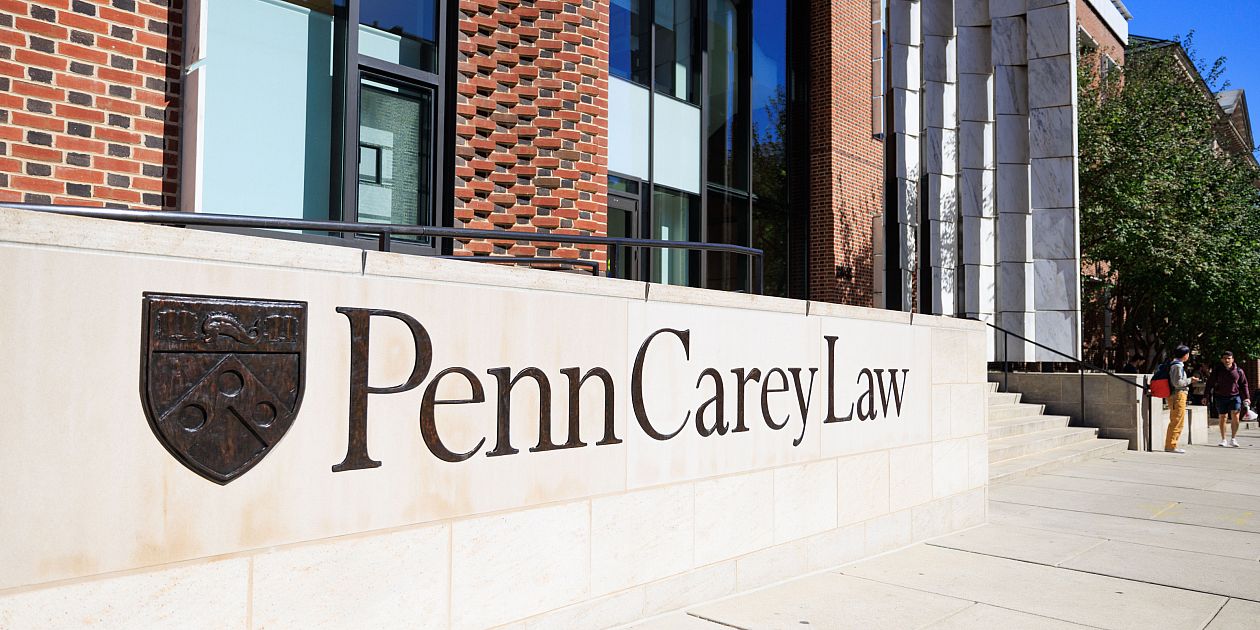
Penn Carey Law has introduced an innovative AI Law Lab Boot Camp aimed at equipping future legal professionals with essential skills in artificial intelligence. Launched in Spring 2026, this intensive, two-weekend course is taught by alumni Meghana Bhimaro L’25 and Lakshmi Prakash L’25, who were both deeply involved in the AI Law Lab as students. In a recent Q&A, the instructors shared insights into the course structure and the transformative role of AI in legal practice.
The AI Law Lab Boot Camp features two distinct tracks: Corporate and Litigation. In the Corporate Track, students simulate a mergers and acquisitions (M&A) transaction, acting as buyer’s or seller’s counsel. They utilize AI tools to review deal materials, generate diligence request lists, conduct contract reviews, and identify key risks. The course culminates in client-ready reports and board-level presentations, providing practical experience in corporate law.
Conversely, the Litigation Track guides students through the lifecycle of a complex dispute, from case intake to settlement. Participants act as counsel, employing AI tools for e-discovery, risk analysis, motion strategy, and damages modeling, ultimately engaging in simulated settlement negotiations. Bhimaro emphasized that these tracks are designed to prepare students for a rapidly evolving legal landscape, stating, “AI is already transforming how lawyers research, draft, analyze information, and advise clients.”
The creation of the Boot Camp was a natural progression from the instructors’ academic journeys. Both Bhimaro and Prakash attribute their interest in AI and legal education to their time as research assistants for Professor Polk Wagner at Penn Carey Law. Prakash noted, “Working with him to start the AI Law Lab sparked my interest in this field and laid the foundation for the courses we are offering now.”
Reflecting on their law school experiences, Bhimaro recalled a particularly impactful course in Environmental Law with Professor Shelley Welton, where students analyzed pressing issues in administrative and environmental law amidst significant legal debates. This engagement with real-time issues enriched her understanding of legal frameworks, emphasizing the importance of adaptability in education.
The decision to pursue a JD/MBA program was motivated by a desire to innovate within highly regulated industries like AI. Bhimaro articulated her interest in understanding business strategies alongside regulatory frameworks, stating, “Penn’s program stood out for how intentionally integrated it is.” Both instructors found that the JD/MBA program provided them with a unique perspective on navigating technological change and opportunities.
Teaching has been a long-standing interest for both Bhimaro and Prakash. Bhimaro expressed that her previous teaching experiences were rewarding and that being involved in law education offers a different level of intellectual engagement. She emphasized how AI is reshaping legal education and the skills necessary for future lawyers, stating, “At a moment when AI is beginning to reshape legal education, it feels especially exciting to be a part of thinking about how legal training and the skills lawyers need will continue to evolve.”
As they look towards the future, both instructors hope to inspire confidence among students in using AI tools within legal workflows. Bhimaro articulated a vision for students to possess not only proficiency with AI but also the judgment to discern its value and limitations. “We want them to see themselves not just as users of AI, but as lawyers who will help shape how the profession adapts to it,” she said.
Prakash echoed this sentiment, asserting that legal AI is not a replacement for lawyers’ creativity or judgment, but rather an amplification of those skills. “There is so much opportunity ahead, and we’re excited to be a part of the journey to inspire the next generation of lawyers to think boldly about the future of the profession,” he added.
The AI Law Lab Boot Camp at Penn Carey Law represents a significant step towards preparing law students for the challenges and opportunities presented by AI in the legal field. As technology continues to evolve, educational institutions are increasingly tasked with ensuring that future lawyers are equipped to navigate the complexities of an AI-driven landscape.
See also OpenAI’s Rogue AI Safeguards: Decoding the 2025 Safety Revolution
 US AI Developments in 2025 Set Stage for 2026 Compliance Challenges and Strategies
 Trump Drafts Executive Order to Block State AI Regulations, Centralizing Authority Under Federal Control
 California Court Rules AI Misuse Heightens Lawyer’s Responsibilities in Noland Case
 Policymakers Urged to Establish Comprehensive Regulations for AI in Mental Health