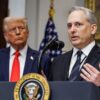


































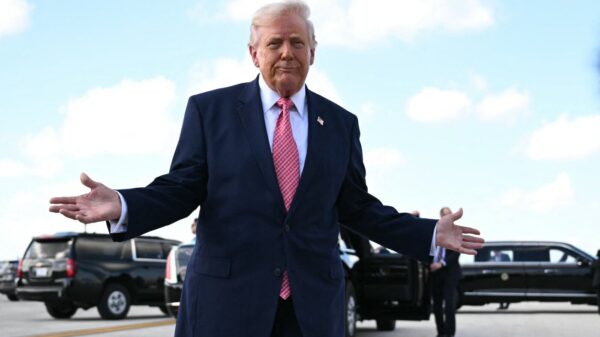






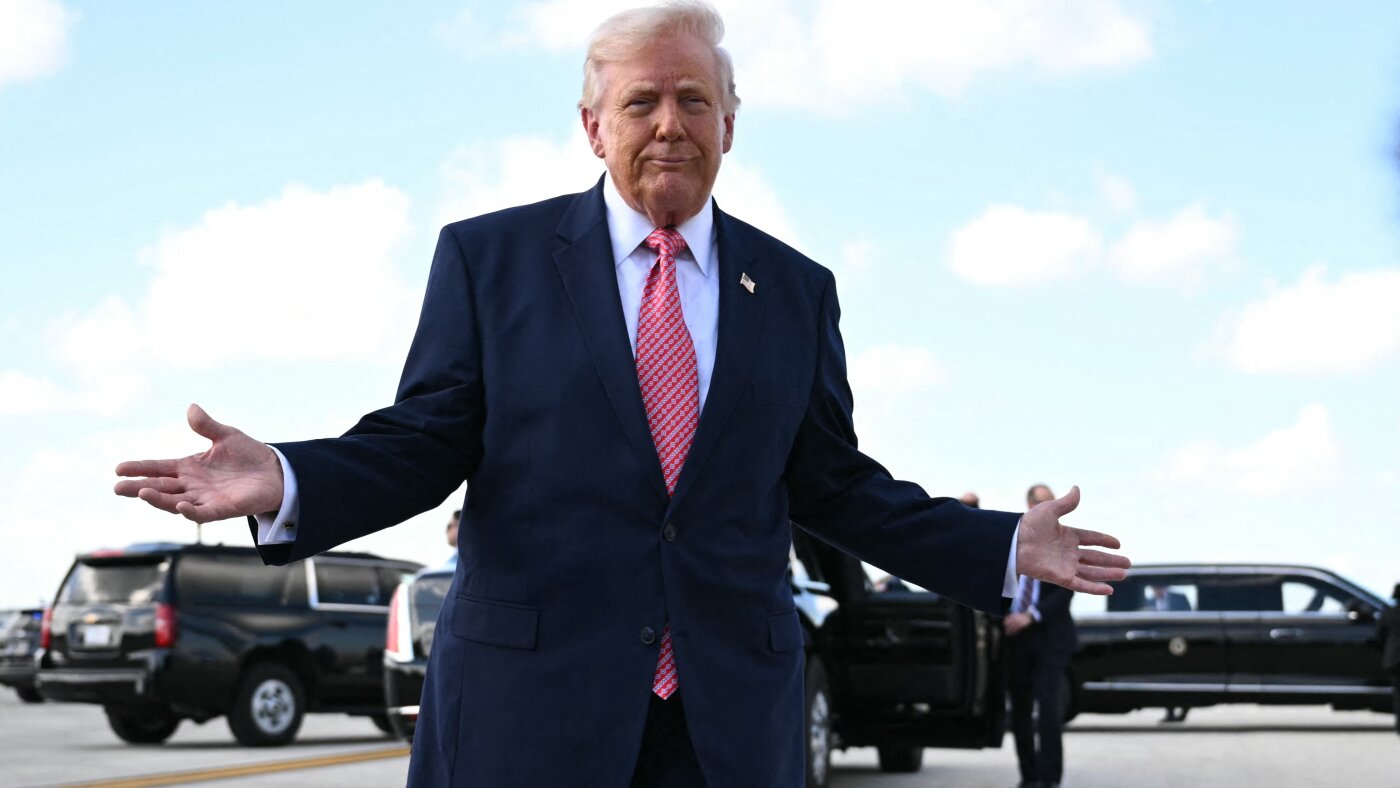
US President Donald Trump addressed the press on March 27, 2026, upon his arrival at Miami International Airport in Florida, ahead of his remarks at the FII PRIORITY Summit in Miami Beach. This appearance comes amid ongoing debates regarding the regulation of artificial intelligence (AI) at both state and federal levels.
In the absence of cohesive federal action, various states have implemented their own laws aimed at regulating AI, focusing on child safety, transparency, and whistleblower protections. However, Trump and his advisers, including David Sacks, the designated AI and crypto czar, have pushed back against state legislation, claiming that such measures hinder innovation.
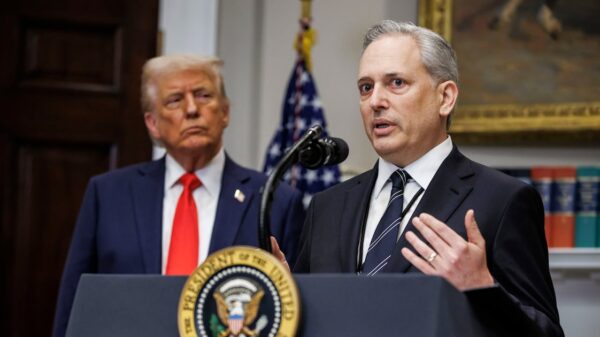
“We want to create an environment where innovators have certainty about the way that they can develop their products and it’s something only Congress can provide,” said Michael Kratsios, head of the White House Office of Science and Technology Policy. He emphasized the need for a unified national framework to avoid a regulatory “patchwork.”
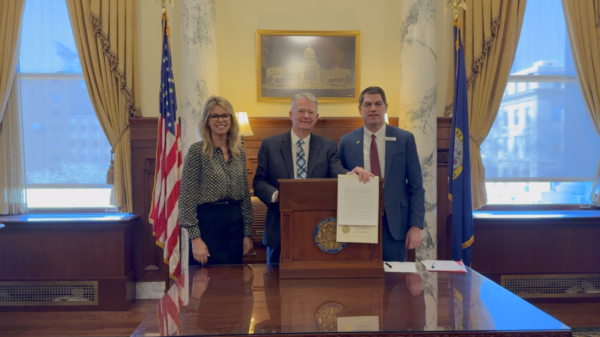
The Trump administration recently unveiled a regulatory framework for AI, urging Congress to adopt it. The White House has frequently criticized the existing state laws, which they believe complicate the innovation landscape. This criticism has extended even to proposals from lawmakers in Trump’s own party. For instance, State Rep. Doug Fiefia, a Republican from Utah, introduced a bill requiring technology companies to disclose how they would protect consumers, but it never reached a vote due to intervention from the administration.
“They basically mentioned that they’re opposed to the bill and viewed the bill as unfixable and was against the administration’s AI agenda,” Fiefia recounted. While a White House official stated that the administration has not outright banned states from enacting child safety protections, they did not address the specific memo that impacted Fiefia’s proposal.
Fiefia, who previously worked at Google, expressed disappointment but noted that he was not surprised by the administration’s stance. He argued for a collaborative approach between state and federal lawmakers, particularly given the current gridlock in Congress. “In states like Utah, we see this as an opportunity to step forward and protect our constituents and our citizens, especially as it relates to child safety,” he said.
Other Republican lawmakers, such as State Sen. Tracy Pennycuick of Pennsylvania, have voiced similar sentiments, expressing frustration with the slow pace of federal action. Pennycuick, who has sponsored AI legislation, remarked, “I think states are the first ones to see when there’s a problem and they have the ability to pivot and act quickly.”
In Texas, State Sen. Angela Paxton is working on similar initiatives but acknowledges the importance of avoiding a fragmented regulatory structure. “When you have no regulation, what you have is the wild west,” she said, advocating for robust federal legislation while maintaining state-level regulatory capabilities in the interim.
The White House’s AI framework promotes several principles aimed at addressing the rapidly evolving technology landscape, including child safety and curbing rising data center costs. However, reactions among lawmakers and experts have been mixed, with some praising the concept of a unified regulatory approach, while others critique the framework for lacking detail.
Riki Parikh, policy director at the non-profit Alliance for Secure AI, noted that while a federal standard is preferable to a fragmented state approach, the current proposals do not adequately address critical issues, such as the technology’s role in job displacement. “What they are proposing here is not sufficient. It does not earn the right to replace the good work states are doing,” Parikh asserted.
Tennessee Attorney General Jonathan Skrmetti regards the administration’s framework as a step in the right direction, particularly when compared to previous efforts to impose a 10-year moratorium on state AI laws. “If you had a 10-year lockout of anybody with enforcement authority and the will to use it, who knows what would’ve happened,” he reflected.
Despite some support from Republican legislators, actual legislative action remains pending on Capitol Hill. Sen. Marsha Blackburn of Tennessee is reportedly collaborating with the White House on her TRUMP AMERICA AI Act, which aims to expand on the administration’s four-page framework. “By releasing a national framework on AI, the Trump administration gave us a roadmap for crafting legislation, and now it is Congress’ turn to pass a bill that will codify the President’s agenda,” Blackburn stated.
As discussions continue, the White House has expressed commitment to engaging in ongoing conversations with lawmakers, highlighting the balancing act between fostering innovation and ensuring consumer protection in the rapidly advancing field of artificial intelligence.
See also OpenAI’s Rogue AI Safeguards: Decoding the 2025 Safety Revolution
 US AI Developments in 2025 Set Stage for 2026 Compliance Challenges and Strategies
 Trump Drafts Executive Order to Block State AI Regulations, Centralizing Authority Under Federal Control
 California Court Rules AI Misuse Heightens Lawyer’s Responsibilities in Noland Case
 Policymakers Urged to Establish Comprehensive Regulations for AI in Mental Health