









In a recent episode of Lawfare’s rapid response series, senior editors Alan Rozenshtein and Kevin Frazier, along with Tarbell fellow Jakub Kraus, delved into President Trump’s newly announced executive order aimed at federal preemption of state artificial intelligence (AI) laws. The discussion centered on the political dynamics surrounding AI regulation amid a growing divide between Silicon Valley Republicans and MAGA populists, alongside the administration’s controversial decision to permit Nvidia to export its H200 chips to China.
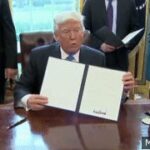
The executive order, unveiled by Trump, is poised to reshape the landscape of AI governance in the United States. By asserting federal authority over state-level regulations, the administration hopes to create a more unified approach to AI development and deployment. This move has sparked debates among tech stakeholders and political factions, highlighting tensions between those advocating for innovation and economic growth and those prioritizing national security and regulatory oversight.
Rozenshtein pointed out that the split within the Republican party reflects broader societal concerns about the implications of AI technology. While Silicon Valley figures often emphasize the potential benefits of AI, such as economic growth and technological advancement, MAGA populists frequently voice apprehensions regarding job displacement and ethical concerns. This ideological rift complicates the prospects for bipartisan support on AI regulation, raising questions about how effective federal preemption will be in addressing local needs and concerns.
The podcast further explored the implications of the Trump administration’s decision to allow Nvidia, a leading AI chip manufacturer, to export its H200 chips to China. This decision has drawn scrutiny from various quarters, including national security experts who argue that such exports could bolster Chinese advancements in AI, potentially undermining U.S. interests. Nvidia’s H200 chips are designed for high-performance computing applications, making them pivotal for AI research and deployment.
Kraus highlighted that the administration’s approach to AI regulation reflects a balancing act between fostering innovation and mitigating risks. The recent executive order could streamline the regulatory framework, but it also raises concerns about the potential stifling of state-level initiatives that are often more attuned to local economic and ethical contexts. The conversation emphasizes the challenge of creating a coherent regulatory environment that addresses both the rapid pace of AI innovation and the legitimate risks associated with its deployment.
The discussions and decisions surrounding AI regulation are becoming increasingly critical as the technology continues to evolve. With major tech companies and government institutions grappling with the implications of AI on society, the need for a cohesive strategy is more pressing than ever. As the U.S. navigates this complex terrain, the outcomes of these policy choices will likely shape the future of AI development and its societal impact.
In conclusion, the debate over President Trump’s executive order on AI regulation underscores the complexities of balancing innovation with ethical considerations and national security. The evolving dynamics within the Republican party and the decision to allow Nvidia to export significant technology to China signal a pivotal moment in the regulatory landscape. As stakeholders from various sectors engage with these developments, the broader implications for the future of AI governance remain to be fully understood.
See also Trump Signs Executive Order to Halt State AI Regulations, Citing National Security Concerns
 Trump Announces Executive Order to Standardize AI Regulation Nationwide
 Trump Signs Executive Order to Federalize AI Regulation, Threatens States with Funding Cuts
 Trump’s Executive Order on AI: Misguided Belief in Winner-Take-All Competition
 Trump’s AI Executive Order Faces State Resistance and Legal Challenges Ahead of 2026