

















































Researchers are advancing the integration of machine learning and Internet of Things (IoT) technologies, heralding a transformative era in industrial environments characterized by real-time monitoring and automated decision-making. The study titled “Machine Learning and IoT as Enablers of Intelligent Industrial Transformation,” published in Future Internet, provides a comprehensive overview of how these technologies are pivotal to the evolution of Industry 4.0, highlighting significant advancements in cybersecurity, predictive analytics, and smart manufacturing systems powered by AI-driven IoT networks.
Industry 4.0 signifies a new phase of industrial evolution, merging digital technologies with physical production systems. This transformation is largely driven by the convergence of machine learning and IoT, which collectively facilitate real-time monitoring, predictive analytics, and adaptive automation across complex industrial infrastructures. IoT networks interconnect sensors, machinery, and control systems, creating continuous streams of operational data that machine learning algorithms can analyze to detect anomalies, forecast future conditions, and streamline decision-making processes. This synergy enables organizations to adopt predictive maintenance strategies that significantly reduce downtime and enhance operational efficiency.
The research underscores the importance of cybersecurity in IoT networks, which are susceptible to cyberattacks that can disrupt operations and compromise sensitive information. Techniques such as XGBoost, LightGBM, and Random Forest are employed to bolster intrusion detection systems tailored for wireless sensor networks and industrial control systems. By integrating advanced feature selection with ensemble learning models, researchers have developed frameworks that achieve high accuracy levels while maintaining computational efficiency suitable for resource-constrained environments.
As industrial environments increasingly incorporate IoT devices and digital platforms, robust cybersecurity solutions powered by intelligent analytics are essential for ensuring operational resilience. Another area of focus is anomaly detection in industrial control systems. Supervisory Control and Data Acquisition (SCADA) systems, widely utilized in sectors like energy and manufacturing, generate extensive telemetry data that can indicate early signs of operational failures. Machine learning models trained on historical data can analyze these streams to identify unusual patterns, potentially preventing significant disruptions.
Several algorithms, including autoencoders and Isolation Forest models, were evaluated for their efficacy in this context. Reconstruction-based models, in particular, demonstrated strong performance in recognizing abnormal operating conditions, especially in environments where anomalies are common. This highlights the growing significance of unsupervised machine learning techniques in predictive maintenance and system monitoring.
Transformative Applications in Supply Chains and Manufacturing
The convergence of machine learning and IoT is also reshaping supply chain management and industrial operations. One research initiative introduced a data-driven decision support system aimed at enhancing demand forecasting within supply chains. Traditional forecasting models frequently fall short in capturing sudden shifts in consumer behavior or macroeconomic variables. To tackle this, researchers proposed employing Graph Convolutional Networks to reframe demand forecasting as a multivariate time-series problem within a network of interconnected variables.
This approach models economic indicators—such as consumer sentiment and income levels—as nodes in a causal graph, enabling the system to learn both the temporal dynamics and interrelationships among these variables. Comparative evaluations reveal that the graph-based method significantly improves forecasting accuracy compared to conventional machine learning techniques, particularly in volatile demand scenarios. By integrating economic indicators and structural relationships, these systems are better equipped to provide timely and reliable demand predictions.
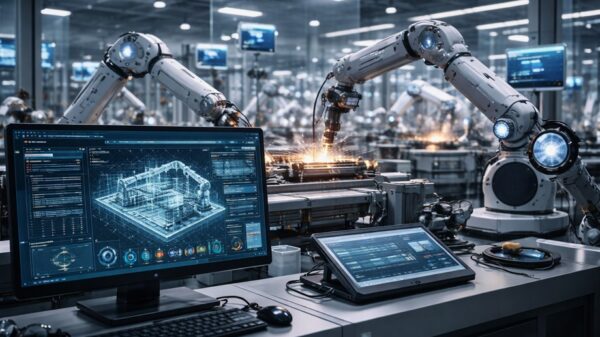
Further innovations in manufacturing include the increasing utilization of digital twin technology, which creates virtual replicas of physical systems by integrating data from sensors and IoT devices. These digital models allow engineers to simulate industrial processes, evaluate performance, and foresee potential failures before they manifest in real-world operations. Coupling machine learning with IoT-generated data enables digital twins to continuously refine their representations, facilitating predictive maintenance and optimizing maintenance schedules.
The study also examines the use of augmented reality (AR) in industrial contexts, where AR applications overlay digital information onto physical environments. This allows workers to visualize instructions and system diagnostics seamlessly. Despite potential challenges, such as hardware limitations and high costs, AR is increasingly recognized as integral to the Industry 4.0 ecosystem, especially when coupled with IoT data and machine learning analytics.
Expanding the discussion further, the editorial highlights the roles of smart manufacturing and AI-enabled agriculture, where machine learning and IoT are rapidly evolving. In smart manufacturing, IoT devices gather data from various sources, and machine learning algorithms optimize production processes, detect defects, and automate decision-making. Research indicates that intelligent manufacturing systems are transitioning from isolated automation tools to comprehensive architectures capable of managing the entire lifecycle of industrial data.
In agriculture, the concept of Artificial Intelligence of Things (AIoT) merges IoT sensing technologies with machine learning analytics to create intelligent farming systems. AIoT applications, such as smart irrigation and pest detection, have the potential to significantly enhance agricultural productivity. However, barriers to adoption persist, particularly in low-income regions with limited infrastructure. To overcome these challenges, researchers advocate for AIoT frameworks tailored to resource-constrained environments, integrating edge computing capabilities to support sustainable technological adoption.
The research identifies several cross-cutting challenges that must be navigated for the successful deployment of intelligent industrial systems, including issues of data imbalance in cybersecurity and the demand for explainable AI in safety-critical applications. Developing interpretable machine learning systems that provide transparent decision-making processes remains a critical goal for those engaged in Industry 4.0 technologies. The need for efficient deployment of machine learning models at the network edge is also emphasized, as edge computing enhances responsiveness by processing data closer to its source. These insights underscore the ongoing evolution of intelligent industrial systems and their far-reaching implications across sectors.
See also AI Study Reveals Generated Faces Indistinguishable from Real Photos, Erodes Trust in Visual Media
 Gen AI Revolutionizes Market Research, Transforming $140B Industry Dynamics
 Researchers Unlock Light-Based AI Operations for Significant Energy Efficiency Gains
 Tempus AI Reports $334M Earnings Surge, Unveils Lymphoma Research Partnership
 Iaroslav Argunov Reveals Big Data Methodology Boosting Construction Profits by Billions