















































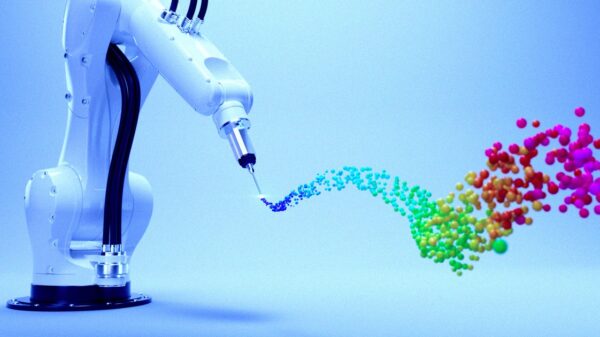

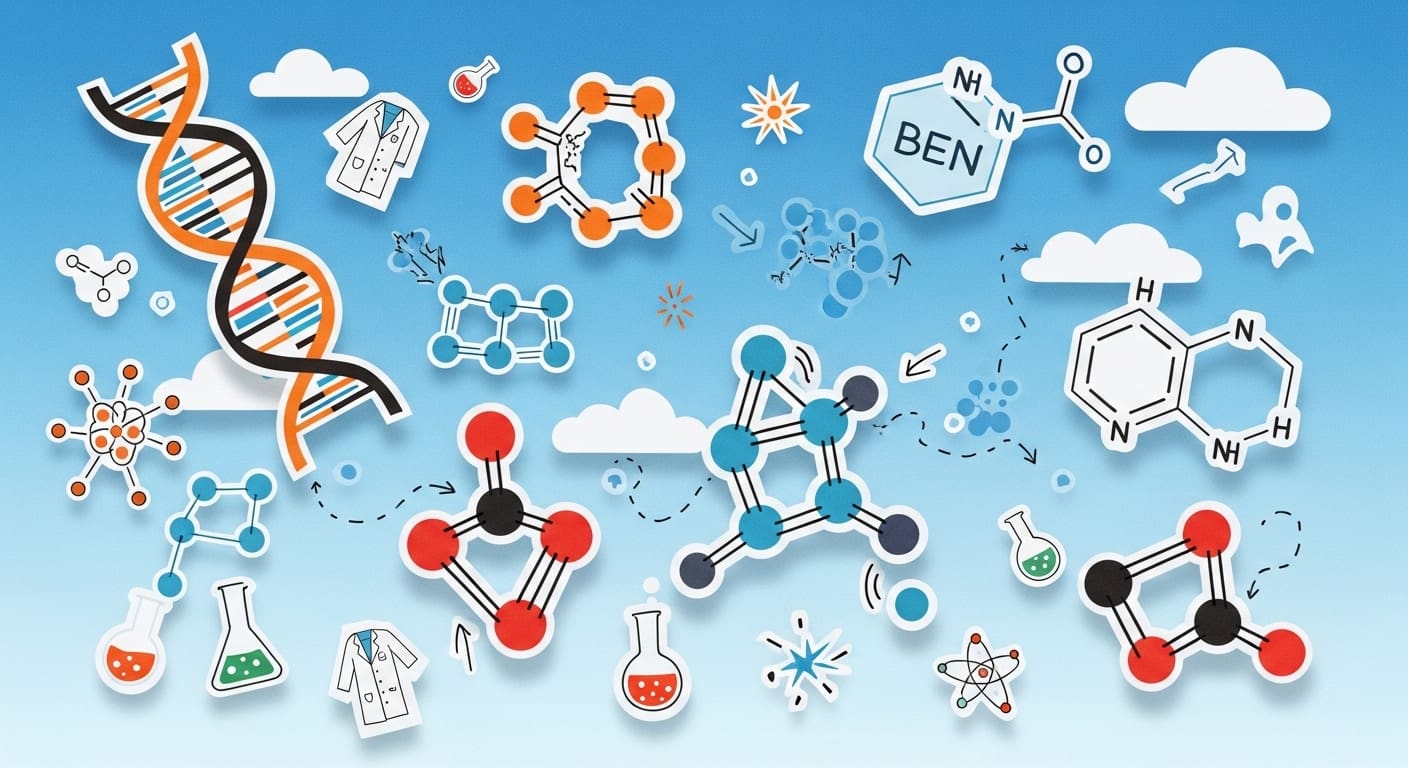
Microsoft is advancing its strategy to enhance materials science and chemical research by combining quantum computing with artificial intelligence. The tech giant aims to build on the “Jacob’s Ladder” concept—a metaphor introduced by Tulane physics professor John P. Perdew in 2001 to illustrate the increasing complexity of computational models for electron behavior. By employing quantum computers to generate precise data, Microsoft plans to train AI models on classical machines, potentially revolutionizing the speed and accuracy with which researchers can predict material properties.
This hybrid approach aspires to overcome the limitations of classical computation, which often struggles with the intricate complexities of electron interactions. By utilizing quantum computing to create highly accurate datasets, Microsoft believes it can produce AI models that operate efficiently at higher levels of computational complexity without incurring significant costs. This convergence could lead to breakthroughs in critical areas such as battery development, drug discovery, and the intricate understanding of chemical reactions.
The original concept of Jacob’s Ladder serves as a guidepost in this endeavor. Perdew’s ladder symbolizes a hierarchy of computational complexity; lower rungs represent simplified models while the higher ones yield more accurate representations of atomic interactions. Microsoft researchers propose to extend this metaphor to encompass all computational methods relating to electron behavior, making even the most complex calculations accessible through quantum computing. This hybrid system, which combines quantum accuracy with the speed of AI, may allow for the design of new materials that are both innovative and cost-effective.
Innovations in chemistry and materials science are crucial yet often go unnoticed, impacting everyday products ranging from pharmaceuticals to fuels. The potential applications of Microsoft’s approach are extensive. In fields where AI is already employed, quantum-enhanced AI holds the promise of dramatically improved outcomes, such as identifying new catalysts to combat climate change, repurposing waste plastics, or discovering advanced battery technologies.
One of the fundamental challenges in achieving accurate material simulations is electron correlation. Classical computational methods employ approximations that often trade precision for feasibility. Techniques like density functional theory (DFT) simplify electron interactions by assuming electrons exist within an averaged field created by other particles, but these methods can falter in complex systems, such as high-temperature superconductors. This limitation results in what researchers refer to as an “exponential wall,” restricting the scope of classical simulations. Quantum computing presents a potential solution, as qubits can exist in multiple states simultaneously—allowing quantum computers to simulate numerous electron configurations at once.
Microsoft envisions using this capability to accurately represent strongly correlated electron systems, where the interdependence of electrons necessitates collective calculations. However, the abundance of data generated from quantum simulations introduces new challenges. Microsoft’s proposal to integrate quantum and classical computing aims to maximize each technology’s strengths. A recent collaboration with Pacific Northwest National Laboratory (PNNL) successfully demonstrated these capabilities, where AI and high-performance computing were utilized to identify potential materials for battery electrolytes. The team evaluated over 32 million materials, ultimately identifying 800 promising candidates, showcasing the effectiveness of this hybrid approach.
“Meaningful chemistry simulations beyond the reach of classical computation will require hundreds to thousands of high-quality qubits with error rates of around 10^-15, or one error in a quadrillion operations.”
Microsoft is also focusing its artificial intelligence efforts on overcoming the inherent challenges of chemical simulation. The company views quantum computing not as a replacement for classical methods but as a means to generate precise training data for AI models. This approach not only enhances the speed of material property predictions but also allows researchers to tackle larger systems without sacrificing accuracy.
By generating data that would be cost-prohibitive to compute using classical methods, Microsoft anticipates significant breakthroughs across various scientific sectors. Quantum-enhanced AI could play a pivotal role in addressing some of the world’s most pressing challenges, from mitigating climate change to advancing personalized medicine through accelerated drug discovery. The potential applications of this technology could extend far beyond battery innovation, suggesting a wide-ranging impact across multiple disciplines.
See also“Done right, quantum-enhanced AI could start to tackle the world’s toughest challenges—from climate change to disease—years ahead of anyone’s expectations.”
 AMD Launches AI Research Lab at University of Toronto, Initiates 100 Projects in 3 Years
 Anthropic Study Reveals AI Could Replace 94% of Computer Jobs, Automation Remains Limited
 Mining Sector Embraces AI for Predictive Maintenance, Enhancing Safety and Efficiency
 AI Study Reveals Generated Faces Indistinguishable from Real Photos, Erodes Trust in Visual Media
 Gen AI Revolutionizes Market Research, Transforming $140B Industry Dynamics