Researchers at the MIT Sports Lab are harnessing the power of artificial intelligence to transform figure skating, a sport often judged by subjective visual assessments, into a data-driven discipline. By quantifying elements like jump height, rotation speed, and landing quality, the initiative aims to enhance the ways coaches, athletes, and broadcasters analyze performances. This technology promises to reveal the intricate physics behind jumps that are frequently elusive to the human eye.
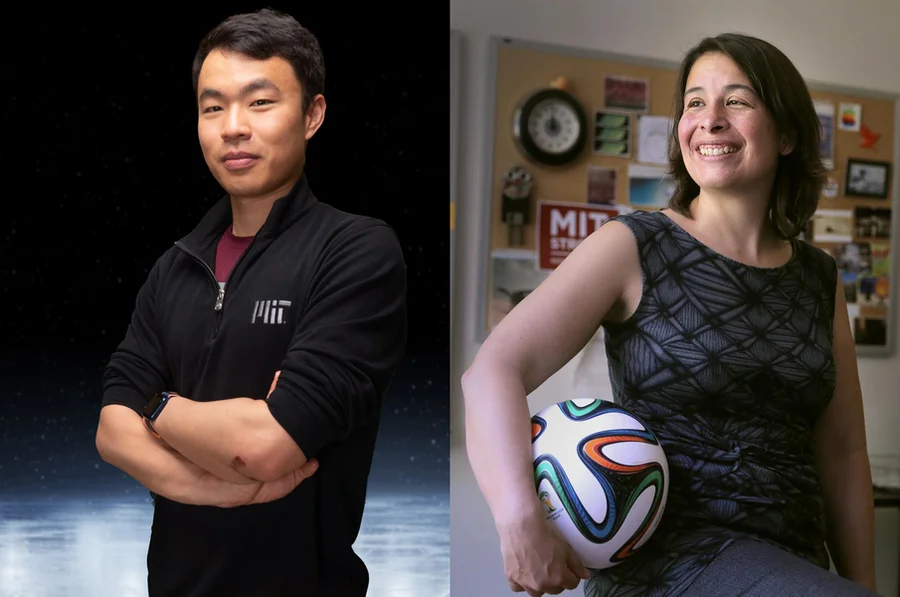
Former MIT researcher Jerry Lu has developed an AI-driven optical tracking system, named OOFSKATE, capable of analyzing standard video footage to extract crucial performance metrics. The technology benchmarks skaters’ performances against those of elite competitors, allowing for the identification of marginal gains in technical execution. Lu states, “Skaters can always keep pushing, higher, faster, stronger. OOFSkate is all about helping skaters figure out a way to rotate a little bit faster in their jumps or jump a little bit higher.”
What distinguishes OOFSkate is its ability to function with ordinary video conditions, including footage captured on smartphones. From a single video clip, it estimates the rotations a skater can physically manage and predicts potential scoring under international judging standards. This focus on technical aspects is significant; while AI techniques have progressed, they still encounter challenges with depth perception as athletes move towards or away from the camera. However, figure skating offers a unique advantage, as essential metrics like jump height and rotation count can be inferred reliably even without precise depth data.
Lu notes, “This has down-the-line impacts for AI research and companies that are developing AI models. By gaining a deeper understanding of how current state-of-the-art AI models work with these sports, and how you need to do training and fine-tuning of these models to make them work for specific sports, it helps you understand how AI needs to advance.”
In parallel, Anette “Peko” Hosoi, co-founder and faculty director of the MIT Sports Lab, is exploring whether AI can assess the artistic dimensions of figure skating. The research seeks to determine whether AI can engage with aesthetic judgments comparably to human perceptions, which vary between experts and novices. “We’re trying to understand differences between reactions from experts, novices and AI,” Hosoi explained. “Do these reactions have some common ground in where they are coming from, or is the AI coming from a different place than both the expert and the novice?”
Figure skating serves as an intriguing test case due to its formal scoring system for artistic elements, allowing comparisons between human and machine evaluations. The ongoing research aims to uncover whether AI aligns more closely with expert judges or casual onlookers, contributing to a broader understanding of how these systems interpret performance.
As the 2026 Milan–Cortina Winter Games approach, Lu plans to collaborate with NBC Sports to incorporate this data-driven perspective into the television coverage of figure skating, skiing, and snowboarding. “The goal is to make these sports more relatable,” said Lu. “Skating looks slow on television, but it’s not. Everything is supposed to look effortless. If it looks hard, you are probably going to get penalized.”
The ongoing advancements in AI technology suggest that the prospect of a skater successfully executing a quintuple jump is becoming more plausible. Hosoi expressed her conviction that it is no longer a matter of “if” but “when,” although she speculated that six rotations may be where biological limits begin to impose constraints. “I am now totally convinced it’s possible,” she stated, projecting optimism for the near future of the sport.
As AI continues to bridge the gap between perception and reality in figure skating, it is shaping how both athletes and audiences understand the sport’s intricacies. The technology not only offers a glimpse into the hidden effort behind seemingly effortless performances but also points to an exciting future where data-driven insights play a central role in athletic training and evaluation.
See also Harvard Study Reveals Employees Work Harder with AI, Risking Burnout and Fatigue
 ByteDance Launches Seedance 2.0, Revolutionizing AI Video Creation with Multimodal Inputs
 Baylor College Unveils AI Model Achieving 100% Sensitivity in Detecting Placenta Accreta Spectrum
 MIT’s J-PAL Launches Project AI Evidence to Evaluate AI Solutions Against Poverty