






















































A recent study by researchers from the University of California Berkeley’s Haas School of Business has found that when employees leverage generative AI to save time at work, they tend to increase their workload instead. Conducted from April to December 2022, the study focused on 40 workers at a tech company with 200 employees, examining changes in work habits across engineering, product, design, research, and operations.
The study, led by Aruna Ranganathan and Xingqi Maggie Ye, revealed that employees not only worked at a faster pace but also expanded their scope of tasks and increased their working hours, often voluntarily. “Importantly, the company did not mandate AI use (though it did offer enterprise subscriptions to commercially available AI tools). On their own initiative, workers did more because AI made ‘doing more’ feel possible, accessible, and in many cases intrinsically rewarding,” the researchers noted.
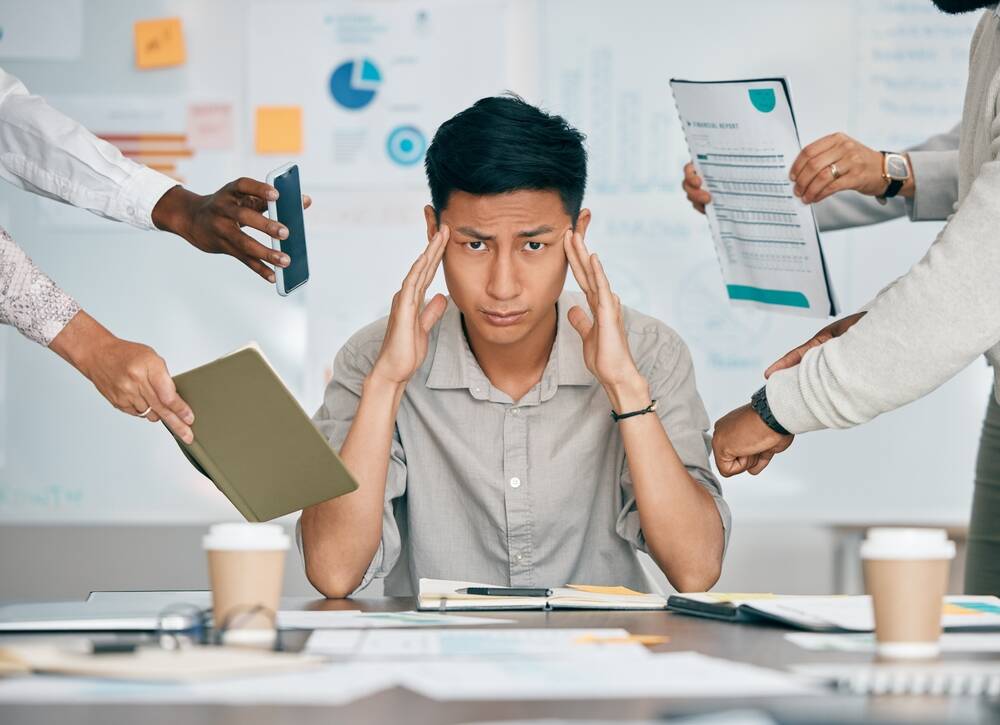
However, this surge in productivity has resulted in significant drawbacks, as employees reported feeling stretched too thin. The intensified workload encroached upon their personal time, leading to cognitive fatigue and burnout. “That workload creep can in turn lead to cognitive fatigue, burnout, and weakened decision-making,” the researchers stated. They cautioned that the initial productivity boost could ultimately result in lower quality work and higher turnover rates.
Interviews conducted during the research indicated that generative AI made it easier for employees to tackle daunting tasks, fostering a willingness to assume new responsibilities associated with other roles. This was particularly evident among engineering staff, who found themselves checking the work of novice coders and coaching team members. As tasks became easier to initiate, employees began to work during breaks, at night, and in the early morning, diminishing the natural pauses that previously punctuated their workday.
The researchers warned that the perception of increased productivity could mask a silent erosion of work-life balance and cognitive strain. “Because the extra effort is voluntary and often framed as enjoyable experimentation, it is easy for leaders to overlook how much additional load workers are carrying,” they wrote. This “silent workload creep” raises concerns about impaired judgment and error rates, ultimately leading to a more challenging work environment.
The study’s findings resonate with broader concerns about job security in the age of AI. A report from Forrester predicts that as many as 10.4 million jobs could be displaced by 2030 due to advancements in robotic process automation and generative AI. Yet, experts remain skeptical about whether these technological shifts will yield genuine productivity gains. Forrester’s vice president and principal analyst J. P. Gownder expressed doubts about AI’s potential to revolutionize workplace productivity.
In light of these findings, the Berkeley researchers suggest implementing measures to prevent employee burnout. They propose “intentional pauses” to combat the blurring of role boundaries, regulate the pace of work, and ensure that tasks remain aligned with organizational goals. “For example, a decision pause could require, before a major decision is finalized, one counterargument and one explicit link to organizational goals,” the researchers explained.
They advocate for a deliberate approach to project management, emphasizing that teams should lead AI initiatives rather than allowing AI to dictate the workflow. “By regulating the order and timing of work — rather than demanding continuous responsiveness — sequencing can help organizations preserve attention, reduce cognitive overload, and support more thoughtful decision-making in AI-forward workplaces,” the researchers added.
Moreover, fostering human interaction can mitigate the isolating effects of AI-mediated work. “As AI enables more solo, self-contained work, organizations can benefit from protecting time and space for listening and human connection,” they concluded. Short opportunities for connection, such as brief check-ins or structured dialogues, can interrupt continuous solo engagement with AI tools and help restore perspective, promoting a healthier work environment.
See also ByteDance Launches Seedance 2.0, Revolutionizing AI Video Creation with Multimodal Inputs
 Baylor College Unveils AI Model Achieving 100% Sensitivity in Detecting Placenta Accreta Spectrum
 MIT’s J-PAL Launches Project AI Evidence to Evaluate AI Solutions Against Poverty
 World Bank Study Reveals Hierarchy’s Role in AI Research Dissemination among 6,000 Employees















