













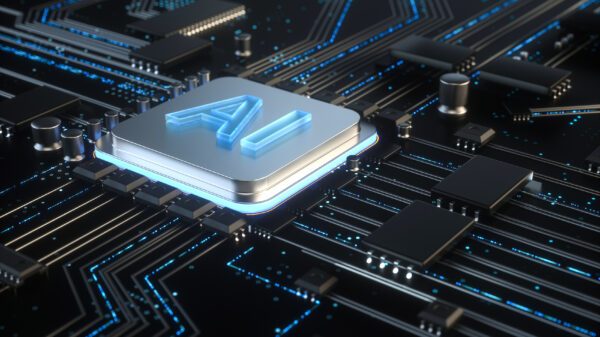

































Hangzhou, China, January 29, 2026 — Chinese semiconductor firm SpacemiT has unveiled its new K3 AI CPU, aiming to integrate the open RISC-V instruction set architecture with advanced computing capabilities tailored for intelligent terminals and edge computing. The launch, which took place on January 29, underscores the growing trend in the technology sector towards more open and customizable computing platforms as the demand for on-device artificial intelligence accelerates.
For years, the processor market has been largely dominated by x86 and Arm architectures. However, as artificial intelligence workloads increasingly migrate from centralized cloud systems to local devices, there is a marked shift towards open-source solutions. As a fully open-source architecture, RISC-V is positioning itself as a pivotal component for future computing ecosystems.
Founded in 2021 and based in Hangzhou, SpacemiT is one of the few companies in China pursuing a “pure RISC-V” strategy. The firm is focused on merging high-performance general computing with AI capabilities in a single chip, promoting what it describes as an “AI CPU” model. This approach targets hardware applications that necessitate high computing density and low power consumption, which are crucial for effective system integration.
The K3 chip represents more than 1,200 days of development and is noted for being one of the first RISC-V AI CPUs ready for mass production, compliant with the RVA23 specification. It features 1024-bit RISC-V Vector extensions (RVV) and supports native FP8 precision for AI inference. The K3 integrates eight high-performance X100 RISC-V CPU cores, operating at a maximum frequency of 2.4 GHz. According to SpacemiT, its single-core performance is comparable to Arm’s Cortex-A76.
Delivering up to 60 TOPS of AI compute, the chip supports up to 32 GB of LPDDR5 memory. SpacemiT emphasized that the K3 is designed not to compete with high-end server CPUs or GPUs but rather to facilitate local execution of medium-scale AI models and multimodal applications. The company claims the K3 can efficiently support AI models ranging from 30 to 80 billion parameters, with a typical system power consumption between 15 and 25 watts.
In terms of software, the K3 adopts a co-design approach, ensuring compatibility with mainstream AI frameworks and compilers such as Triton and TileLang, alongside major open-source AI ecosystems and Linux distributions. This design philosophy aims to lower the barriers for developers seeking to deploy AI models on RISC-V platforms, making the transition smoother than traditional architectures.
At the launch event, Chen Zhijian, founder and CEO of SpacemiT, articulated the company’s vision, stating, “We believe the long-term direction of computing architectures is a transition from closed to open systems. x86 is highly closed, Arm is semi-open, while RISC-V is fully open. In the long run, open instruction sets are more likely to become the foundation of global computing.” He also highlighted the significance of RISC-V for China’s semiconductor industry, suggesting it creates new pathways for Chinese chips to integrate into the global technology ecosystem.
The K3 chip showcases a blend of general and AI computing capabilities along with data-coherent interconnects, which Chen describes as a step towards a “next-generation AI CPU.” He argues that in the AI era, CPUs must evolve beyond mere control processors to include native AI capabilities, akin to the transformation from feature phones to smartphones.
SpacemiT’s previous-generation K1 chip has reportedly achieved shipments exceeding 150,000 units, finding applications in industrial control systems, robotics, edge computing platforms, and open-source intelligent hardware. This commercial groundwork positions SpacemiT for a successful rollout of the K3, which has already garnered initial orders with deliveries set to begin at the end of April 2026.
The company continues to promote a “full-stack RISC-V” strategy, encompassing CPU intellectual property, chip design, operating systems, compilers, AI software stacks, and development platforms. The K3 supports various operating systems, including Ubuntu, OpenHarmony, and OpenKylin. Additionally, SpacemiT plans to launch supporting products such as PICO-ITX single-board computers, robot core boards, and array server platforms, while also providing hardware reference designs for developers and system integrators.
As Hangzhou emerges as a significant hub for AI, semiconductor, and open-source technology innovation in China, industry analysts note that a new generation of Chinese tech companies is gaining traction, enhancing the country’s footprint in advanced hard-tech sectors. Although the RISC-V architecture still trails behind x86 and Arm in high-end computing and software ecosystem maturity, SpacemiT remains focused on establishing a competitive edge in the mid-range computing market. “Our goal is not to confront global giants head-on,” Chen stated. “Instead, we aim to establish differentiated advantages in the mid-range computing segment, using lower power consumption, higher integration, and better cost efficiency to make AI computing accessible to more devices.”
As the industry continues to shift artificial intelligence from centralized platforms to localized environments, factors such as power efficiency, system integration, and open ecosystems are becoming essential competitive differentiators. The launch of the K3 represents a significant advancement by China’s RISC-V community in merging open-source architectures with AI computing, reflecting a broader ambition to forge new technological pathways in the global computing landscape.
See also Professor Zhang Wenhong Warns Against AI in Hospital Diagnostics, Citing Training Risks
 India Announces $70 Billion AI Mission 2.0 to Expand National AI Infrastructure
 AI Innovations Support Ukraine’s Education Amid Ongoing War Crisis
 PaleBlueDot AI Secures $150M Series B, Surpassing $1B Valuation for Global AI Compute Expansion
 NVIDIA and TSMC Stocks Surge Over 59% on Strong AI Demand and Eased Trade Tensions