













































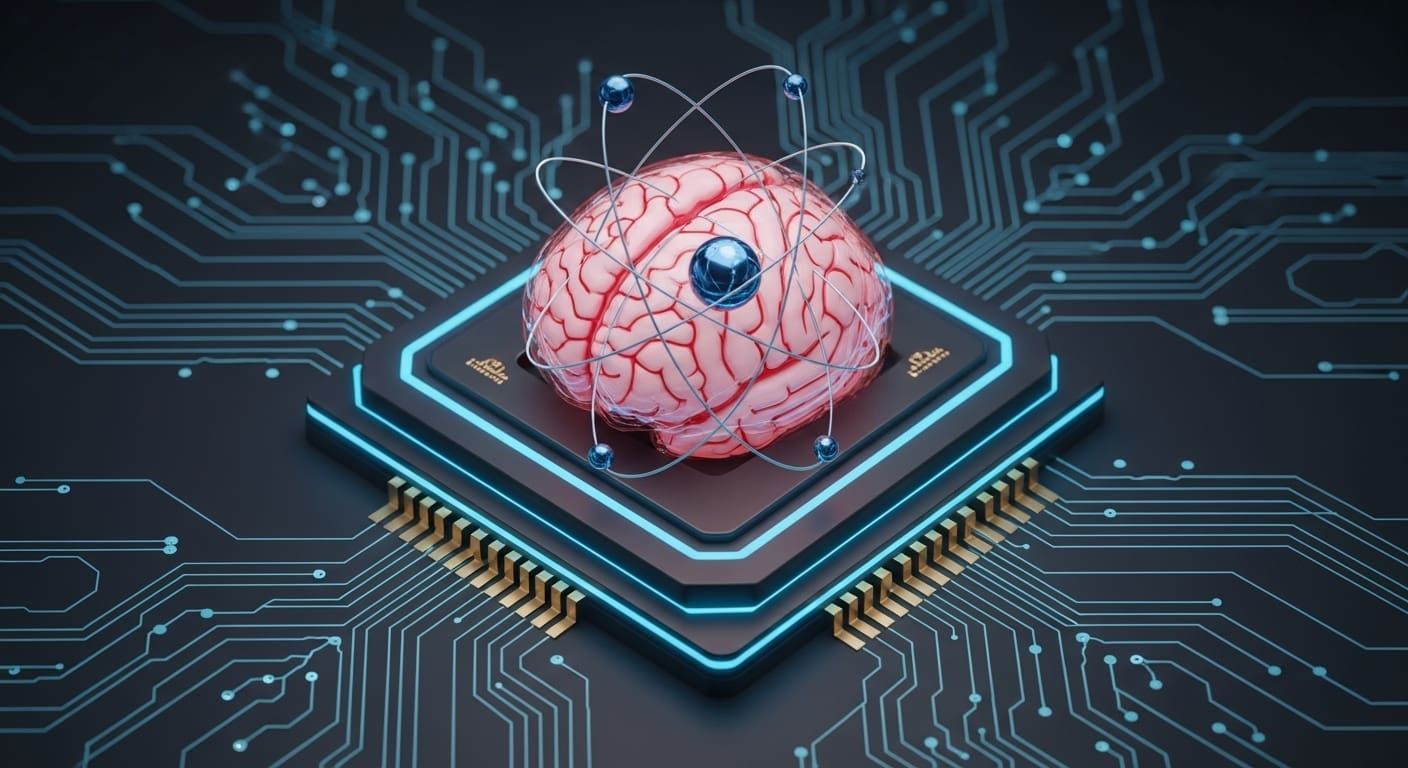
A collaboration between researchers at TU Wien, alongside teams from the USA and Switzerland, has led to a significant breakthrough in particle physics by enhancing the simulation of quantum field theories. These theories are crucial for understanding particle interactions and behaviors but often require computational simulations that exceed traditional calculation methods. The team has successfully utilized artificial intelligence to determine the most efficient way to represent these complex theories on a computational grid, effectively a four-dimensional lattice that simulates both space and time. “If we want to work with quantum field theories on a computer, we have to discretize them,” explained David Müller from the Institute for Theoretical Physics at TU Wien, underscoring the need for precise modeling applicable to phenomena ranging from particle collisions at CERN to the universe’s earliest moments.
Simulating quantum field theories relies on innovative computational strategies, and the recent advancements at TU Wien highlight the role of artificial intelligence in optimizing lattice formulations. Researchers have long recognized that multiple formulations can produce the same physical results but differ widely in computational efficiency. Identifying the most effective formulation has been an ongoing challenge for decades. The four-dimensional lattice constructed by the team is pivotal for accurately representing continuous quantum phenomena. Notably, they concentrated on “fixed-point equations,” which retain consistency across varying lattice resolutions. “There are certain formulations of quantum field theory on a lattice that have a particularly nice property,” noted Urs Wenger from the University of Bern. “They ensure that certain properties remain the same, even if we make the lattice coarser or finer.”
Past efforts to refine these lattice formulations faced significant hurdles due to the vast number of parameters involved, often reaching into the hundreds of thousands. “Many people began exploring these concepts three decades ago, but back then, we simply didn’t have the technical means,” stated Kieran Holland from the University of the Pacific. The team developed a specialized neural network tailored to adhere to established physical laws, successfully parameterizing the ‘action’—a fundamental concept in quantum field theory—on the lattice. “We were able to show that this approach opens up a completely new way to simulate complex quantum field theories with manageable computational effort,” asserted Andreas Ipp from TU Wien. The resulting simulations demonstrate remarkably low error rates, even when utilizing coarser lattices, indicating a significant reduction in computational demands.
The longstanding obstacle of optimizing computer simulations of quantum field theories is now yielding to advances in artificial intelligence, as evidenced by this collaborative effort. The process requires the representation of continuous space and time as a discrete four-dimensional lattice, where each point interacts according to the principles of quantum field theory. With various lattice formulations available, the newly developed AI emphasizes “fixed-point equations” that guarantee consistent results irrespective of grid resolution. This ensures that essential properties of the theories remain reliable across different scales, akin to a map preserving key geographical features regardless of the zoom level. Importantly, this AI system is not a generic model; it is specifically designed to comply with established physical laws.
In summary, the ability to leverage fixed-point equations for scale-independent results marks a crucial advancement in quantum field theory simulations. Achieving accurate results hinges on selecting the optimal lattice formulation, a task now significantly augmented by artificial intelligence. This development not only promises to make simulations more efficient but also enhances the confidence researchers can place in their findings. As the field of particle physics continues to evolve, this breakthrough may lead to deeper insights into fundamental questions concerning the nature of the universe, paving the way for future explorations of both theoretical and experimental physics.
See also Micron Invests $24B in AI Memory Expansion, Driving Stock Surge and Job Growth
 UK Firms Cut Jobs Amid 11.5% Productivity Boost from AI; Unemployment Hits Four-Year High
 Yahoo Launches Scout, an AI Answer Engine Featuring Up to 9 Visible Sources
 Ambarella Launches DevZone, Pioneers 4nm AI Silicon for Edge Computing Revolution