











































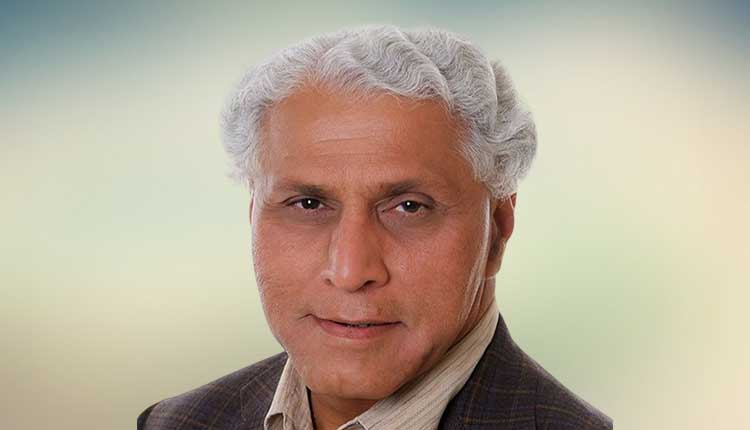
Washington: Artificial intelligence (AI) is evolving at a pace that could significantly shape economic growth, geopolitical dynamics, and social stability in the coming years, according to technology entrepreneur Romesh Wadhwani. Speaking at a major conference hosted by the Center for Strategic and International Studies (CSIS) ahead of India’s upcoming AI Impact Summit, Wadhwani highlighted that AI is transitioning into a new era characterized by autonomous “AI agents” that can plan, execute, and learn with minimal human oversight.
“What was breakthrough technology three years ago now seems quaint,” Wadhwani remarked, referencing early generative AI tools. He emphasized that the global landscape is shifting toward AI agents that are increasingly capable of augmenting, replacing, and ultimately surpassing human workers.
While fewer than 5 million AI agents were operational in 2025, Wadhwani projected a compound annual growth of more than 200 percent over the next five years. He anticipates that these AI agents will soon work autonomously, taking over numerous tasks and even managing entire business processes.
“This is not a 50-year vision,” he asserted. “This is a five-year vision.” He pointed out that the rapid advancement of AI technology is outpacing government regulatory efforts, drawing parallels to the lengthy timeline between the invention of the telephone and the establishment of a coherent U.S. telecommunications policy.
The implications of AI policy stretch across five key dimensions: geopolitics and national security, economic growth, business competitiveness, innovation speed, and social stability. “AI policy will determine winners and losers,” he warned.
Wadhwani compared the global approaches to AI regulation, noting that the United States leans toward light-touch regulation and innovation leadership, while Europe is focusing on regulation through its AI Act. In contrast, China is pursuing mandatory AI adoption under strict political control. He characterized India’s strategy as primarily aimed at economic growth and large-scale deployment of AI technologies.
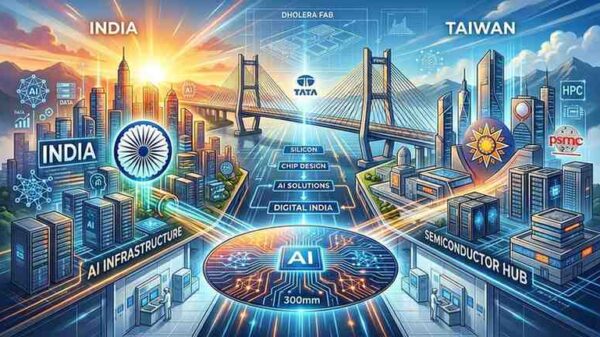
“I think of India as the land of practical innovation using AI,” Wadhwani stated, highlighting the country’s emphasis on application over capital-intensive frontier models. He noted that India is also undertaking massive reskilling initiatives while maintaining relatively limited regulation. His vision is for India to emerge as one of the world’s top three AI powers, following the United States and China.
Wadhwani projected that AI could contribute between $1 trillion and $1.5 trillion to India’s GDP over the next five years, potentially generating tens of millions of new jobs, even as automation displaces others. This growth underscores the importance of effective AI policy in shaping economic trajectories.
The upcoming AI Impact Summit in India is set to reflect a shift in global AI discussions towards implementation and developmental outcomes, particularly pertinent for the Global South. Wadhwani’s insights indicate that the future landscape of AI will demand agile policy frameworks to keep pace with technological advancements, thus influencing the broader economic and social fabric of nations.
See also Nvidia Aids DeepSeek in Developing AI Models for Chinese Military, Lawmaker Reveals
 NASA’s Perseverance Rover Executes First AI-Driven Mars Drives Using Claude Model
 Wild Tech Unveils 2026 Growth Strategy with AI-Driven Solutions for Construction and Manufacturing
 IFSA Global EXPO 2026 Launches in Dallas with New Experiences and Networking Opportunities
 SpaceX Proposes One Million Solar-Powered Satellites for AI Data Processing in Orbit