
















































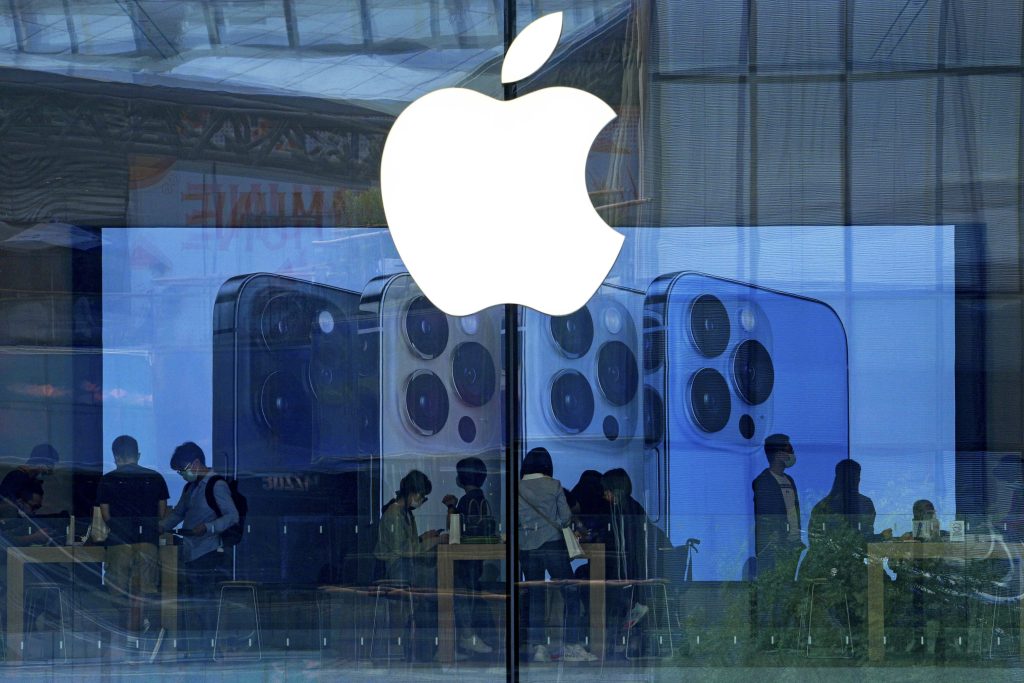
Apple’s stock run met a sudden stop on Thursday, February 12, 2026, as investor confidence faltered amid allegations of censorship, regulatory scrutiny, delays in Siri integration, and escalating concerns about artificial intelligence (AI) spending. The culmination of these factors led to a sharp decline of over 5% in Apple’s share price, reflecting a broader market wariness towards mega-cap technology stocks.
The decline was triggered not by a poor earnings report or product failure, but rather by a political controversy. The Federal Trade Commission (FTC) issued a warning letter to Apple regarding its Apple News platform, indicating potential political bias. FTC Chair Andrew Ferguson called for CEO Tim Cook to investigate claims that Apple News is promoting left-leaning content while censoring conservative outlets. In a letter shared on social media, Ferguson stated there have been reports of systematic bias within the app, raising concerns about regulatory and reputational risks for Apple.
At a time when technology firms are under increased scrutiny, the accusations add a new layer of political sensitivity, particularly for a company that has historically maintained a stance above partisan disputes. The situation is compounded by the ongoing delays in the much-anticipated Siri upgrade, with the launch of Siri 2.0 now expected in May 2026, followed by further enhancements in September. Experts suggest that this gradual rollout may leave both investors and consumers disappointed.
Institutional investors have begun to trim their stakes in Apple, reflecting a cautious sentiment in the market. According to recent disclosures, several institutions have reduced their exposure, including NBT Bank, which cut its position by 5.3%. Others, like Campbell & Co., have significantly scaled back their investments, with a reported reduction of approximately 70.6%, while Gamco also decreased its holdings.
While some of these moves may stem from routine portfolio rebalancing, the timing underscores a growing unease among investors. Apple’s valuation, which had previously soared after a period of outperformance, leaves little margin for error amid unexpected controversies or execution missteps.
From a technical standpoint, Apple’s stock has fallen below its 50-day and 100-day simple moving averages during the late 2025 tech selloff, though it managed to hold above the $240 level with support from the 200-day moving average. As of late January, the stock surged above $280, yet investor caution led to a pullback earlier this week as concerns about rising AI spending costs emerged, dropping the stock back down to approximately $260.
Despite the turmoil, Apple continues to return capital to shareholders with a quarterly dividend of $0.26 per share, yielding approximately 0.38%. However, the modest yield offers limited downside protection in a volatile environment, particularly for UK investors facing additional currency risks and potential withholding taxes.
Apple’s ambitious push into AI has also drawn scrutiny. CEO Tim Cook has characterized AI as “one of the most profound opportunities of our lifetime,” with the company embedding AI technologies across its product ecosystem. The acquisition of Israeli startup Q.ai, which specializes in facial movement interpretation, signifies Apple’s commitment to AI, albeit at the cost of increased research and development expenses.
Investors are increasingly questioning the pace and magnitude of AI-related investments across the tech sector, as the capital intensity required for such initiatives raises concerns about profit margins and the timeline for realizing returns. Critics argue that current consumer demand does not justify the heightened investment in AI, thereby questioning the long-term viability of some applications.
Ironically, Apple’s financial performance remains robust, with a reported 16% year-over-year revenue increase to $143.8 billion, exceeding expectations. Earnings per share reached $2.84, while net income climbed to $42.1 billion. The iPhone continues to be a revenue cornerstone, generating record earnings of $85.3 billion, up over 20% from the previous year.
Nonetheless, in today’s market, strong historical performance is often overshadowed by forward-looking concerns. Investors are hyper-focused on capital allocation, regulatory risks, and the ability to execute strategic initiatives effectively. Favorable policy shifts in India, allowing foreign companies to supply machinery without immediate tax liabilities, bolster Apple’s supply-chain diversification strategy but do little to alleviate pressing regulatory and financial pressures.
The investment climate has shifted, with markets less willing to reward growth narratives without clear evidence of returns. Companies engaging in large-scale AI investments are increasingly held to higher standards of capital discipline. While Apple’s proven track record offers some reassurance, the convergence of political allegations, regulatory scrutiny, and rising AI costs has created a precarious sentiment among investors.
The 5% drop in Apple’s stock highlights the rapid erosion of confidence, raising questions about whether this is a temporary setback or a precursor to deeper corrections. The company’s ability to navigate regulatory challenges and justify its AI spending will be crucial in determining its market trajectory in the coming months.
For more information, visit Apple’s official website.
See also Microsoft AI Chief Confirms Plan to Ditch OpenAI Models, Shift to Own Tech by 2026
 Nvidia DGX Spark Update Cuts Idle Power by 32%, Boosts AI Workstation Efficiency
 Fashion Industry Leverages AI to Slash Costs and Boost Productivity by 2026
 SAP and Cohere Launch Sovereign AI Solutions in Canada for Secure Data Management
 Hollywood Stars Unite Against AI: Johansson, Blanchett, Cage, Jackson, Lyonne Fight for Creative Rights