




















































SCHAFFHAUSEN, Switzerland, January 05, 2026–Aptiv PLC (NYSE: APTV), a global industrial technology company, is showcasing its advanced intelligent edge solutions at CES 2026, emphasizing their capacity to enable devices to sense, think, and act in real time. This innovative approach is pivotal in optimizing performance across the lifecycle of various applications, including transportation, robotics, and aerospace.
By processing data at the edge rather than relying solely on centralized cloud systems, Aptiv’s solutions promise faster response times and enhanced optimization at the system level. “At CES 2026, we’re demonstrating how Aptiv enables real-time perception, decision-making, and actuation—transforming how vehicles and other intelligent, connected devices deliver safer, more adaptive, and smarter experiences,” stated Javed Khan, Executive Vice President and President of Intelligent Systems at Aptiv. He highlighted the company’s commitment to leveraging proven technologies already implemented in millions of vehicles to enhance other critical applications.
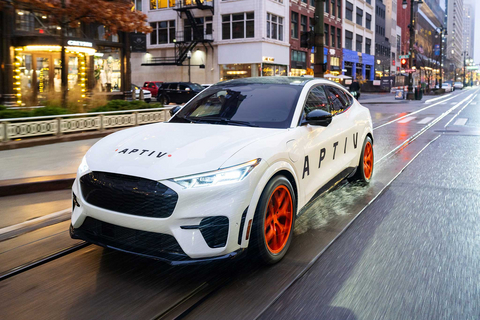
In the automotive segment, Aptiv is presenting its next-generation end-to-end (E2E) AI-powered Advanced Driver Assistance Systems (ADAS) platform. This platform is designed to provide safer, more human-like driving experiences and enhance hands-free (L2++) autonomy in both urban and highway environments. Utilizing AI for perception, fusion, and behavior planning, the system continuously learns from real-world driving data, allowing for ongoing improvements.
Central to this offering are Aptiv’s newly launched Gen 8 radars, which deliver leading range, resolution, and object detection capabilities under all conditions. Coupled with advanced machine learning algorithms, these radars are expected to provide robust driving solutions across diverse scenarios. Additionally, the Aptiv PULSE™ sensor integrates surround-view cameras with ultra-short-range radar, ensuring seamless 360° perception to assist drivers and automated systems in navigating safely, irrespective of weather or lighting conditions.
At the exhibition, Aptiv is unveiling its latest Digital Cockpit technologies, aimed at enhancing safety and the in-cabin experience for both passenger and commercial vehicles. These innovations leverage Aptiv’s unique expertise in user experience, ADAS, and middleware, allowing vehicles to actively engage with drivers during hands-free driving. The technologies keep drivers informed and ready to take control when necessary, while enabling Original Equipment Manufacturers (OEMs) to deliver innovative and personalized experiences.
Aptiv’s Driver Monitoring System (DMS) and Cabin Monitoring System (CMS) utilize advanced vision and radar sensing to assess occupancy status, facilitating smarter, safety-critical decisions within vehicles. The CMS aims to replace traditional seat-based occupant detection with vision-based sensing, thus reducing complexity and costs while enhancing reconfigurability to meet rigorous safety standards. A virtual synthetic data environment further accelerates development, generating scalable, realistic datasets that train AI-powered systems.
The quest for greater personalization is met through Aptiv’s Cockpit Sound Suite, Face ID, and other modular software features, all built on the Aptiv Android Automotive Framework. These systems deliver dynamic audio experiences and ensure critical alerts are directed to the appropriate occupant without disturbing others. Face ID supports user profiles, adjusting vehicle settings like mirrors and ADAS sensitivity, thereby minimizing distractions.
Aptiv’s collaboration with Verizon will also be spotlighted, particularly in exploring the potential of Cellular Vehicle-to-Everything (C-V2X) technology, which integrates 5G connectivity, edge computing, and automotive innovation to enhance road safety. The new Aptiv LINC™ Software Platform, powered by Aptiv’s cloud-native framework and featuring Wind River technology, exemplifies high-speed, low-latency communication capabilities essential for safer mobility ecosystems. This includes sharing data about vulnerable road users between vehicles, enhancing overall situational awareness.
Beyond automotive solutions, Aptiv’s CES 2026 pavilion will showcase technologies for various robotics and aerospace applications, including an AI-powered collaborative robot and advanced Autonomous Mobile Robots for scalable material handling. These innovations integrate Aptiv’s award-winning PULSE sensor, underscoring the company’s commitment to mission-critical applications across multiple industries.
Aptiv will conduct two speaking engagements at CES 2026 in Las Vegas, focusing on the transformative potential of edge computing and its implications for the automotive and aerospace sectors. The discussions aim to shed light on how emerging technologies are reshaping mobility and connectivity standards.
As Aptiv continues to lead in developing intelligent edge solutions, its commitment to enhancing safety, performance, and user experiences across various sectors remains steadfast. This initiative not only supports the future of mobility but also sets a benchmark for innovation across industries. For further details on Aptiv’s offerings, please visit Aptiv’s newsroom.
See also University of Toronto Launches $20M Hinton AI Chair Backed by Google
 Good Tokens Expands Blockchain and AI Solutions to Enhance Global Humanitarian Impact
 Deepfake Crisis: Tech Giants’ Failures Allow AI Doppelgangers to Thrive—Varoufakis Warns
 Meta’s AI Lab Loses VP Jitendra Malik as Leadership Exodus Intensifies Amid Strategy Shift
 Tuba Joins NVIDIA Inception to Transform AI-Driven Healthcare Benefits Management