






















































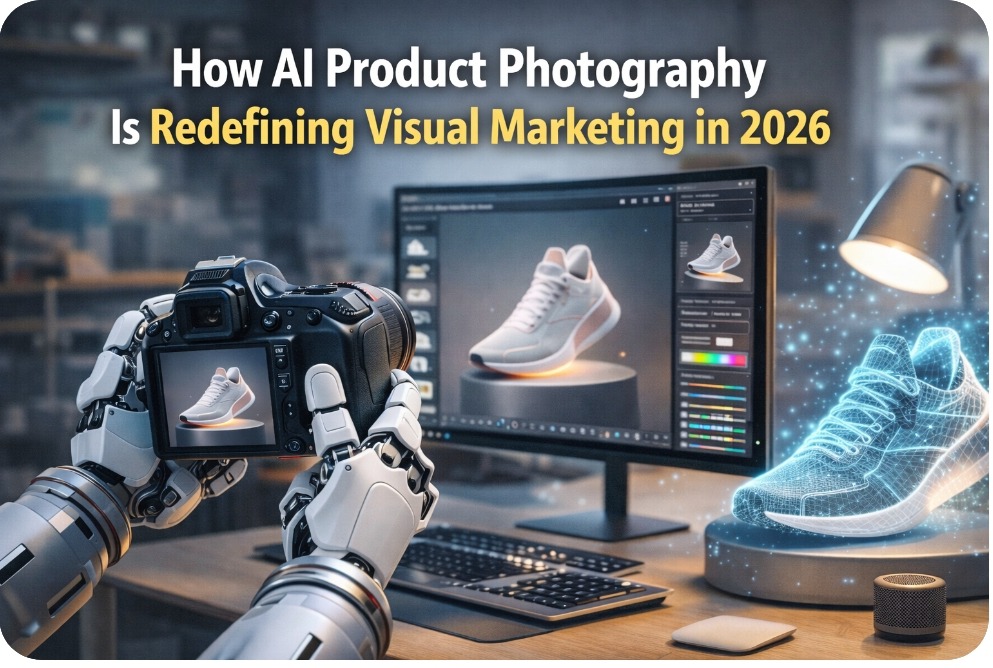
In 2026, visual marketing has evolved beyond mere aesthetics, becoming essential for speed, scalability, personalization, and performance. As ecommerce continues to reshape the global retail landscape, brands face increasing pressure to produce high-quality product visuals specifically tailored for various platforms while managing costs. Traditional photography, while still valuable, often lacks the agility needed to fulfill the demands of modern digital commerce.
This backdrop has paved the way for the adoption of AI product photography, a transformative solution that combines artificial intelligence with advanced image generation and editing technologies. This shift is redefining how businesses create, optimize, and deploy visual content across digital channels, yielding faster production cycles, reduced costs, highly customized visuals, and enhanced customer engagement.
Visual content has long played a pivotal role in consumer decision-making. From catalog photography to glossy magazine spreads and online galleries, imagery shapes perception and trust. However, the digital era has significantly increased the demand for visual content. Brands today require product images for ecommerce listings, lifestyle visuals for social media, optimized images for marketplaces, and mobile-friendly content, all while managing rapid changes in trends and promotions.
Producing such content through traditional studio photography can be time-consuming and costly, often requiring weeks to coordinate shoots, rent equipment, and manage post-production. In contrast, AI product photography can generate studio-quality images in a fraction of the time, often eliminating the need for physical shoots altogether.
Speed as a Competitive Advantage
In fast-paced markets, speed is critical. Companies that can rapidly adapt to shifting trends and seasonal promotions gain a competitive edge. AI-driven product visuals enable businesses to launch new imagery instantly, update backgrounds digitally, create variations for A/B testing, and localize campaigns without the need for reshoots. For instance, a footwear brand can showcase its products in various environments—from urban streets to beach settings—without physically moving the items, significantly reducing time to market.
Cost efficiency is another advantage of AI-enhanced image creation. While professional photography necessitates substantial investment in studio rentals, equipment, models, and editing, AI automation reduces these costs by enabling brands to upload base images and generate multiple professional-quality variations virtually. This technological advancement particularly benefits small and medium-sized businesses, granting access to high-quality visual marketing previously reserved for larger enterprises with hefty budgets.
The democratization of visual marketing reshapes the competitive landscape, allowing startups and independent sellers to thrive. Furthermore, hyper-personalization has emerged as a key trend; consumers now expect content tailored to their preferences and demographics. AI-powered tools facilitate the dynamic generation of personalized visuals, enabling regional variations, seasonal adjustments, and demographic-specific imagery. Such customization would be nearly impossible with traditional photography alone.
High-quality product imagery has a direct correlation with purchasing decisions, as customers cannot physically interact with products online. AI-enhanced visuals can improve lighting and clarity, remove distractions, enhance product details, and generate realistic lifestyle contexts. Well-crafted visuals that demonstrate how a product fits into a consumer’s life can lead to higher conversion rates, making visual optimization a central component of ecommerce growth strategies.
Modern brands operate across numerous digital touchpoints, including websites, social media platforms, and email campaigns, each requiring distinct image formats. AI tools streamline resizing and adaptation for these various channels without compromising visual quality. This consistency strengthens brand identity while ensuring that content remains optimized for its specific environment.
Moreover, sustainability continues to influence both consumer and corporate decisions. Traditional photography often results in waste through shipping, set construction, and production materials. AI-driven image generation reduces environmental impact, as virtual backgrounds replace physical props, minimizing the need for reshoots and physical resources. Brands prioritizing sustainable marketing practices can incorporate AI product photography into their environmental responsibility initiatives.
As AI-powered tools offer creative flexibility, brands are no longer constrained by traditional studio limitations, allowing them to experiment with exotic landscapes, futuristic settings, and seasonal backdrops. This newfound freedom encourages innovation and storytelling that enhances brand identity beyond standard catalog imagery.
As AI technology evolves, it will likely integrate with augmented reality and immersive ecommerce experiences. Anticipated advancements include real-time image generation based on user interaction and AI-driven styling suggestions. Brands that embrace AI product photography early will likely stay ahead of competitors relying solely on conventional methods.
The shift towards AI in visual marketing is not about replacing creativity; it augments it, allowing creative professionals to focus on strategy and storytelling rather than repetitive tasks. As ecommerce and digital marketing continue to grow, integrating AI-driven image generation into marketing strategies is essential. Companies that adopt this technology thoughtfully will enhance operational efficiency, elevate brand storytelling, and improve customer engagement.
See also Media87 Achieves Top Digital Marketing Agency Status for 2026, Excels in Local SEO
 AI Marketing Revolution: Cognitive Personalization Enhances Real-Time Consumer Engagement
 Text-to-Video AI Market Projected to Reach $685.8M by 2026; Key Trends Revealed
 AI-Driven Email Marketing Approaches Individualized Engagement But Faces Implementation Gaps
 SAP Rebrands Emarsys to Engagement Cloud, Joins Trusted Tech Alliance for AI Ethics















