



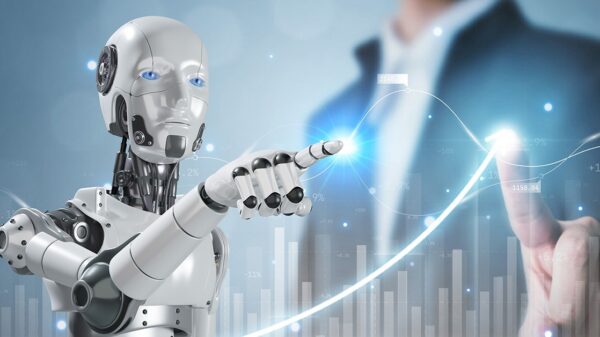






































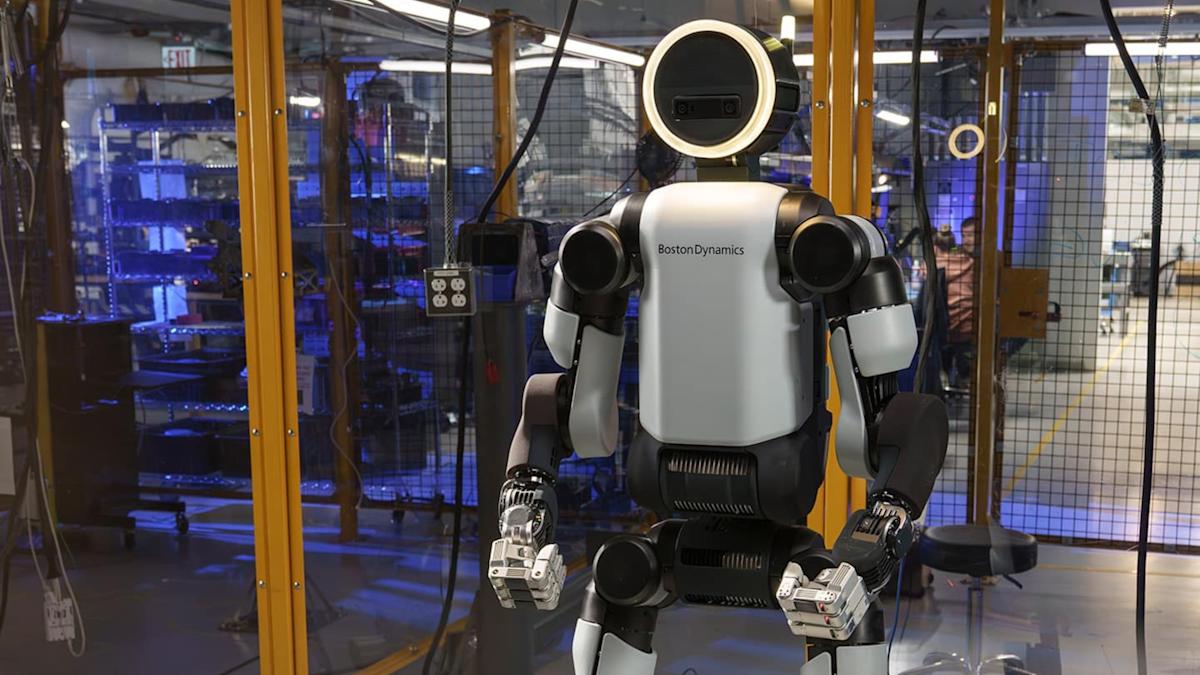
Boston Dynamics has announced that its humanoid robot, Atlas, is finally entering production, marking a significant milestone in robotics. The announcement was made at CES 2026, where the company revealed that the final version of Atlas is currently being built. Initial deployments will be made to Hyundai, Boston Dynamics’ majority shareholder, and Google DeepMind, which will serve as the company’s new AI partner.
According to Boston Dynamics, this enterprise version of Atlas is engineered to perform a wide array of industrial tasks, emphasizing consistency and reliability. Atlas is capable of operating autonomously, through a teleoperator, or via a “tablet steering interface.” The robot boasts a reach of up to 7.5 feet and can lift weights of up to 110 pounds. Designed to function in a broad range of environments, it can operate in temperatures from -4 to 104 degrees Fahrenheit. “This is the best robot we have ever built,” stated Robert Playter, CEO of Boston Dynamics. “Atlas is going to revolutionize the way industry works, and it marks the first step toward a long-term goal we have dreamed about since we were children.”
Boston Dynamics has been publicly showcasing its humanoid robots since at least 2011, when Atlas was first introduced as a project for DARPA. Since then, the robot has undergone numerous revisions, most notably transitioning from a hydraulic design to an all-electric configuration in 2024. That same year, the company demonstrated Atlas’s ability to manipulate car parts, indicating one of the initial applications for the robot in industrial settings.
Hyundai has plans to utilize Atlas in its car plants starting in 2028, primarily focusing on tasks such as parts sequencing. The car manufacturer anticipates that by 2030, Atlas’s role will expand to include component assembly and eventually tackle more complex operations involving repetitive motions and heavy loads. Meanwhile, Google DeepMind is set to work on integrating its Gemini Robotics AI foundation models into the Atlas system, enhancing the robot’s capabilities.
As Boston Dynamics transitions Atlas from concept to production, the implications for the future of automation in various industries seem significant. The combination of advanced robotics and AI integration could set a new standard for efficiency and capability in manufacturing and other sectors. With Atlas expected to redefine how industries function, the robot’s rollout could be a pivotal moment in the ongoing evolution of robotics.
See also Google and Character.AI Settle Landmark Lawsuit Over Teen’s Suicide Linked to Chatbot
 China and Singapore: Divergent AI Impacts on Labor Markets Reveal Urgent Trends
 Rokid Launches AI Glasses Style: Screenless, Lightweight, and $80 Cheaper than Meta’s Ray-Bans
 Vanessa Larco Forecasts 2026 Consumer AI Surge; M&A Activity and Niche Opportunities Ahead
 Anthropic’s Daniela Amodei Reveals AI Lacks Human-Like Reasoning Despite Progress