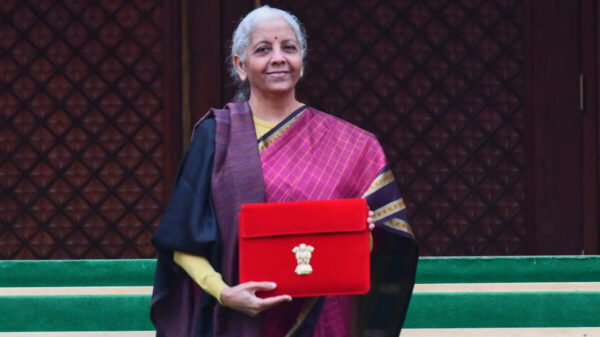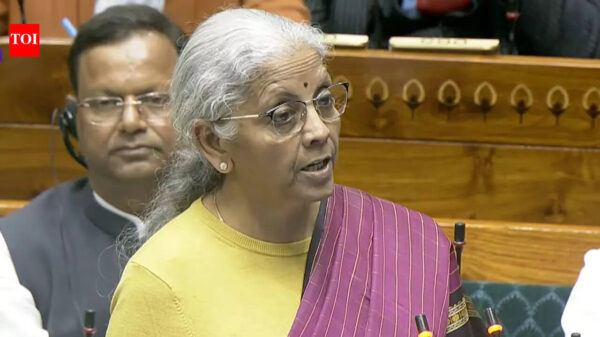
















































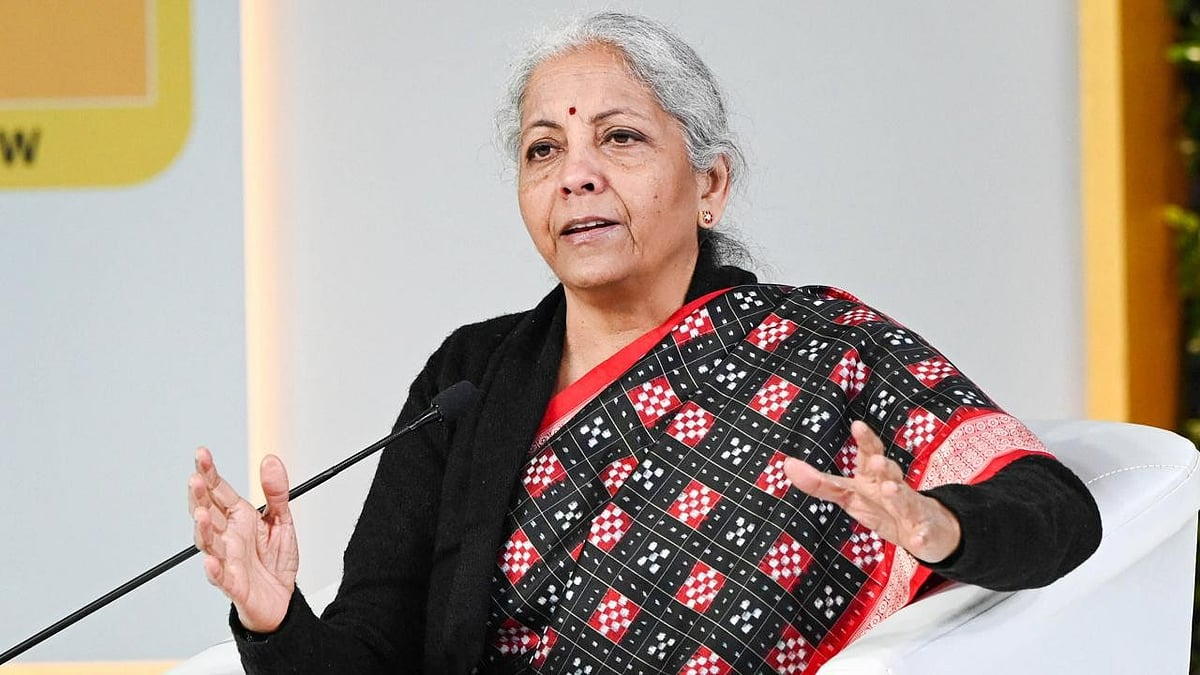
Budget 2026: As the countdown begins to Finance Minister Nirmala Sitharaman‘s presentation of the Union Budget for the financial year 2026-27 (FY27), the recent Economic Survey, drafted by her Chief Economic Advisor, calls for a robust focus on long-term reforms over “quick fixes to visible, short-term pressures.” Scheduled for February 1, the Budget is poised to outline a comprehensive strategy for addressing various economic challenges. Taxpayers and analysts alike are closely monitoring potential measures aimed at bolstering growth, with industry leaders advocating for targeted incentives in sectors such as deep-tech, commercial real estate, semiconductors, artificial intelligence, and renewable energy.
In the lead-up to the Budget, voices from the deep-tech community are expressing a strong desire for increased financial support. Ankur Shrivastava, Founder and Managing Partner at Momentum Capital, emphasized the need for significant backing, particularly for innovations in climate and health-tech. He pointed out that the current non-dilutive grants of INR 10–50 lakh are inadequate for substantial scientific breakthroughs, suggesting that enhanced grants similar to the Department of Science and Technology (DST) model, along with credit guarantees, are vital for de-risking hardware innovation.
Similarly, the renewable energy sector is urging the government to address critical infrastructure gaps as India aims for a target of 500 GW by 2030. Saurabh Kumar, Vice President at the Global Energy Alliance for People and Planet (GEAPP) India, highlighted the importance of focusing on Battery Energy Storage Systems (BESS), which are essential for integrating storage with renewable sources to ensure a reliable power supply. He insisted that support for digitization, grid-balancing technologies, and decentralized renewable solutions is crucial for establishing a resilient clean energy ecosystem.
The tech industry is also seeking incentives to enhance artificial intelligence (AI) adoption. Annie Banik, Co-Founder and CEO of SmartWinnr, noted that targeted incentives for research, skills development, and responsible deployment of AI can significantly boost job creation and productivity across various sectors. She advocated for a balanced approach that promotes innovation while maintaining public trust, emphasizing the necessity for clear data privacy and ethical AI regulations to sustain investor confidence.
As the conversation surrounding AI continues, the HR-tech sector is also pushing for a more progressive Budget. Anish Singh, Co-founder of All Things People (ATP), stated that policy support for AI-led skilling and workforce innovation is vital as the nature of work evolves. He argued for the formal integration of gig and project-based workers into social security frameworks to enhance employment opportunities across sectors.
As the nation prepares for Sitharaman’s ninth consecutive Union Budget presentation, the significance of understanding budget-related terminology cannot be understated. Key terms such as Capital Expenditure, Fiscal Deficit, and Revenue Receipts will provide insights into government funding strategies. The Budget’s formulation involves extensive consultations across ministries and stakeholders, culminating in the traditional Halwa ceremony that marks the start of the final confidential phase before the presentation.
This year’s Union Budget will be particularly noteworthy as it marks the first Sunday presentation in over a decade. The earlier decision to merge the Railway Budget with the Union Budget in 2016 aimed at simplifying financial planning and aligning railway spending with national priorities. This aligns with the broader objectives of enhancing urban infrastructure and facilitating smoother resource allocation.
Industry expectations are high, particularly in sectors like commercial real estate and clean energy. Aditya B Yamsanwar, Director at Team One Architects, emphasized the need for urban infrastructure investments to support resilient commercial real estate. He suggested that the Budget 2026 can act as a catalyst for deeper capital investments and integrated development frameworks.
Furthermore, the clean energy sector sees critical minerals as pivotal for India’s transition to a sustainable energy future. Saloni Sachdeva Michael, an energy specialist at IEEFA, pronounced that prioritizing processing and recycling infrastructure in the Budget is essential for reducing import dependency and enhancing domestic value addition in critical mineral supply chains.
As stakeholders await the Union Budget, the discussions highlight a collective aspiration for concrete policy measures that can foster innovation, sustainability, and economic resilience. With expectations running high, the upcoming Budget could redefine the trajectory of various sectors, positioning India as a global leader in technology and sustainable development.
See also Microsoft Signs $750M AI Deal with Perplexity to Boost Azure’s Multi-Cloud Strategy
 AI Policy Choices Will Transform Global Power and Economy in Next Five Years, Warns Wadhwani
 Nvidia Aids DeepSeek in Developing AI Models for Chinese Military, Lawmaker Reveals
 NASA’s Perseverance Rover Executes First AI-Driven Mars Drives Using Claude Model
 Wild Tech Unveils 2026 Growth Strategy with AI-Driven Solutions for Construction and Manufacturing