

































China’s Ministry of Commerce has initiated a probe into Meta’s acquisition of Manus, a move analysts interpret as a clear warning to US tech firms regarding the handling of Chinese AI talent and technology. The investigation, confirmed during a press conference on Thursday, will examine whether the acquisition aligns with China’s laws and regulations, particularly concerning export controls.
Launched in China in March 2022 by the AI product studio Butterfly Effect, Manus garnered global attention for its development of a “general-purpose” AI agent capable of performing tasks with minimal human oversight. In mid-2025, the company moved its operations to Singapore. Following this transition, Meta announced in December that it would acquire Manus for over $2 billion, also severing its ties with China. As of now, Meta has not commented on the probe.
This investigation marks a notable shift in the ongoing regulatory tug-of-war between the US and China. Analysts indicate that the probe is particularly aimed at curbing the practice of “Singapore washing,” where companies relocate from China to Singapore to escape stricter regulatory frameworks. Notable examples include TikTok’s parent company ByteDance and the fast-fashion retailer Shein, both of which have shifted their headquarters to Singapore.
Furthermore, experts suggest that this investigation also seeks to deter Chinese AI startups from pursuing opportunities in the US market. According to Wendy Chang, a senior analyst at the Mercator Institute for China Studies, the probe serves to prevent the loss of critical AI technology and talent to foreign entities, especially American companies.
Meta has expressed intentions to integrate Manus’ technology into its own offerings while maintaining the startup’s leadership in a separate operational framework. This acquisition is seen as part of a larger trend where AI talent has become a focal point in the competitive landscape, with firms like OpenAI, Meta, and Google significantly increasing compensation packages to attract top talent. Last year, Meta notably invested $14 billion in the AI training startup Scale AI, appointing its CEO, Alexandr Wang, to lead its AI initiatives.
Shifting Focus
This probe signals a transition in the battleground of AI technology from hardware, particularly advanced chips, to the management of “models, agents, talent, and enterprise deployment,” as articulated by Murthy Grandhi, an analyst at GlobalData. This evolution reflects the growing importance of intellectual property and human capital in the AI race, underscoring a more nuanced approach to regulation.
Hanna Dohmen, a senior research analyst at Georgetown’s Center for Security and Emerging Technologies, noted that while the investigation is not entirely unexpected, its focus on talent and intellectual property movement is a relatively new and innovative regulatory approach.
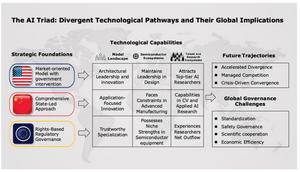
As the US and China diverge in their approaches to AI technologies, China’s scrutiny of Manus may indicate a more rigorous policing of outbound AI technology transfers. Grandhi suggests that this trend could accelerate the bifurcation of AI ecosystems between the two nations.
The duration of the probe remains uncertain, as other investigations by the Chinese Ministry of Commerce have previously extended over a year. Grandhi anticipates that the most probable outcome will be the approval of the acquisition, albeit with certain conditions rather than a complete block. Dohmen added that regardless of the final decision, the probe sends a cautionary message to other US or foreign companies considering similar acquisitions.
See also Experts Warn: Prepare for Potential AI Bubble in 2026 Amid Market Volatility
 Boltz PBC Secures $28M to Revolutionize AI-Driven Drug Discovery Platforms
 DeepSeek V4 Set to Outperform ChatGPT and Claude in Long-Context Coding by February 17
 Investment Firms Deploy AI Tools, Driving 44% Productivity Shift by 2030 Across Wall Street
 AI Transforms Aviation: Streamlining Operations and Enhancing Passenger Experience Now