





































Yanis Varoufakis, former Greek finance minister, recently found himself grappling with a distressing dilemma: hundreds of deepfake videos bearing his likeness and voice have proliferated across social media platforms such as YouTube. This unsettling phenomenon began when Varoufakis clicked on a link from a colleague, only to discover a video of himself discussing geopolitical themes—while he was, in fact, in his island home, wearing a blue shirt that he had never left behind.
The deepfake technology, capable of creating highly realistic simulations of individuals, has cast Varoufakis into a bizarre digital limbo where he is a mere spectator to his own identity. Videos depicting him making fabricated statements about topics like the recent coup in Venezuela have emerged, prompting questions from supporters and opponents alike, who wonder if he truly made those comments. The situation escalated to the point where Varoufakis’s digital doppelgangers are being perceived by some as more articulate than the man himself.
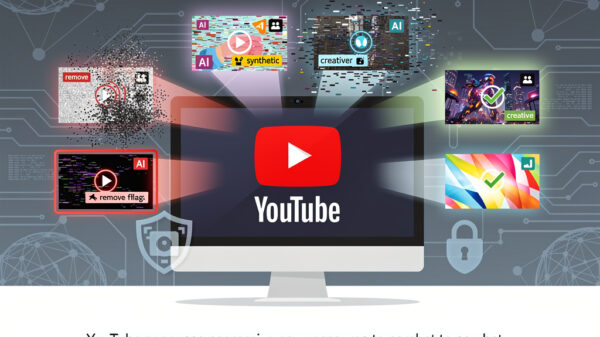
Initially, Varoufakis sought to address the issue by contacting tech giants like Google and Meta to demand that the videos be removed. Despite filling out multiple forms in frustration and witnessing a few channels taken down, the videos reappeared under different guises almost immediately. Growing increasingly disillusioned, he likened his struggle to the myth of the Hydra, where every head cut off leads to more in its place.
As his outrage subsided, Varoufakis began to ponder the implications of his situation in the context of the broader digital landscape. He has long argued that big tech has turned markets into “cloud fiefs,” raising the specter that in this new, technofeudal reality, individuals may not even own their own identities. As he observed the rampant proliferation of deepfakes, he contemplated whether this technology might ironically serve as a testament to the disempowerment of the liberal individual.
In a moment of reflection, Varoufakis considered the concept of isegoria (ἰσηγορία), a cornerstone of Athenian democracy that underscores equality of speech. He noted that contemporary interpretations often misrepresent it as merely the right to be heard. In ancient Athens, however, isegoria represented a commitment to genuinely evaluating speech on its merits, irrespective of the speaker’s identity or eloquence. This leads Varoufakis to wonder if the overwhelming presence of AI-generated content might compel audiences to focus on the arguments presented rather than the personas behind them.
While he finds a glimmer of hope in this possibility, he acknowledges the formidable challenges posed by the technofeudal landscape. Big tech companies retain significant control over the digital agora—the platforms that facilitate communication and discourse. They can elevate their own narratives while dismissing dissenting voices as untrustworthy, thus perpetuating a digital hierarchy where truth becomes a commodity owned by the powerful.
Furthermore, Varoufakis raises critical concerns about the inherent ideologies embedded within these technological systems. The mechanisms driving these platforms, rooted in extracting value from users and prioritizing shareholder profits, reinforce a status quo that undermines genuine democratic engagement. As such, he asserts that the solution lies not in pleading for verification from these tech lords but in actively socializing cloud capital—distributing the power and resources that are currently monopolized.
Until that vision is realized, Varoufakis suggests that embracing the existence of deepfakes may hold unexpected benefits. If individuals begin to question the authenticity of what they see, they might prioritize the content of the arguments rather than the identities of the speakers. In a world saturated with digital doppelgangers, there lies a paradoxical opportunity to reclaim the essence of isegoria and engage in the critical evaluation of ideas, rather than merely accepting the surface-level narratives presented to them.
In a society where the lines of authenticity are increasingly blurred, Varoufakis’s reflections serve as a call to action. The challenge ahead is not just about navigating a landscape rich in misinformation but about redefining what it means to participate in a democratic discourse. By confronting these complex realities, society may yet find pathways to rejuvenate democratic ideals that are in danger of being obscured by a cacophony of synthetic noise.
As the digital realm continues to evolve, Varoufakis articulates a vision for the future: a collective responsibility to engage critically with the information that shapes public discourse, a task made all the more vital in an age where identities can be easily fabricated, and truths can be shrouded in ambiguity.
See also Meta’s AI Lab Loses VP Jitendra Malik as Leadership Exodus Intensifies Amid Strategy Shift
 Tuba Joins NVIDIA Inception to Transform AI-Driven Healthcare Benefits Management
 Gold Surges 2% and Dollar Strengthens as AI-Driven Tech Stocks Soar Amid Venezuela Turmoil
 Elon Musk Shares Essential Tips for Crafting AI Images with Grok Imagine
 U.S.-China AI Dynamics: From Rivalry to Cooperative Governance for Global Stability