



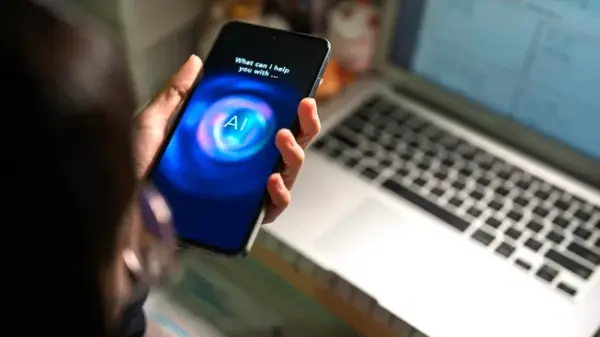






































OpenAI’s recently launched GPT-5 has elevated ChatGPT’s capabilities, enabling it to conduct more intelligent and emotionally nuanced conversations. However, in an increasingly competitive AI landscape, being the first to market does not always equate to being the best alternative. While ChatGPT remains a favored choice for many users, its downtime can prompt a search for viable substitutes.
Rival chatbots such as Claude, Gemini 2.5 Pro, Perplexity, and Microsoft Copilot are gaining traction, each offering distinctive features and performance that may outperform ChatGPT in specific tasks. As the competition intensifies, users are encouraged to explore these alternatives to find the most effective responses tailored to their needs.
Among these options, Gemini emerges as a standout. Initially named Bard, Google’s chatbot has undergone significant enhancements to become a formidable competitor to ChatGPT. Following updates including the Gemini 2.5 Pro release in early 2025, it has added notable improvements in image and video generation. Gemini’s integration with Google tools such as Gmail and Calendar enhances its utility, making it adept at managing a range of tasks effectively. Moreover, its advanced conversational abilities position it as a versatile option for users seeking a well-rounded AI assistant, available in both free and paid versions.
Meanwhile, DeepSeek, often underrated, offers a different approach. While its popularity has waned in the wake of rising competitors, it continues to excel in creative tasks and idea generation due to its innovative web interface and mobile applications. Although concerns regarding privacy due to its server locations have arisen, DeepSeek remains a compelling tool for those looking for unconventional solutions. Users can access its basic features for free, with premium plans available for enhanced functionality.
Another notable player is Claude, which recently focused its development on productivity and performance. The latest iteration, Opus 4.5, has garnered attention for its efficiency in coding tasks, and it boasts a significant context window that facilitates complex analyses. Claude’s desktop applications for Windows and macOS, along with integrated features like voice dictation, further enhance its appeal to users who prioritize productivity in their workflows. However, limitations on message rates can frustrate heavy users, necessitating a careful balance between usage and capabilities.
In the realm of creativity, Microsoft Copilot stands out for its extensive integration across Microsoft products. Built on OpenAI’s GPT-4o model, Copilot has been optimized to leverage Microsoft’s vast ecosystem, delivering enhanced reasoning and AI vision capabilities. Its additional features, including custom chatbot creation and image generation through DALL-E, make it a versatile tool for users navigating various Microsoft applications. Available for a fee, Copilot’s integration into existing subscriptions provides a seamless experience for Microsoft users.
For research purposes, Perplexity offers an innovative solution that combines conversational AI with live search results. This unique blend allows users to engage in a dialogue while receiving structured information, making it an ideal choice for deep dives into complex subjects. The recent introduction of a shopping hub further enriches its utility. Users can access many features for free, with premium options providing access to advanced models.
Inflection Pi has gained attention for its engaging conversational style. Although it may not be the most powerful model, its user-friendly interface and friendly demeanor make it a favorite for casual conversations. Pi’s ability to provide personalized advice and real-time news updates enhances its functionality, creating an appealing experience for users seeking a more conversational AI.
Meta has also entered the competitive landscape with its Meta AI chatbot, integrated across various social media platforms. With functionalities that allow for image generation and smart recommendations, it is tailored for users already embedded in the Meta ecosystem. Furthermore, its incorporation into hardware like Ray-Ban smart glasses and Quest VR headsets offers real-time assistance, emphasizing Meta’s focus on accessibility and user engagement.
Lastly, Llama 4, from Meta, is making waves as a leading open-source AI model. Its rapid adoption and frequent updates, including powerful multimodal capabilities, position it as a strong alternative for developers and researchers. The open-source nature of Llama has fostered a vibrant community, allowing for customized applications tailored to specific needs.
In summary, while OpenAI’s ChatGPT continues to be a significant player in the AI chatbot space, the emergence of alternatives such as Gemini, DeepSeek, Claude, Microsoft Copilot, Perplexity, Inflection Pi, Meta AI, and Llama 4 indicates a diversifying market where users can find tailored solutions to meet their specific requirements. As the technology evolves, understanding and leveraging these options will be crucial for users looking to maximize their AI interactions.
See also U.S.-Taiwan Tariff Deal Boosts TSMC’s Arizona Expansion, Lowers Chip Costs for Consumers
 AI Ethics in High-Risk Operations: Balancing Confidence Thresholds and Human Oversight
 Washington Lawmakers Propose AI Chatbot Regulations to Protect Minors’ Mental Health
 Invest $3,000 in Nvidia, AMD, and Broadcom: Seize AI Growth Before 2026 Boom
 AustralianSuper Seizes AI Investment Opportunities Amid Geopolitical Tensions and Risks