Meta Platforms Inc. reported significant advancements in its artificial intelligence (AI) capabilities during its Q1 FY26 earnings call, highlighting a strategy focused on enhancing user engagement across its platforms, including Instagram and Facebook. Chief Financial Officer Susan Li revealed that the company has doubled the length of user interaction sequences used for training, which now includes more detailed descriptions of user interactions. This shift is designed to provide a clearer understanding of user interests, driving improvements in content recommendations.
Li noted that these enhancements have already yielded positive results, including a “10% lift in Reels time spent” on Instagram and an increase of “more than 8%” in Facebook’s global video time, the largest such gain in four years. The company’s recommendation systems are becoming more accurate, with same-day posts now making up “more than 30% of recommended Reels,” more than double the rate from a year ago. Meta is investing in expanding the size and complexity of its models and incorporating large language models (LLMs) to deepen content understanding across its platforms.
CEO Mark Zuckerberg stated that this approach marks a pivotal moment for Meta, allowing the company to develop a “first-principles understanding of what you care about and what each piece of content in our system is about.” Li added that Meta is redesigning its content retrieval system to present more content that aligns with a user’s full range of interests, alongside refining LLM-based features that allow users to provide natural-language feedback about the content they wish to see.
The company is also experimenting with LLM-based recommender systems, focusing on building foundational models that enhance organic content and advertising recommendations. “Our focus this year is validating the model architectures and techniques in these domains before we scale them out in future years,” Li explained. Zuckerberg highlighted the rollout of the Muse family of models, specifically “Muse Spark,” which is the first release from Meta Superintelligence Labs. This model now powers Meta AI in direct chat threads and the standalone Meta AI app and website, leading to “meaningful engagement gains.”
According to Zuckerberg, Meta aims to develop personal and business agents capable of understanding user goals and assisting in achieving them. Weekly conversations with business AIs have surged from “1 million at the start of the year to more than 10 million.” Currently, these tools are free for most businesses, but Meta plans to establish a longer-term monetization strategy. Zuckerberg believes that users would be willing to pay for premium versions of these AI capabilities.
In advertising, Li announced the introduction of “Meta ads AI connectors in open beta,” enabling advertisers to link their ad accounts directly to AI agents. The Meta AI business assistant has been fully rolled out to eligible advertisers, achieving a “20% higher rate” of resolving account issues. More than “8 million advertisers” are leveraging at least one generative AI ad tool, with those utilizing video generation witnessing “more than 3% higher conversion rates.” The company’s Adaptive Ranking Model, characterized as an LLM-scale system with “a trillion parameters,” efficiently routes requests to more compute-intensive models when the likelihood of conversion is higher, resulting in a “1.6% increase” in conversion rates across Facebook and Instagram.
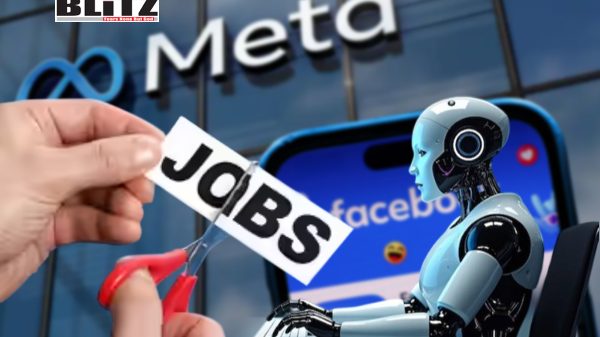
Despite these advancements, Li indicated that the company plans to reduce its workforce, ending Q1 with over 77,900 employees, a decrease of 1% from the previous quarter. She hinted at internal plans to downsize the employee base in May as Meta shifts its focus toward substantial investments in AI and infrastructure. Additionally, Meta is navigating legal challenges surrounding youth-related issues, with Li acknowledging ongoing scrutiny and potential material losses from various scheduled trials in the U.S.
Operational metrics reflect a growing user base, with Family daily active people averaging “3.56 billion in March 2026,” marking a 4% year-on-year increase, despite a slight quarter-on-quarter decline attributed to internet disruptions in Iran and restrictions on WhatsApp access in Russia. Ad impressions across Meta’s Family of Apps jumped by 19% year-on-year, while the average price per ad rose by 12%.
See also Google DeepMind’s AI Co-Clinician Surpasses GPT-5.4 in Blind Doctor Tests
 Anthropic Plans Japan Expansion for Claude Mythos AI Amid U.S. Opposition
 Major Publishers Support Amazon in Legal Battle Against Perplexity’s AI Spoofing Threat
 Perplexity Unveils Mac-Native ‘Personal Computer’ Platform with $2.8B in Labor Savings