















































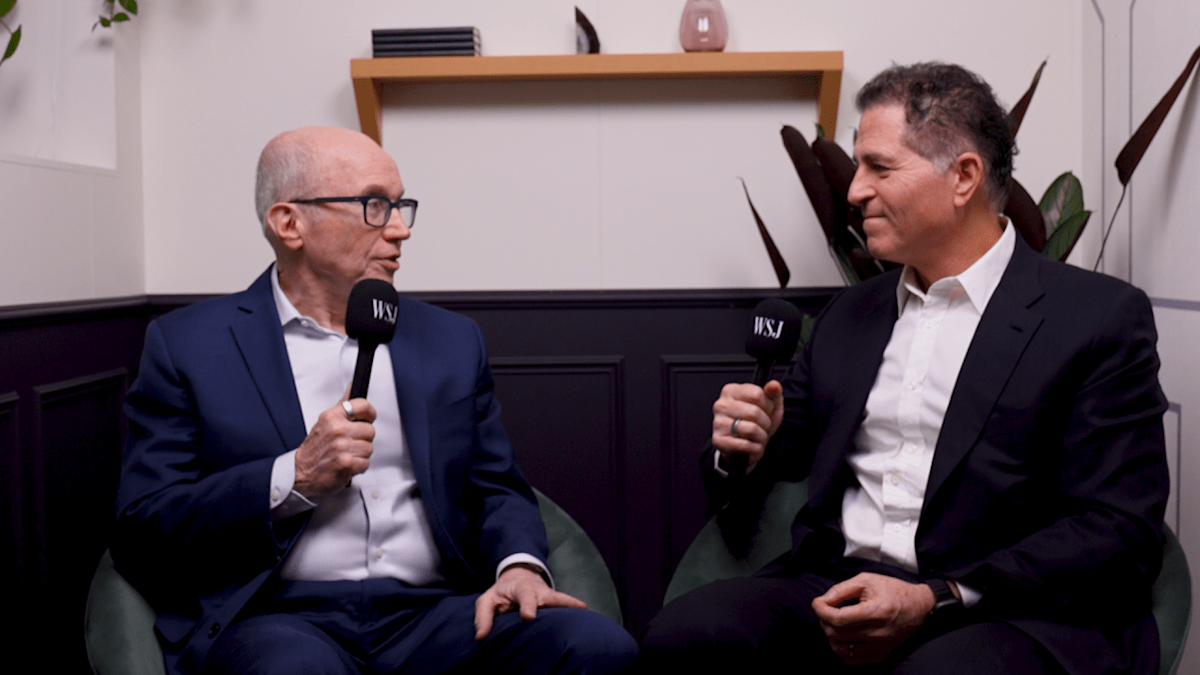
Michael Dell, founder and CEO of Dell Technologies, recently discussed his philanthropic venture, Invest America, during an interview with WSJ Leadership Institute President Alan Murray at the World Economic Forum in Davos. Dell and his wife, Susan Dell, pledged $6.25 billion to initiate investment accounts aimed at fostering financial literacy and investment habits among children. This substantial contribution reflects their commitment to shaping a future where financial empowerment begins at a young age.
Dell explained that the Invest America initiative is designed to provide children with their first investment accounts, allowing them to learn about the importance of saving and investing early on. The program aims to create an environment where financial education is accessible, promoting informed decision-making that could benefit future generations. “By giving children the tools and resources to understand investing, we are setting the stage for a more financially literate society,” he remarked.
In addition to discussing his philanthropic endeavors, Dell addressed the current landscape of artificial intelligence (AI). He expressed optimism about the future of the technology, predicting that 2026 will be a “breakthrough” year for AI advancements. According to Dell, the next few years are critical as businesses and developers continue to explore innovative applications for AI that could transform various industries.
During the conversation, Dell emphasized the need for responsible AI development, highlighting the importance of ethics and regulatory frameworks in guiding technological advancements. He underscored that while AI has the potential to drive efficiency and innovation, it must be approached with caution to mitigate risks associated with privacy, security, and job displacement. “We have an obligation to ensure that the development of AI is aligned with societal values,” he noted.
Dell’s insights come at a time when tech giants like Microsoft and Nvidia are heavily investing in AI technologies, seeking to pioneer applications that range from healthcare to finance. These investments signal a broader trend within the technology sector, where AI is expected to play an increasingly vital role in business operations and consumer products.
As the discussion unfolded, Dell acknowledged the challenges associated with AI’s rapid evolution but remained confident about the potential benefits. He pointed out that collaboration among industry leaders, researchers, and policymakers is essential to fostering an ecosystem that encourages innovation while addressing ethical concerns. “We can’t afford to ignore the implications of these technologies. Collaboration is key,” he stated.
Looking ahead, Dell’s dual focus on philanthropy and innovation positions him as a pivotal player in shaping both societal values and technological advancements. His active engagement in initiatives like Invest America demonstrates a commitment to addressing foundational societal issues while also navigating the complex landscape of emerging technologies.
In conclusion, the dialogue at Davos underscores a significant intersection of philanthropy and technology, where leaders like Michael Dell are not only investing in future generations but also advocating for a responsible approach to innovation. As AI continues to evolve, the emphasis on ethical development and financial literacy will likely influence how society adapts to the changes brought about by these advancements.
See also Google, OpenAI, and Anthropic Compete to Master Pokémon AI Challenges on Twitch
 Cal Al-Dhubaib Drives Ethical AI Adoption for Top Ohio Brands Post-Pandata Acquisition
 ChatGPT Saves Users Up to 15% on Shopping Compared to Perplexity in Price Hunt
 Mid-Market Adoption of AI by 90% in 2026 Will Drive Economic Growth and Productivity Gains