



















































The National Oceanic and Atmospheric Administration (NOAA) has unveiled a suite of advanced, artificial intelligence-driven global weather prediction models that promise to enhance forecasting speed, efficiency, and accuracy. The initiative represents a major leap in operational meteorological technology, allowing forecasters to deliver more precise guidance to the public with reduced computational costs.
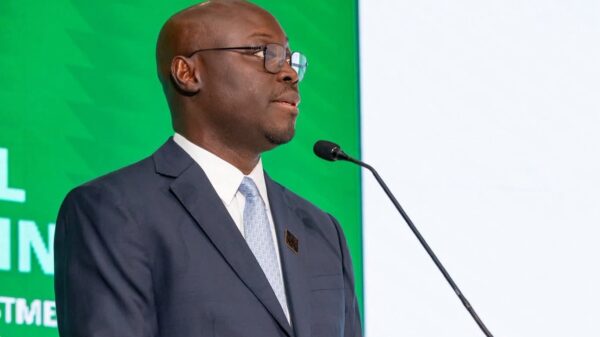
“NOAA’s strategic application of AI is a significant leap forward in American weather model innovation,” stated Neil Jacobs, Ph.D., NOAA administrator. He emphasized that these new AI models signify a transformed approach for NOAA, offering improved accuracy for large-scale weather patterns and quicker distribution of forecasts at a fraction of the cost due to dramatically decreased computational demands.
The newly launched models comprise three distinct applications. The first, the Artificial Intelligence Global Forecast System (AIGFS), utilizes AI to improve the generation of weather forecasts, achieving a notable reduction in tropical cyclone track errors. A 16-day forecast from this model consumed only 0.3 percent of the computing resources required by the operational Global Forecast System (GFS) and processed within approximately 40 minutes.
Second, the Artificial Intelligence Global Ensemble Forecast System (AIGEFS) features a 31-member ensemble that provides a variety of possible forecast outcomes. Preliminary results indicate that it outperforms the traditional Global Ensemble Forecast System (GEFS) by extending forecasts by an additional 18 to 24 hours while utilizing only 9 percent of the operational GEFS’s computational resources.
The third application, the Hybrid-GEFS (HGEFS), is a groundbreaking 62-member grand ensemble combining the 31 members of the physical GEFS with the 31 members of the AI-based AIGEFS. Initial tests suggest that this innovative approach consistently outperforms both the AI-only and physics-only ensemble systems, marking a significant advancement in operational weather modeling.
This suite of models is a direct result of Project EAGLE, a collaborative effort involving NOAA’s National Weather Service, Oceanic and Atmospheric Research labs, the Environmental Modeling Center within NOAA’s National Centers for Environmental Prediction, and the Earth Prediction Innovation Center. “Using Project EAGLE and the Earth Prediction Innovation Center, NOAA scientists continue to work with members of academia and private industry on more advancements in forecasting technology,” Jacobs added.
The development team leveraged Google DeepMind’s GraphCast model as a foundational tool, subsequently fine-tuning it using NOAA’s Global Data Assimilation System analyses. This additional training significantly improved the model’s performance, particularly when applying GFS-based initial conditions.
As NOAA pushes forward with these advancements, the integration of AI into weather forecasting promises not only to enhance the accuracy of predictions but also to make such technologies more accessible and cost-effective. This initiative could redefine how meteorological data is processed and delivered to the public, potentially leading to timelier warnings for severe weather events and improved disaster preparedness.
With the ongoing collaboration between NOAA and tech leaders, the future of weather forecasting appears set for dramatic evolution, offering the potential for increased safety and better-informed communities in the face of changing climate patterns.
See also Nvidia Surpasses $5T Valuation Amid US-China Tech Rivalry and Policy Shifts in 2025
 U.S. Military Captures Maduro in Venezuela, Triggering Global Outcry and Diplomatic Crisis
 Memory Chip Crisis: 2026 Smartphone and PC Markets Face Price Hikes and Potential Contraction
 Midjourney Unveils Scrolling Style Creator, Enhancing User Experience and Artistic Exploration
 AI Infrastructure Set to Drive Robust Growth Through 2026, Says F/m Investments’ Bido






