








































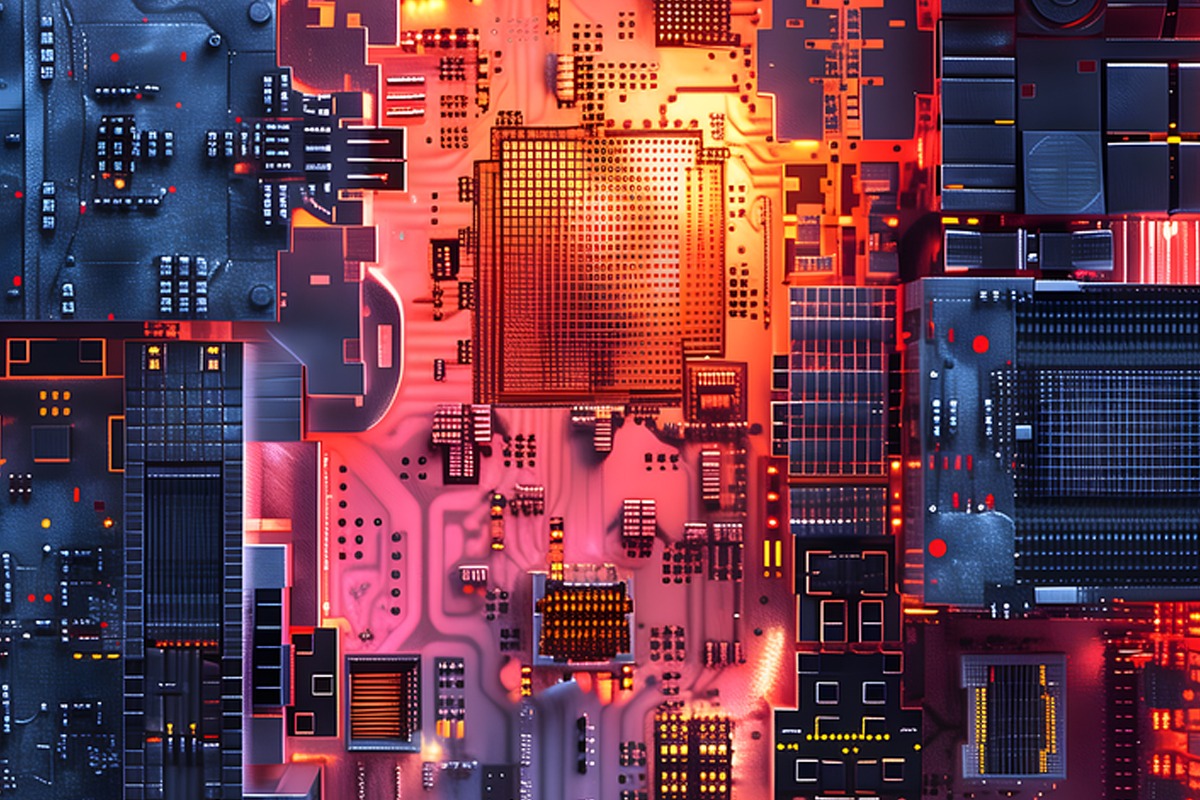
The global semiconductor industry in 2025 was profoundly shaped by the artificial intelligence (AI) boom, ongoing geopolitical tensions, and the escalating rivalry between the United States and China. From regulatory changes and trade disputes to landmark partnerships and soaring valuations, the year underscored both the vast economic potential of semiconductors and the inherent vulnerabilities of an industry caught in the crossfire of global power dynamics.
The year kicked off with a contentious policy debate in Washington. On January 13, just a week before Joe Biden exited the White House, his administration unveiled the controversial AI Diffusion Rule, aimed at tightening export controls on advanced AI chips. This eleventh-hour maneuver was met with sharp criticism from the US semiconductor sector, including the Semiconductor Industry Association (SIA) and chip giant Nvidia Corp.. Industry leaders cautioned that such restrictions could undermine the US’s technological edge while limiting revenue from international sales.
Even Nvidia CEO Jensen Huang, known for his typically measured public statements, denounced the rule, labeling Biden’s policy a “failure” and contending it endangered the company’s competitiveness in China and other markets. A seismic shift occurred with Donald Trump’s return to the White House. One of his first actions was to repeal Biden’s 2023 executive order addressing AI risks, subsequently revamping the US chip export policy by scrapping the AI Diffusion Rule in mid-May. Huang lauded this shift, emphasizing the need to maximize AI diffusion if the US aims to retain its primacy in the AI landscape.
While Nvidia faced challenges selling its chips to China, its robust market performance reflected both the AI boom and investor confidence in its strategic positioning. On October 29, Nvidia made headlines by becoming the first company to surpass US$5 trillion in market capitalization, buoyed by strong demand for its H100 and Blackwell chips. Since the launch of the generative AI chatbot ChatGPT in November 2022, Nvidia shares surged twelve-fold, mirroring the explosive growth of AI applications. However, this dominance has positioned Nvidia within the contentious US-China rivalry.
Trump continued to enforce restrictions on the sale of Nvidia’s most advanced chips to China, explicitly prohibiting access to the technology. Reports emerged indicating the US government was embedding trackers in AI chip shipments to prevent diversion and potential military use by Chinese entities. Huang has repeatedly warned against isolating China, noting it is home to nearly half of the world’s AI researchers. Against this backdrop, Nvidia is reportedly preparing to ship its H200 chips—part of the previous-generation Hopper line—to China by mid-February. This development would mark the first deliveries of H200 chips to China since Trump’s announcement that sales would be permitted, albeit with a 25% fee. However, uncertainty persists as Beijing has yet to give formal approval for any H200 purchases, leaving the timeline subject to regulatory decisions.
Simultaneously, China persisted in its ambitious push into AI and semiconductors. DeepSeek, powered by Huawei’s 910C chipsets, emerged as a serious competitor to ChatGPT. Other Chinese tech giants, such as Ant Group and Tencent Holdings Ltd, are also leveraging domestic semiconductors to advance AI training techniques, further bolstered by public support from Chinese President Xi Jinping, who has rallied behind private-sector technology leaders.
In September, Advanced Micro Devices Inc (AMD) announced a multi-year agreement to supply AI chips to OpenAI, a deal that could yield tens of billions of dollars in annual revenue and provide OpenAI an option to acquire up to approximately 10% of the chipmaker. This announcement drove AMD shares up by more than 34% on that day. Meanwhile, Nvidia had previously established its own agreement with OpenAI to supply at least 10 gigawatts of AI systems, committing to invest up to US$100 billion in ChatGPT’s parent company.
In Asia, Nvidia solidified its footprint in South Korea, supplying over 260,000 Blackwell AI chips to Samsung Electronics, Hyundai Motor Group, and SK Group. Samsung is in the process of building an AI factory utilizing over 50,000 GPUs, while Hyundai and SK Group are also engaged in significant AI projects featuring Nvidia chips. These developments culminated in the now-iconic “chimaek summit” on October 30 in Seoul, where Huang, Samsung chairman Lee Jae-yong, and Hyundai boss Chung Eui-sun celebrated their partnerships over Korean fried chicken and beer, symbolizing camaraderie in complex trade negotiations.
As 2025 draws to a close, the semiconductor industry stands at a critical juncture. Companies face the dual challenge of scaling AI infrastructure while navigating geopolitical risks and compliance hurdles. The year’s events—from Nvidia’s record market valuation to the emergence of new Chinese competitors, coupled with strategic US policy shifts—signal that 2026 will continue to be defined by rapid technological advancements, fierce competition, and the intersection of commerce and geopolitics at the heart of the AI revolution.
For more insights, visit Nvidia, OpenAI, and Huawei.
See also U.S. Military Captures Maduro in Venezuela, Triggering Global Outcry and Diplomatic Crisis
 Memory Chip Crisis: 2026 Smartphone and PC Markets Face Price Hikes and Potential Contraction
 Midjourney Unveils Scrolling Style Creator, Enhancing User Experience and Artistic Exploration
 AI Infrastructure Set to Drive Robust Growth Through 2026, Says F/m Investments’ Bido
 Maryland Secures $2.6M in AI Grants to Transform Public Benefits Access for 380K Residents