
































British-American conceptual artist Phillip Toledano is set to release his third book on artificial intelligence, titled Another England, following the success of his previous works in the last two years. Toledano, who resides in New York but was born in London in 1968, has dedicated nearly a decade exploring themes surrounding alternative truths and the cultural landscape shaped by disinformation, encapsulated in his project titled The United States of Conspiracies.
With the advent of mass artificial intelligence, Toledano has embraced this technology to further his artistic vision. In his upcoming series, We Are at War, commemorating the 80th anniversary of the Normandy Landings in 2024, he employs AI to recreate images believed to have been captured by renowned photographer Robert Capa on Omaha Beach, the originals of which were lost. This innovative approach allows Toledano to play with historical narratives, blurring the lines between fact and fiction.
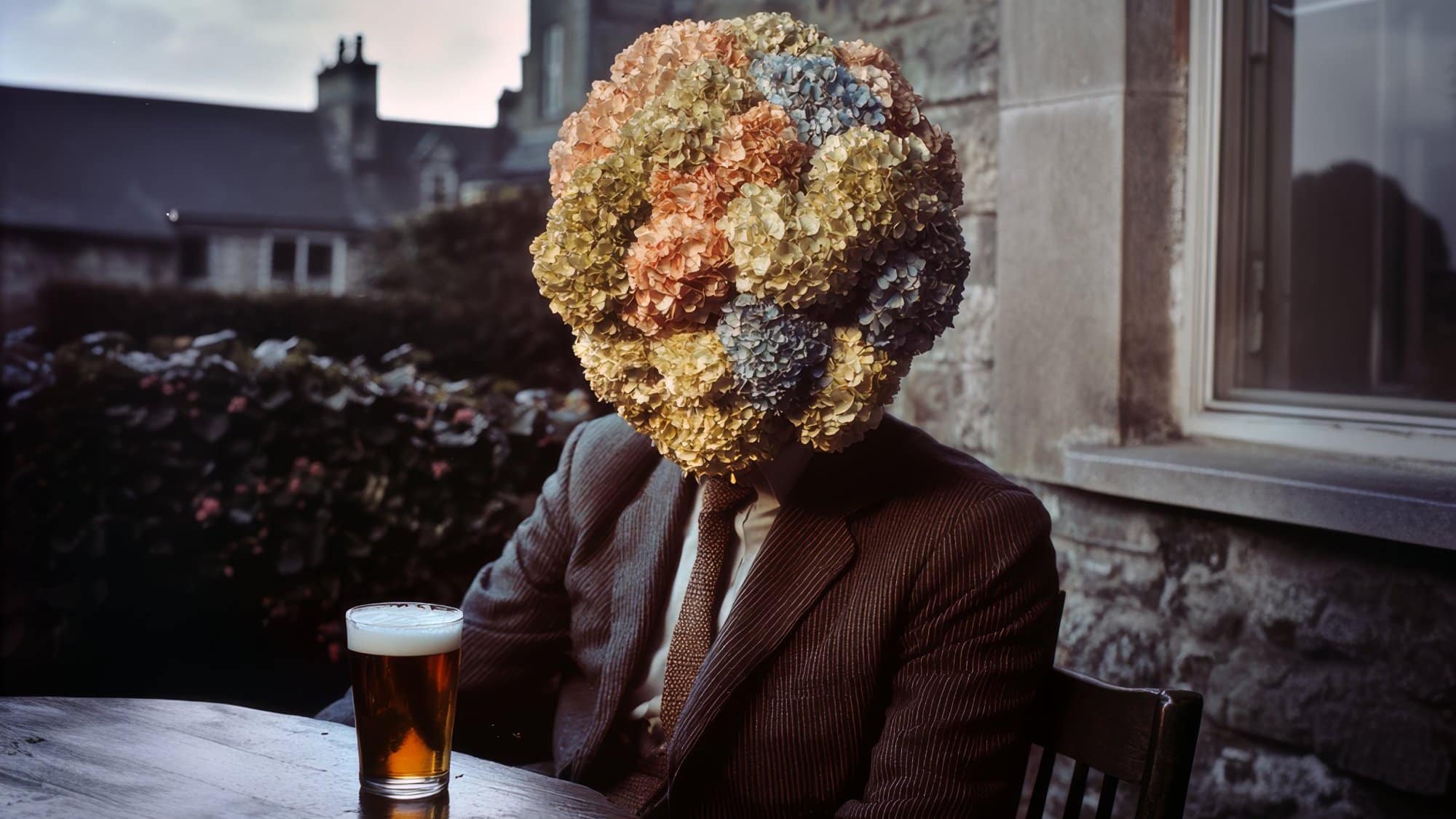
The same year, Toledano released Another America, featuring unsettling yet vivid depictions of American life. He intentionally mimics the photographic style of the 1940s and 1950s to enhance the authenticity of the imagery. With Another England, he extends this concept of “historical surrealism,” aiming to challenge perceptions of reality through the lens of AI.
“This work is not a warning in the traditional sense, nor pure speculation. It’s an observation,” Toledano told Blind. He elaborates that the project reflects a contemporary landscape where “plausibility trumps proof,” suggesting a world where history can be “visually editable” and facts are “infinitely elastic.” Such a perspective underscores the potential implications of AI in shaping narratives and perceptions.
Toledano cautions that the proliferation of artificial intelligence equips every lie with the potential for convincing visual support. He shares a satirical anecdote involving the Dover Harbour Board, which, in a bid to counteract privatization during Margaret Thatcher’s era, allegedly considered carving her likeness into the white cliffs of Dover—a fictitious tale that exemplifies how AI can transform fiction into folklore.
This imaginative creation, humorously dubbed “geological hostage-taking” in a fictional Guardian article, portrays Thatcher with “60 feet of limestone grimace, eternally staring at France.” Such storytelling reflects Toledano’s unique ability to intertwine absurdity with critical commentary, evoking both laughter and reflection from his audience.
Further exploring the interplay of reality and fiction, another whimsical narrative in Another England recounts how a Devon village survived on bioluminescent jellyfish, thanks to a retired biology teacher’s peculiar theory. By 1983, the village’s streetlamps had transformed into jellyfish tanks, with one named Cyril flickering in response to lies—a surreal yet thought-provoking concept that plays with the idea of truth and judgment.
The book also introduces the Fox Liberation Army, a fictional group that disrupts a North Wensum Hunt, employing tactics both humorous and absurd. These narratives not only entertain but serve to critique societal norms, showcasing Toledano’s skill in satire and self-mockery.
Yet, Toledano acknowledges a critical paradox within his work: while it offers a playful exploration of absurdity, it also raises questions about the normalization of manipulated images and narratives. “AI allows us to create the world as we want to see it, politically, socially, and otherwise,” he states. He recognizes that the enjoyment derived from these narratives can mask a troubling reality.
Throughout Another England, Toledano employs whimsical elements, such as inflatable sheep deployed by the English Tourist Authority to attract visitors away from France. This lighthearted approach nevertheless carries deeper implications about the nature of authenticity in storytelling and the role of art in confronting societal issues.
Toledano’s work ultimately challenges the feasibility of traditional photography in a world increasingly dominated by AI. “It’s better to start from the idea that I haven’t been a photographer for a long time, but rather a conceptual artist,” he reflects. He warns that AI’s capability to produce visually stunning work does not equate to meaningful content.
Some images in his book serve as stark reminders of pressing global issues, such as one depicting a warmly lit country house oblivious to a massive burning airship in the background—a metaphor for contemporary complacency amidst chaos. Through these layered narratives, Toledano encourages audiences to reflect critically on the interplay of technology, art, and truth in today’s society.
Another England by Phillip Toledano is published by L’Artiere and available for €60.
See also AI-Powered Riff-Diff Method Revolutionizes Custom Enzyme Design for Industry
 Hollywood Titans Unite Against AI Theft: Johansson, Blanchett Lead 800-Strong Campaign
 UN AI Chief and Billion-Dollar Investors Unite at WAM Morocco to Drive Industrial Revolution
 TU/e Secures €1.5M to Revolutionize Materials Science with AI-Driven SimuLingua Project