



















































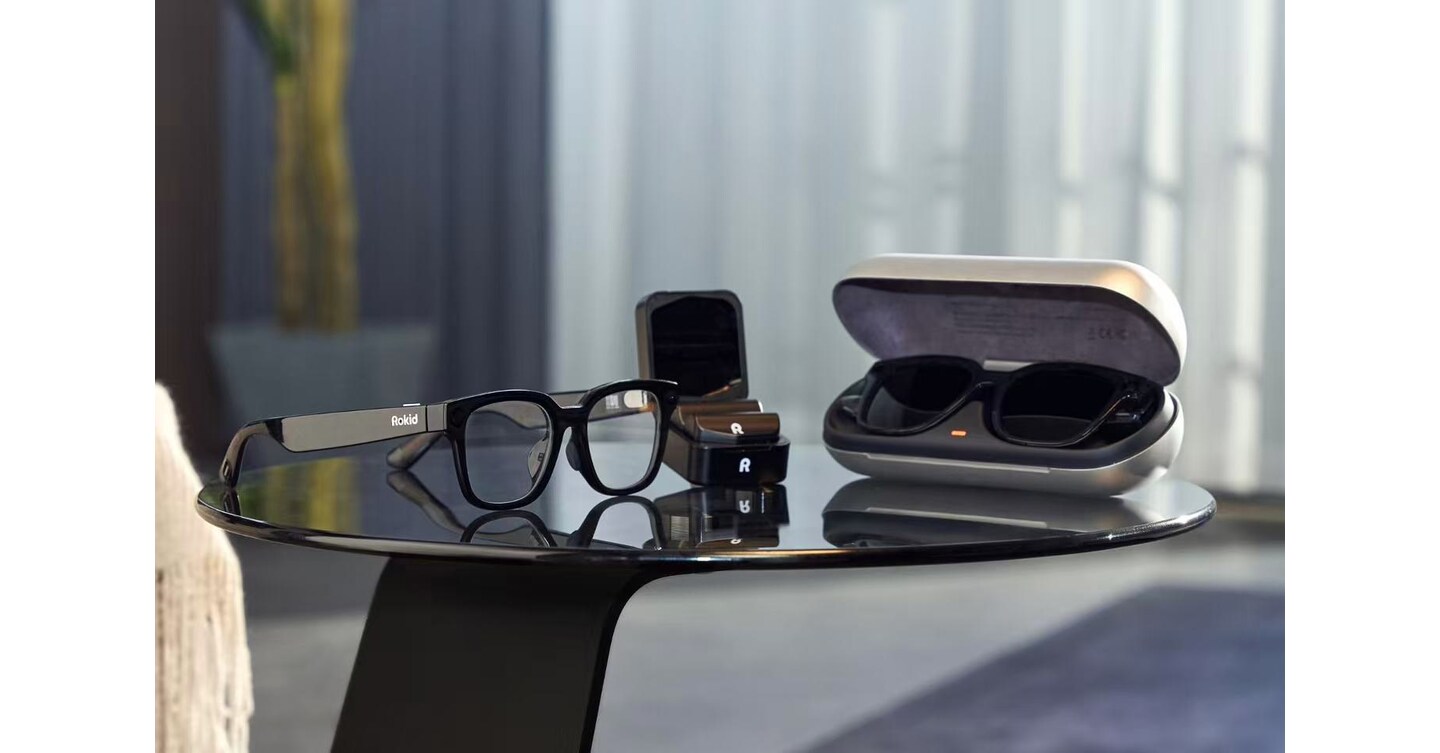
Rokid, a leader in human-computer interaction and AI-powered eyewear, introduced its Rokid Ai Glasses Style at CES 2026 in Las Vegas on January 6, 2026. Weighing just 38.5 grams, these display-free, voice-centric glasses aim to redefine smart eyewear by emphasizing comfort, style, and global accessibility. Rokid’s latest product embodies a dual-chip architecture designed for all-day wear, addressing a market eager for advanced functionality without sacrificing user experience.
The glasses represent Rokid’s strategic shift after over a decade focused on augmented reality (AR) and smart glasses. The company positions Style as a pivotal point in the evolution of personal computing, with some industry experts asserting that smart glasses could become the next “iPhone moment.” Tech visionary Kevin Kelly recently remarked, “Smart glasses will be the next iPhone,” highlighting the potential impact of this technology.
Setting itself apart from competitors, the Rokid Ai Glasses Style operates on an open, global AI strategy, allowing support for multiple AI engines, including ChatGPT, DeepSeek, and Qwen. This approach facilitates interaction with global services like Google Maps and Microsoft AI Translation, promoting accessibility across different regions and languages. Rokid has already integrated services such as payments, insurance, and ride-hailing in China, and launched an AI Agent Store for third-party developers, aiming for broader international collaboration.
Prescription compatibility is core to the Style’s design, addressing a key barrier to adoption. Rokid offers a comprehensive global online prescription service, supporting a correction range from plano to ±15.00D, catering to various vision needs, including myopia and astigmatism. Users can upload their prescriptions online and expect delivery of custom lenses within 7–10 days. The glasses also feature ultra-thin lenses with dynamic photochromic capabilities, transitioning from clear to tinted lenses in about 25 seconds.
Zoro Shao, Global General Manager at Rokid, emphasized the significance of the product, stating, “AI glasses are becoming the most natural interface for the next era of computing. Clarity is a fundamental human right.” He indicated that the aim is to make advanced AI technology both usable and accessible, ensuring that prescription needs do not hinder users’ access to technological advancements.
Rokid claims to have introduced or advanced four world-first innovations with Style, including the industry’s first dual-chip AI architecture, which utilizes an NXP RT600 for low-power tasks and a Qualcomm AR1 for AI and imaging. The glasses also support voice interaction in 12 languages and offer a multimodal interaction system that allows for head gestures and predefined AI functions, enhancing hands-free usability.
Designed for prolonged wear, Style balances lightweight comfort with performance, featuring aviation-grade titanium alloy hinges and air-cushioned silicone nose pads. It boasts an impressive battery life of up to 12 hours with typical daily use and more than 24 hours of standby time.
In terms of creative capabilities, Style is equipped with a 12MP Sony sensor and supports 4K capture with a triple-format imaging system that allows for content creation in multiple aspect ratios suited for platforms like Instagram and TikTok. This functionality enables users to produce shareable content without the need for post-editing, giving Rokid a competitive edge in the realm of creator-friendly smart eyewear.
The glasses are positioned competitively, starting at $299 for the standard model, while a “Golden Bundle” including prescription lenses is available for $398. Rokid aims to make these advanced prescription-compatible AI glasses accessible, particularly in light of competitors priced above $579. An early-bird reservation offer allows customers to place a $1 deposit for a $20 discount, leading up to the official global launch on January 19, 2026.
Rokid’s commitment to social good includes a subsidy program for customers purchasing Style for visually impaired users, lowering the price to $279. Shao highlighted the importance of democratizing technology, stating, “Our mission is to leave nobody behind,” emphasizing that over a billion people globally suffer from vision impairments, underscoring the need for accessible tech solutions.
Having focused exclusively on smart eyewear for over a decade, Rokid’s push with Style aims to eliminate barriers hindering mass adoption, including weight, cost, and compatibility issues. As the company progresses, it hopes to transition AI glasses from niche products for early adopters to everyday devices for the general public.
Founded in 2014, Rokid has established itself as a pioneer in AR and AI technologies, delivering accessible smart glasses that integrate seamlessly into daily life. The company’s commitment to innovation is evident in its sustained focus on building global partnerships and fostering a robust developer community.
See also AZIO AI Secures Strategic Investor Support, Advances Merger with Envirotech Vehicles Inc.
 CurveBeam AI Surges to 2-Month High Following Approval of Chinese Investment
 Grok Faces UK Regulatory Scrutiny for Creating Non-Consensual Images of Women
 Venture Capitalists Shift Focus: AI Drives M&A and Hiring Strategies at CES 2026
 Anthropic President Daniela Amodei Questions Relevance of AGI Amid AI Limitations