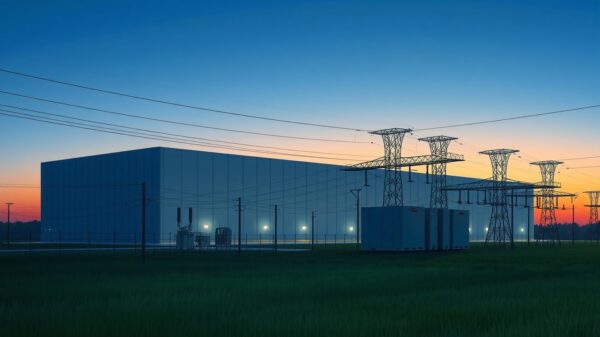














































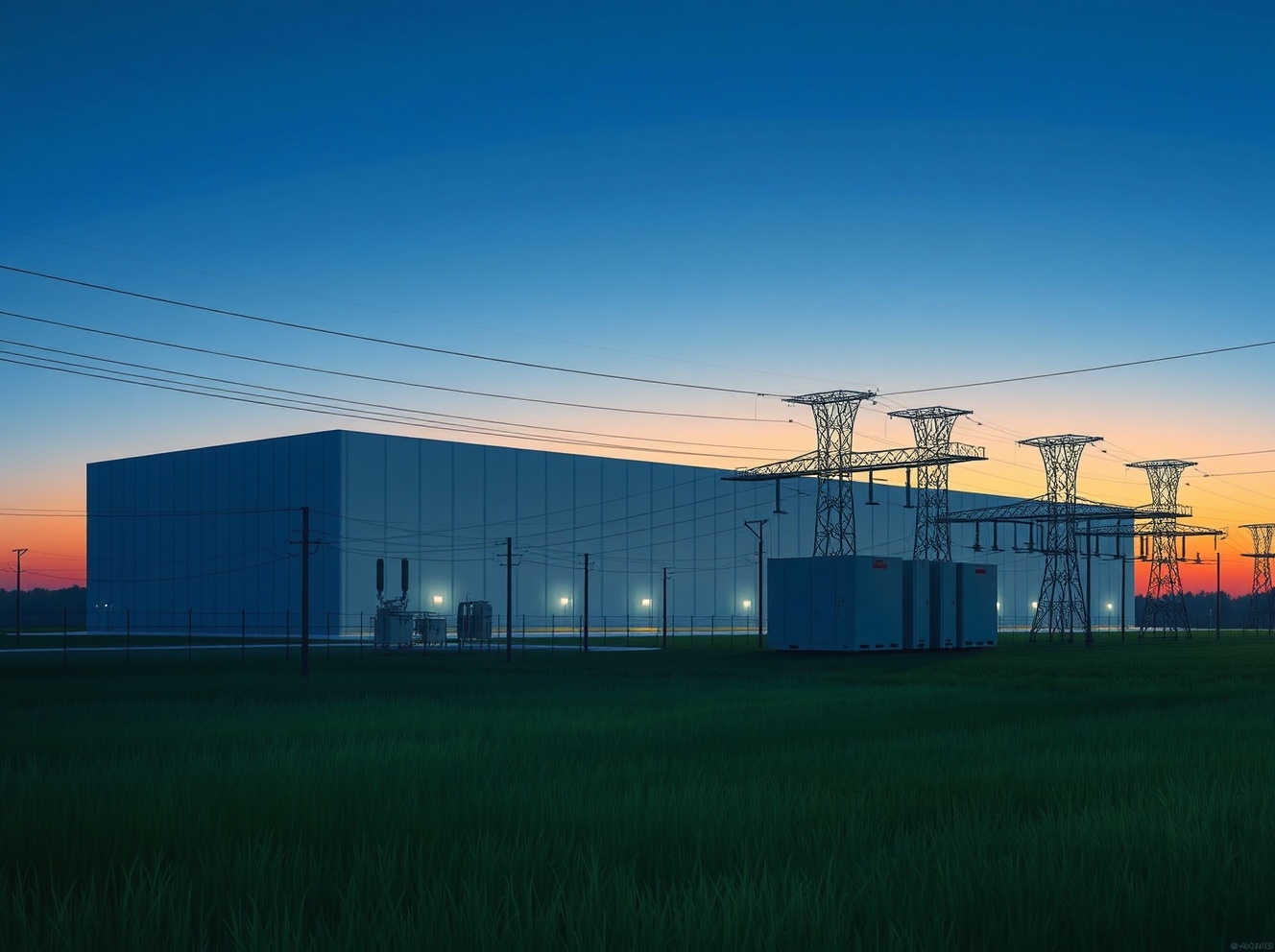
In a notable development reflecting rising political anxiety over the U.S. digital infrastructure, Senators Josh Hawley (R-MO) and Elizabeth Warren (D-MA) have initiated a formal inquiry into the burgeoning energy consumption of data centers. On Thursday, the senators dispatched a letter to the U.S. Energy Information Administration (EIA), advocating for a mandatory annual reporting system for these facilities. This bipartisan initiative underscores a pressing challenge: the rapid expansion of artificial intelligence and cloud computing is placing significant strain on the nation’s electrical grid, prompting lawmakers to seek unprecedented transparency from one of the economy’s most energy-intensive sectors.
The letter, which was reviewed by Bitcoin World, urges the EIA to “establish a mandatory annual reporting requirement for data centers and other large loads.” The senators contend that the surging electricity demand—following years of relative stagnation—poses considerable risks for effective grid planning and oversight. The absence of reliable, standardized data creates a fundamental issue for utilities and regulators alike. This request comes on the heels of a report by Wired detailing the legislative push, highlighting the EIA’s role as a statistical agency within the Department of Energy. Established in 1977, the EIA has traditionally categorized energy use into four broad sectors: residential, commercial, industrial, and transportation. Data centers, however, often occupy a nebulous space between commercial and industrial classifications, obscuring their overall impact on energy consumption.
Hawley and Warren are demanding highly specific data points that extend well beyond total energy consumption. Their requests encompass hourly, annual, and peak energy loads for individual facilities, the specific electricity rates paid by data center operators, information on necessary grid upgrades and their funding mechanisms, and details on participation in demand response programs, where utilities compensate users for reducing consumption during peak periods. Notably, the senators call on the EIA to differentiate between energy consumed for AI computing tasks and that used for general cloud services. This distinction is critical, as AI model training and inference are known to be significantly more energy-intensive than standard server operations. The letter specifically addresses EIA Administrator Tristan Abbey, who had previously noted in December 2024 that the agency would be a key player in tracking data center energy demand. The senators have requested a response by April 9.
This letter signifies a growing regulatory trend that extends beyond just two senators. A day prior, Senator Bernie Sanders (I-VT) and Representative Alexandria Ocasio-Cortez (D-NY) announced intentions to introduce legislation that would suspend new data center construction until Congress establishes a regulatory framework for AI. These concurrent efforts from a range of lawmakers highlight the bipartisan recognition of the interconnected issues of technological growth, infrastructure resilience, and environmental sustainability. The escalating energy consumption is the driving force behind these actions. For example, Google reported that its data center electricity consumption doubled between 2020 and 2024. Industry estimates suggest that planned new data centers could nearly triple the sector’s total energy demand by 2035, a trajectory that existing grid planning models may struggle to accommodate.
Complexity of New Energy Reporting
Establishing a mandatory survey is a multifaceted, multi-year endeavor. Administrator Abbey indicated in December that launching a new survey from scratch “takes probably about two years.” This process must navigate the Office of Management and Budget’s review, which includes a requisite public comment period. Nevertheless, Abbey also stated that there are existing authorities for more rapid, targeted surveys that could deliver a “sharper signal” in a shorter timeframe. Presently, the EIA lacks the formal authority to compel specific industries to report data without a mandate or revised survey approval. Consequently, the senators’ letter functions as both a formal request and a political signal intended to expedite administrative action. The agency’s forthcoming response will be closely monitored by utility companies, technology firms, and environmental advocates.
The U.S. electrical grid is undergoing its most significant transformation in decades, driven by the rise of intermittent renewable energy sources, the electrification of transportation and heating, and the skyrocketing demand from data centers. Historically, load growth has been predictable and gradual. However, utility companies now face the challenge of accommodating large, concentrated, and immediate energy demands from facilities that can consume as much power as a medium-sized city. Without accurate and timely data on the timing and magnitude of these loads, long-term investments in transmission lines, substations, and generation capacity risk becoming high-stakes guesses. This data deficiency threatens both grid reliability and consumer electricity costs, as expenses for emergency upgrades or new generation are often distributed among ratepayers.
The bipartisan inquiry into data center energy consumption marks a pivotal shift in recognizing these facilities as crucial components of national infrastructure with substantial energy implications. The push for mandatory, detailed energy reporting signals a transformation in how these data centers are perceived—from mere commercial entities to primary players in national energy security and climate policy. As the demand for AI technology continues to surge, the tension between rapid technological advancement and the limitations of physical infrastructure is likely to intensify. The outcome of this regulatory endeavor will significantly influence not only the future of the technology sector but also the resilience, cost-efficiency, and environmental footprint of the American electrical grid for years to come.
See also Germany”s National Team Prepares for World Cup Qualifiers with Disco Atmosphere
 95% of AI Projects Fail in Companies According to MIT
 AI in Food & Beverages Market to Surge from $11.08B to $263.80B by 2032
 Satya Nadella Supports OpenAI’s $100B Revenue Goal, Highlights AI Funding Needs
 Wall Street Recovers from Early Loss as Nvidia Surges 1.8% Amid Market Volatility