



















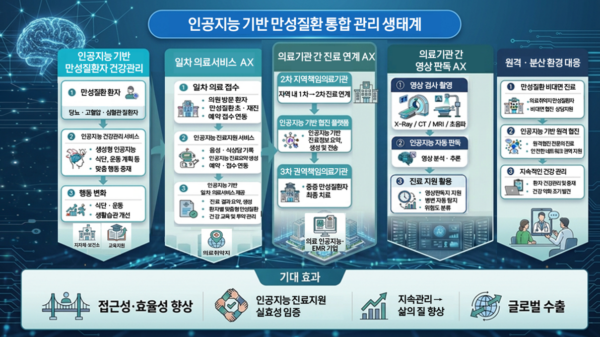



















SEOUL (January 9, 2026, 08:11 GMT) — South Korea’s Ministry of Economy and Finance has announced a comprehensive set of economic policy measures for 2026, aiming for an annual growth rate of 2 percent, effectively double the projected growth of 1 percent for 2025. This initiative is designed to rejuvenate the economy while reinforcing the government’s commitment to accelerating the adoption of artificial intelligence nationwide and enhancing national AI capabilities.
The announcement, made public on Friday, builds upon a series of policy initiatives the government outlined alongside its 2026 annual budget bill disclosed in late 2025. Key components of the new measures include plans to commence construction of a national AI computing center by late 2026, identification of a specific city for self-driving automobile demonstrations, and the establishment of a presidential committee focused on bolstering the domestic semiconductor industry.
In addition to these initiatives, the government is set to allocate investments from the National Growth Fund to support innovation in various sectors, including technology and AI. Special legislation may also be enacted to facilitate AI-related projects, illustrating the government’s proactive stance on fostering a robust tech ecosystem.
This comprehensive strategy reflects a broader trend as nations globally intensify efforts to harness AI’s potential. Countries like the United States and members of the European Union have similarly ramped up investments in AI technologies, recognizing their pivotal role in driving economic growth and maintaining competitive advantage in the global arena. South Korea’s focus on AI aligns with its historical strengths in technology and manufacturing, suggesting that the government’s initiatives may enhance its position in the increasingly crowded tech landscape.
The establishment of a national AI computing center is particularly noteworthy. This facility is expected to serve as a hub for research and development, facilitating collaboration between government, academia, and the private sector. It could also foster innovations that might translate into commercial applications, benefiting various industries, from healthcare to automotive.
Furthermore, the designation of a city for self-driving demonstrations indicates a strategic move to create a controlled environment for testing autonomous vehicles, a sector that is gaining traction worldwide. By positioning itself as a leader in this space, South Korea could attract international investment and partnerships, bolstering its tech ecosystem.
The government’s commitment to the semiconductor industry is also significant, given the critical role that semiconductors play in powering AI and other advanced technologies. As global demand for chips continues to surge, South Korea’s proactive measures to enhance its semiconductor capabilities could position it as a key player in the supply chain, especially in light of ongoing geopolitical tensions affecting trade.
As the government rolls out these policies, businesses and investors will be closely monitoring the developments. The establishment of a presidential committee to support the semiconductor industry is expected to provide a clearer framework for collaboration between public and private sectors, potentially leading to more targeted investment strategies.
Overall, South Korea’s 2026 economic roadmap not only aims to boost growth but also seeks to create a conducive environment for technological innovation. The emphasis on AI and semiconductor development underscores the government’s recognition of these sectors as vital to the nation’s economic future. As other nations look to bolster their own tech industries, South Korea’s efforts may serve as a model for achieving sustainable economic growth through technological advancement.
For more information on the government’s initiatives, you can visit the official website of the Ministry of Economy and Finance of South Korea.
See also DeepSeek Expands R1 Paper by 64 Pages, Prepares for V4 Release Ahead of Lunar New Year
 AI’s Rise Fuels Erosion of Online Trust, Experts Warn of Misinformation Crisis
 Tech Giants Invest Billions in AI: Meta Acquires Manus, OpenAI Secures $300B Cloud Deal
 Adobe Partners with Runway to Enhance Firefly AI Video Tools with Gen-4.5 Model
 AI Leaders Rally Behind PM Modi’s Vision, Paving Path for Ethical Innovation in India