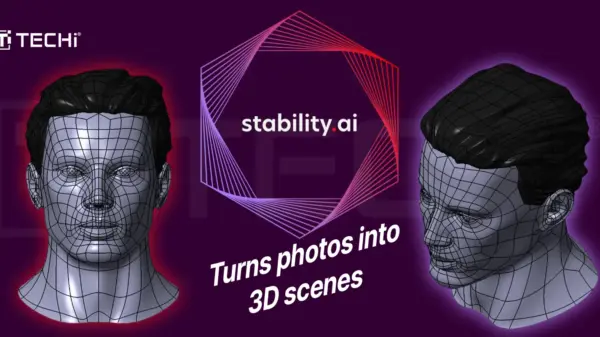








































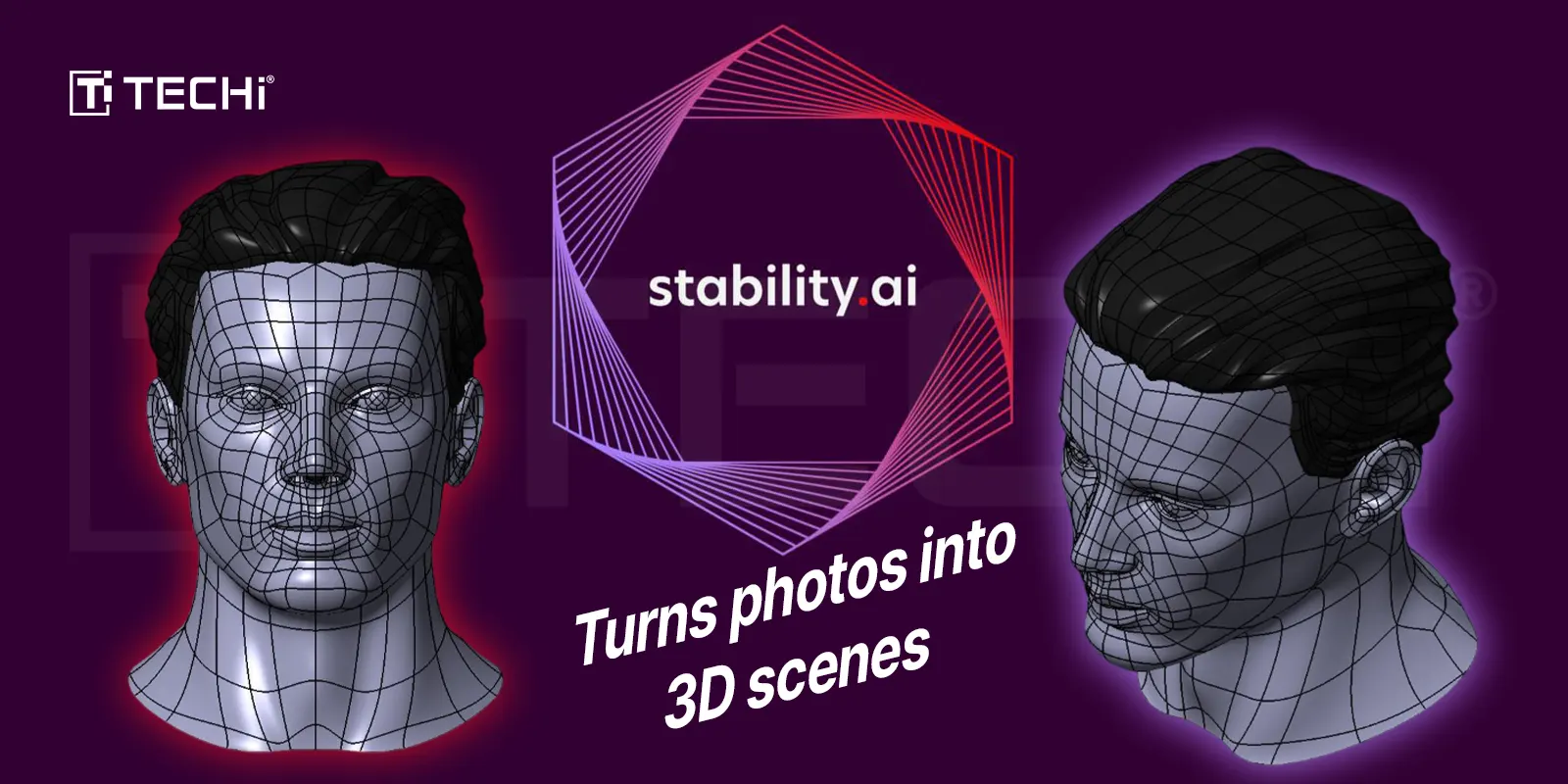
Stability AI has unveiled its latest innovation, the Stable Virtual Camera, an AI model designed to transform 2D images into 3D videos. Announced in a blog post, the model is currently accessible under a Non-Commercial License in a research preview phase. The company claims that the model can utilize up to 32 images to generate 3D videos, incorporating user-defined camera movements along with 14 distinct dynamic camera paths, including options like 360°, Lemniscate, Spiral, Move, and Roll.
The most significant advancement of the Stable Virtual Camera is its ability to create 3D videos from 2D images without the need for complex reconstruction or scene-specific optimizations, which were essential in earlier models. Stability AI asserts that the model introduces realistic depth, enhancing the overall visual experience.
This new offering has the potential to be a game-changer for filmmakers and animators. By merging traditional virtual camera controls with AI capabilities, the Stable Virtual Camera allows for the creation of accurate and intuitive 3D videos. Unlike traditional 3D modeling approaches, this AI model generates novel perspectives of a scene from one or more images, tailored to specific camera angles defined by the user. As a result, it is poised to deliver seamless trajectory videos, further facilitating the production of smooth and engaging 3D content.
The operational mechanics of the Stable Virtual Camera involve a two-pass sampling procedure. Initially, the model generates a handful of key “anchor” views from the provided inputs. These anchor views are then processed through a multi-view diffusion model that enables the transition to the final targeted views in smaller increments, thereby ensuring a high-quality output in the resulting videos. While the model is designed to manage a fixed number of input and output views, it can adapt to accommodate a greater number of views depending on user requirements.
However, Stability AI has acknowledged certain limitations of the Stable Virtual Camera. Early users may experience instances of low-quality video outputs or flickering artifacts under specific conditions. The company has invited researchers and users to engage with the model and provide feedback, which could lead to enhancements in future iterations of the technology. This collaborative approach underscores Stability AI’s commitment to refining its offerings based on user experience.
The introduction of the Stable Virtual Camera reflects the ongoing evolution within the AI landscape, particularly in the realm of multimedia content creation. As demand grows for innovative tools that streamline the production process and enhance creative possibilities, this model could significantly impact industries reliant on visual storytelling. Looking ahead, the ability of AI-driven technologies to simplify complex tasks while maintaining high standards of quality may reshape the creative workflows of filmmakers and content creators alike, marking a pivotal moment in the convergence of technology and artistry.
See also Germany”s National Team Prepares for World Cup Qualifiers with Disco Atmosphere
 95% of AI Projects Fail in Companies According to MIT
 AI in Food & Beverages Market to Surge from $11.08B to $263.80B by 2032
 Satya Nadella Supports OpenAI’s $100B Revenue Goal, Highlights AI Funding Needs
 Wall Street Recovers from Early Loss as Nvidia Surges 1.8% Amid Market Volatility