






































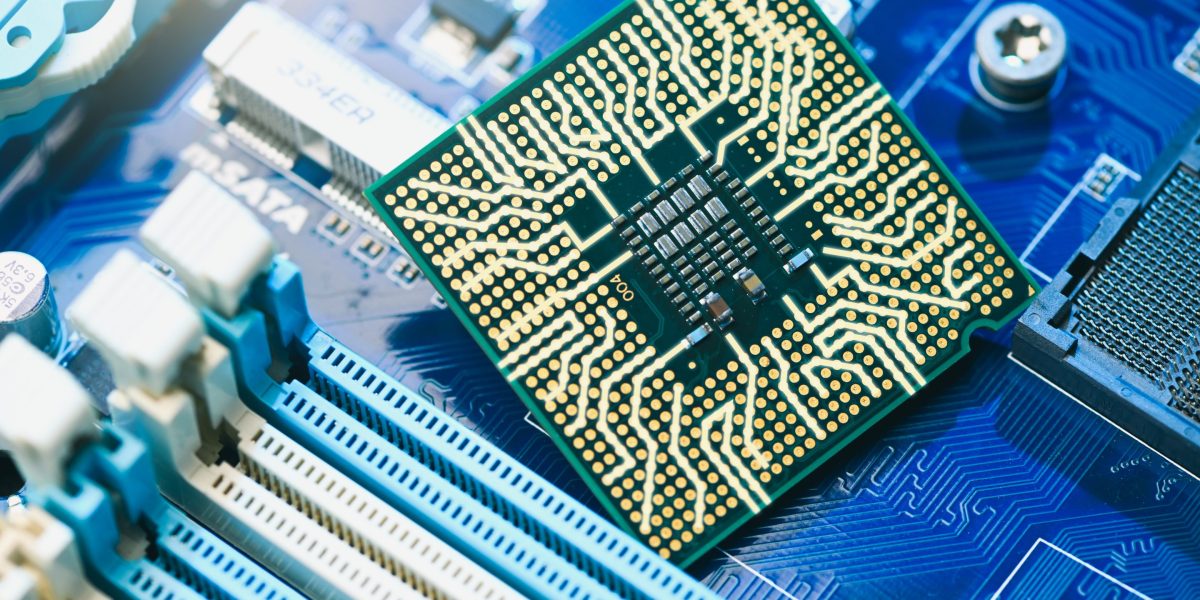
On December 9th, U.S. President Donald Trump announced that the U.S. would permit the export of Nvidia’s H200 processors to China, imposing a 25% fee on all sales. This decision has sparked significant controversy within the American political landscape, with critics like Senator Elizabeth Warren accusing Trump of compromising national security.
In the current climate of global AI competition, characterized by a zero-sum mentality, many leaders emphasize the need for stringent export controls. Dario Amodei, co-founder and CEO of Anthropic, has highlighted the importance of AI safety domestically while framing an arms race abroad. He argues that these controls are essential to lag China’s advancements and ensure that the U.S. emerges victorious in the AI arena. Similarly, Chris Miller, author of Chip War, claims that U.S. restrictions on advanced GPUs, such as the NVIDIA H100s, have effectively slowed down China’s chipmaking capabilities. Trump himself claimed in July that America had initiated the AI race and asserted its potential to win.
However, this interpretation of the AI landscape as a competitive race may be misguided. A two-party race typically suggests a rivalry over a non-excludable resource, where the first party to secure the resource gains a substantial advantage. This is akin to the metaphor from the 1955 film Rebel Without a Cause, where two characters face a fatal choice while racing toward a cliff.
The geopolitical context of AI, however, does not support such a narrative. The use of AI models is excludable; for instance, Sam Altman of OpenAI opted to restrict access to Chinese users of GPT. Nonetheless, AI model implementations are not strictly rivalrous. Although resources like energy and data may impose costs on marginal users, the decision to exclude users stems from a belief that cooperation with China is inadvisable.
Critics argue that selling semiconductors to China would empower Beijing, ultimately diminishing U.S. interests. Yet this perspective overlooks the potential advantages for American households, which could benefit from increased access to advanced electronics at lower prices. The global technology landscape also affords the U.S. considerable leverage, as many economies rely on American tech innovation.
Economists often describe scenarios involving non-rivalrous yet excludable resources as a “stag hunt,” a concept derived from philosopher Jean-Jacques Rousseau. In this scenario, a group of hunters can either cooperate to hunt a large stag or compete individually for smaller prey like rabbits. The success of the group hinges on collaboration, which yields superior outcomes compared to individual efforts.
The current global AI competition resembles a stag hunt more than a race. Collaborative governance, policy alignment, and trade can provide substantial rewards, while a lack of communication can lead to mistrust and miscalculations. The risk of escalating tensions due to misunderstandings or reckless AI deployment in conflicted regions looms large. The shared goal for U.S.-China relations in AI should focus on mutual benefits and the prevention of costly errors.
Addressing pressing challenges such as AI manipulation and labor displacement requires cooperation and trust among nations. This collaborative approach can foster transparency and diminish the erratic politicization currently evident in discussions surrounding AI.
To achieve these objectives, policymakers must invest in robust multilateral AI governance institutions, including effective dispute resolution mechanisms. Emerging middle powers, such as energy-rich Saudi Arabia and tech-focused nations like France and Israel, along with a talent-rich India, are carving out their niches in this evolving landscape.
The international order is increasingly multi-polar, and the domain of AI is no exception. Rather than striving to “win the AI race” at the expense of a rival, both the U.S. and China should prioritize building bridges and identifying common interests with other nations.
See also Good Tokens Expands AI and Blockchain Solutions to Enhance Global Humanitarian Impact
 Anthropic’s Claude Code Empowers Mobile AI Coding, Achieving Major Productivity Gains in 2026
 KT Launches Nationwide AI Ethics Curriculum with Ewha University to Empower Youth Training
 AI-Driven Inflation Threatens 2026 Tech Boom as Costs Surge and Profit Margins Shrink
 Elon Musk Reveals Grok Imagine’s Guide to Creating Cinematic AI Images and Videos