

















































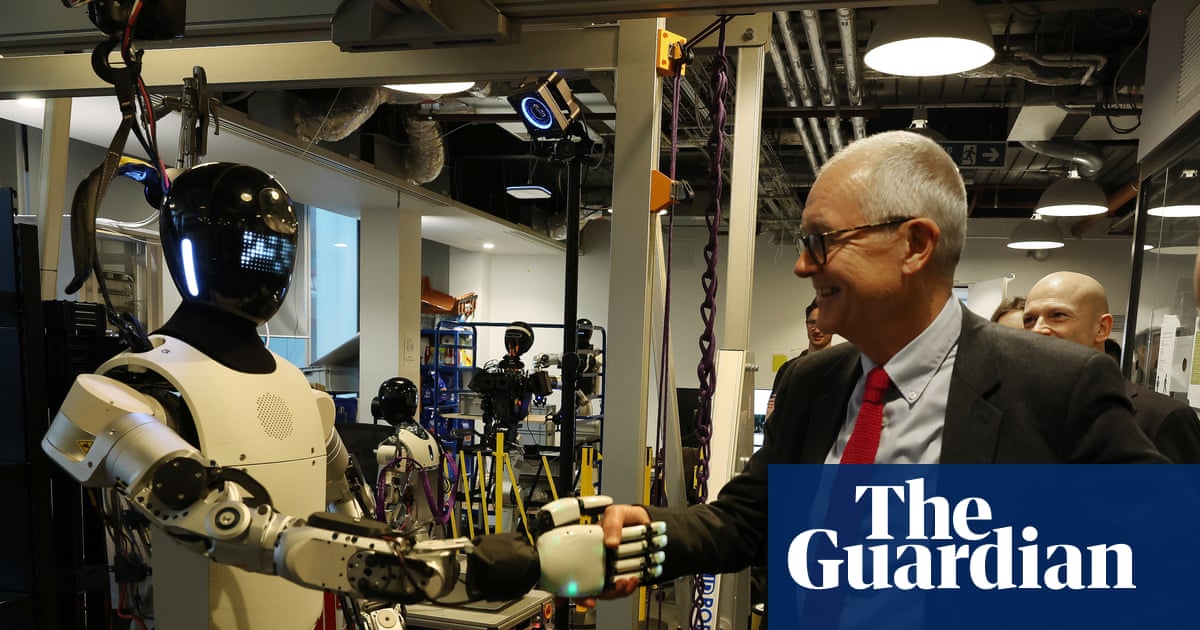
Advances in artificial intelligence (AI) and robotics are set to reshape the job landscape in the UK, particularly in warehouses and factories, according to Patrick Vallance, the UK science minister. The comments came as the government unveiled plans to ease regulatory burdens for companies involved in robotics and defense technology.
Speaking to the Guardian, Vallance emphasized that the integration of AI with robotics is paving the way for a new generation of automated systems. “What’s really changing now is the combination of AI and robotics. It is opening up a whole new area, particularly in the sorts of things like humanoid robotics,” he stated. Vallance highlighted that this shift will not only enhance productivity but also fundamentally alter the nature of human jobs.
As part of a broader initiative, the government’s Regulatory Innovation Office (RIO) is expanding its support to the robotics and defense sectors, aiming to streamline processes for companies in these industries. Vallance pointed out that warehouses and factories, already leading in robot deployment, will see substantial changes with the introduction of humanoid robots capable of performing tasks that require mobility and dexterity.
“Activities that require movement around warehouses and factories, or those sorts of things that can be made robotic, will be made robotic. I think they will be made robotic in many cases and therefore, will change the nature of those jobs. That’s going to be the first wave,” he noted.
However, the implications of AI integration are not uniformly positive. London Mayor Sadiq Khan cautioned that the rise of AI could lead to significant job losses, warning of a potential “new era of mass unemployment.” In his annual Mansion House speech, Khan called for government intervention to facilitate the transition for workers displaced by technology.
Responding to Khan’s concerns, Vallance acknowledged that while robots would replace “repetitive” tasks, they also have the potential to enhance existing roles. “You take away some of the things which are less interesting, repetitive things that can be done in another way,” he remarked. He cited the example of robotics in surgical procedures, where technology complements human skills rather than displacing them, allowing for more precise operations.
In a move to bolster the UK’s robotics landscape, the government is investing £52 million in new hubs designed to promote the adoption of robotics in British businesses. These hubs will offer practical advice and live demonstrations to help companies integrate robotic technologies more effectively. “The RIO will aim to streamline overlapping requirements to bring products to market safely, but more quickly, to improve lives and grow our economy,” a government statement read.
The expanded remit of the RIO is expected to benefit various technologies, including autonomous drones, which often face complex regulatory hurdles due to overlapping aviation, data protection, and sector-specific safety rules. This complexity can prolong the approval process, creating challenges for innovation.
During a recent visit to Humanoid, a UK-based robotics firm that has deployed prototypes in a factory operated by the German industrial group Siemens, Vallance discussed the importance of real-world testing for robotic technologies. Adam Kelsall, Humanoid’s head of product management, expressed support for initiatives that facilitate faster testing and deployment of robotic solutions.
The evolving landscape of AI and robotics presents both opportunities and challenges for the workforce. While some jobs may be rendered obsolete, others could be transformed or created, necessitating a proactive approach from policymakers to ensure a smooth transition for workers in affected sectors. As the UK positions itself as a leader in robotics, the government’s initiatives could play a crucial role in shaping the future of work in a technology-driven world.
See also Wikipedia Partners with Microsoft, Meta, and Amazon for AI Training Data Agreements
 India’s AI Ecosystem Leverages Google’s Support to Scale Startups for Global Impact
 Gen Z Faces Job Crisis as AI Threatens 50% of Entry-Level Positions, Bezos Advocates for Education
 Google Launches Universal Commerce Protocol, Enabling Seamless AI Shopping Across Major Retailers