














































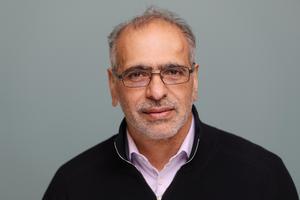
The University of Ottawa has announced the launch of the Ottawa Medical Artificial Intelligence Research Institute (OMARI), a new center dedicated to advancing research, education, and innovation in medical artificial intelligence (AI). Spearheaded by Dr. Khaled El Emam, a Canada Research Chair in Medical Artificial Intelligence, the institute aims to enhance collaborations and elevate the university’s standing within the rapidly evolving field of medical technology.
OMARI will function as a resource hub focused on harnessing and scaling medical AI to accelerate research breakthroughs, foster educational advancements, and promote health equity through data-driven tools. Located within the Faculty of Medicine, the institute seeks to leverage partnerships with the university’s esteemed affiliated hospitals and research institutes.
“We want to motivate clinicians, researchers, and students to bring their innovations from the lab into the real world,” said Dr. El Emam, who is also a Senior Scientist at the Children’s Hospital of Eastern Ontario (CHEO) Research Institute. The institute aims to create environments where innovation and commercialization can coexist and thrive.
OMARI plans to support researchers in launching spin-off companies, facilitating the transition of innovative ideas to market-ready solutions. It will also highlight underutilized funding sources, including foundations that back medical AI initiatives and philanthropic contributions from companies. The goal is to establish a collaborative ecosystem that identifies and addresses the needs of investigators, offering access to essential resources such as computing power, software tools, and financial support.
“We want to build communities of practice so that investigators and students working on similar problems or using similar tools can share ideas and benefit from each other’s experience,” Dr. El Emam explained. This collaborative approach aims to expedite the research process and maintain competitiveness in a field that is continuously evolving.
Initially, OMARI will focus on advancing medical research and ethically deploying AI tools. However, its future phases will incorporate educational initiatives aimed at equipping students with practical skills in AI application. “We teach students the basics, but we also want them to learn how to use AI to code faster and produce analysis results more quickly,” Dr. El Emam noted. This dual emphasis on teaching fundamental concepts and practical application is intended to enhance overall educational quality.
The establishment of OMARI comes at a crucial time as medical AI continues to have a transformative impact on healthcare. By fostering innovation and collaboration, the institute aims to position Ottawa as a recognized leader in medical AI research. As the field grows, the institute’s focus on ethical considerations and educational advancements will likely be pivotal in shaping the future of healthcare technology.
For more information about the Ottawa Medical Artificial Intelligence Research Institute, visit the University of Ottawa website.
See also AI Policy Will Drive $1.5T Growth and Global Power Shifts, Warns Romesh Wadhwani
 Amazon Cuts 16,000 Jobs Amid $50B OpenAI Investment Talks, Signaling AI Strategy Shift
 Character.AI and Google Settle Teen Safety Lawsuits Following Suicide Tragedies
 Alphabet’s Project Genie Revolutionizes 3D World Building, Targeting Game Developers