



















































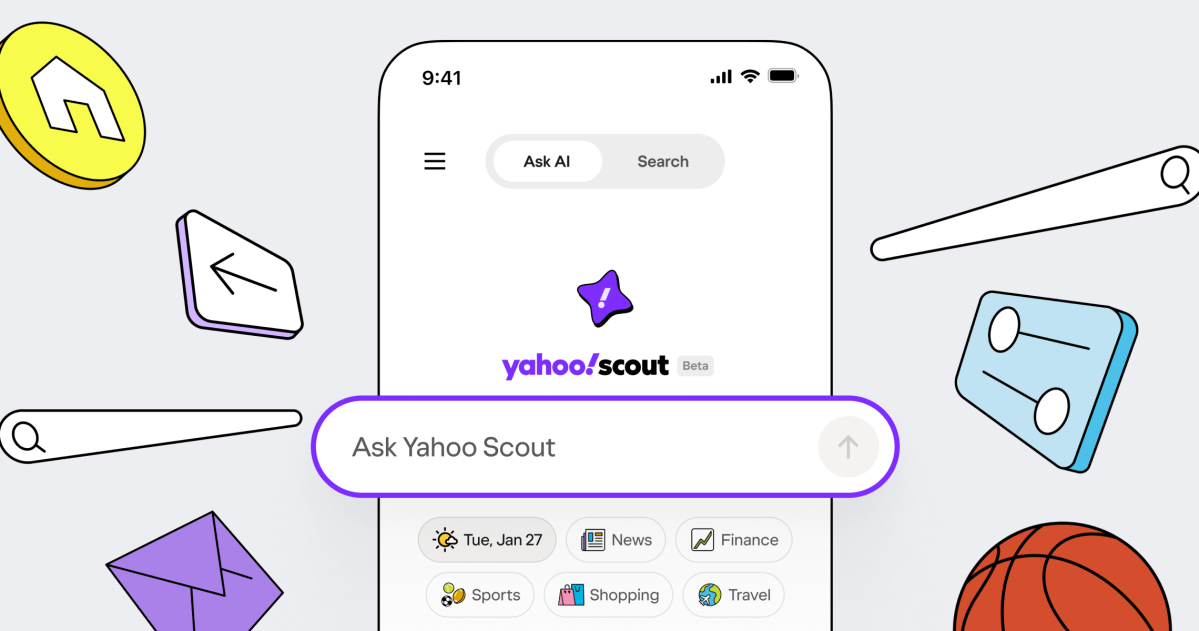
Yahoo is re-entering the digital landscape with its new AI-driven product, Scout, signaling a return to its origins as a comprehensive web guide. Initially known as “Jerry’s Guide to the World Wide Web” in the 1990s, Yahoo’s approach was overshadowed by the rise of traditional search engines. However, the company believes the current moment represents a resurgence of interest in curated web experiences.
Scout, Yahoo’s latest venture, functions as a search portal reminiscent of AI tools such as Perplexity and Google’s AI Mode. Users can pose questions directly in a text box, which Scout answers promptly. Presently, Scout operates as a tab within Yahoo’s search engine—still the third-most-popular search platform in the U.S.—and as a standalone web application along with being a key feature in the new Yahoo Search mobile app. Described by Yahoo as an “answer engine,” Scout uses AI to deliver succinct responses, making it one of the most engaging search tools on the market.
According to Eric Feng, head of Yahoo’s research division and the Scout project, the tool serves two main purposes. First, it aids users in navigating the vastness of the web, filtering out clickbait and unreliable sources. Second, it aims to integrate AI-generated summaries and insights across Yahoo’s various offerings, consolidating disparate information into a cohesive experience. Feng articulated this shift from mere web searching to a more intelligent form of data retrieval.
Yahoo’s extensive portfolio of content verticals—spanning Sports, Finance, Weather, and more—positions it uniquely in the market. With a sizable newsroom and partnerships with numerous publishers, Yahoo boasts a wealth of high-quality material for Scout to utilize. CEO Jim Lanzone emphasized that Yahoo can leverage its user data, content relationships, and search expertise to create a distinctive AI-driven answer engine.
While Google’s capabilities are formidable, Yahoo has a strategic advantage: it is unburdened by a massive search-advertising ecosystem. Lanzone indicated that, unlike Google, which must delicately navigate its ad business, Yahoo can fully embrace AI integration with Scout. Although the company does intend for Scout to coexist with traditional search results initially, it clearly envisions a future where the AI-based interface takes precedence.
Scout is launching with a monetization strategy that includes affiliate links for shopping results and an advertising unit appearing at the bottom of some queries. Lanzone noted that many AI platforms are opting for ad-driven revenue models, and Yahoo plans to follow suit to keep Scout accessible for users. “Maybe one day we’ll also have a paid tier,” he suggested, “but free search is extremely important.”
Interestingly, Yahoo has opted not to develop its own foundational AI model, which Lanzone highlighted as a costly venture. Instead, Scout is built atop Anthropic’s Claude model, enhanced with what Feng calls “Yahoo content, Yahoo data, Yahoo personality.” The search capabilities are supported by an ongoing partnership with Microsoft and Bing, which has been in place for several years.
In early testing, Scout distinguishes itself as a search engine rather than an AI assistant, providing straightforward responses organized in a conversational format. This contrasts with many current AI tools that often obscure the web links users need. For instance, when tested with a query about a winter storm, Scout offered a compact summary along with multiple clearly highlighted links, enhancing user engagement with the content.
Scout’s effectiveness in linking users to relevant information stands out in comparison to other platforms like ChatGPT, Perplexity, and Google AI Mode, which tend to bury links behind icons or less visible buttons. In a time when maintaining user engagement is critical, ensuring that users click through to external content could prove vital for Yahoo’s broader business model and its relationships with newsrooms and publishers.
As Yahoo reinvents its role in the digital landscape, it seeks to blend AI capabilities with its historical strengths in content curation. While Scout may not yet rival Google’s dominance, its initial performance suggests a promising step toward reclaiming its place as a trusted guide on the internet, catering to users’ needs for reliable information amidst the complexities of the web.
See also AI Breakthrough at TU Wien Enhances Quantum Field Theory Simulations, Reducing Computational Demands
 Micron Invests $24B in AI Memory Expansion, Driving Stock Surge and Job Growth
 UK Firms Cut Jobs Amid 11.5% Productivity Boost from AI; Unemployment Hits Four-Year High
 Yahoo Launches Scout, an AI Answer Engine Featuring Up to 9 Visible Sources