






















































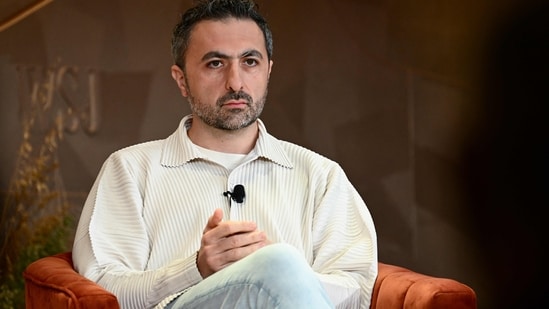
Microsoft AI CEO Mustafa Suleyman asserted on Thursday that advancements in Artificial Intelligence (AI) will lead to the full automation of most tasks in white-collar jobs within the next 12 to 18 months. In an interview with the Financial Times, Suleyman indicated that occupations such as lawyers, accountants, and project managers, which predominantly involve computer work, are particularly at risk of being completely automated.
Suleyman pointed to the field of software engineering, noting that many professionals are increasingly leveraging AI to assist in their coding efforts. He explained that this shift has redefined the role of engineers, who now focus more on “strategic” tasks such as architecting systems and managing production processes. He emphasized that this transformation in job roles has accelerated significantly over the past six months.
Addressing the capabilities of current AI models, Suleyman claimed that these systems can code more effectively than the majority of human coders, stating, “maybe even all of them to date.” He forecasted that the process of creating new AI models would soon become as straightforward as producing a podcast or writing a blog, allowing institutions to tailor AI to their specific requirements.
Looking ahead, Suleyman predicted that AI agents would be capable of managing workflows across large organizations within the next two to three years. This expectation aligns with the broader industry narrative that AI will increasingly take over tasks traditionally performed by humans, raising concerns about job displacement.
In his vision for Microsoft, Suleyman expressed a commitment to developing a superintelligence. He noted the recent renegotiation of a long-term partnership with OpenAI, extending the intellectual property license until 2032. “We also decided this was the moment we have to set about delivering true AI self-sufficiency,” he remarked, underlining Microsoft’s strategy to bolster its AI capabilities.
Suleyman elaborated on Microsoft’s plans to cultivate its own foundation models of AI, which would be supported by a robust training team designed to organize and manage vast amounts of data. These initiatives come amid rising concerns about the impact of AI on employment, particularly as other tech giants, including Amazon, have announced substantial layoffs—reportedly affecting as many as 16,000 corporate jobs—citing increased competition in the AI sector.
Microsoft has been fortifying its relationship with OpenAI since entering a partnership in 2019 to advance AI technologies. The recent agreement solidifies OpenAI’s role as Microsoft’s primary partner for frontier models, emphasizing the continued collaboration that seeks to push the boundaries of what AI can achieve.
As AI technology evolves at an unprecedented pace, the implications for the workforce are profound. Suleyman’s comments reflect a growing consensus in the tech industry regarding the transformative potential of AI, which could redefine numerous job roles and functions. The challenge will be to navigate this transition while ensuring that the benefits of AI are broadly shared, mitigating the risks of significant job losses.
See also Ellucian Earns Four Finalist Nods at 2025 AI Awards for Ethical Innovation in Higher Education
 Chinese Open-Source AI Surges: DeepSeek Inspires 600M Downloads and New Models
 India’s 2026 AI Regulation Mandates Rapid Takedowns, Risking Compliance for Global Firms
 Quantum-AI Integration: Key Strategies for Business Leaders to Navigate Costs and Cybersecurity Risks














