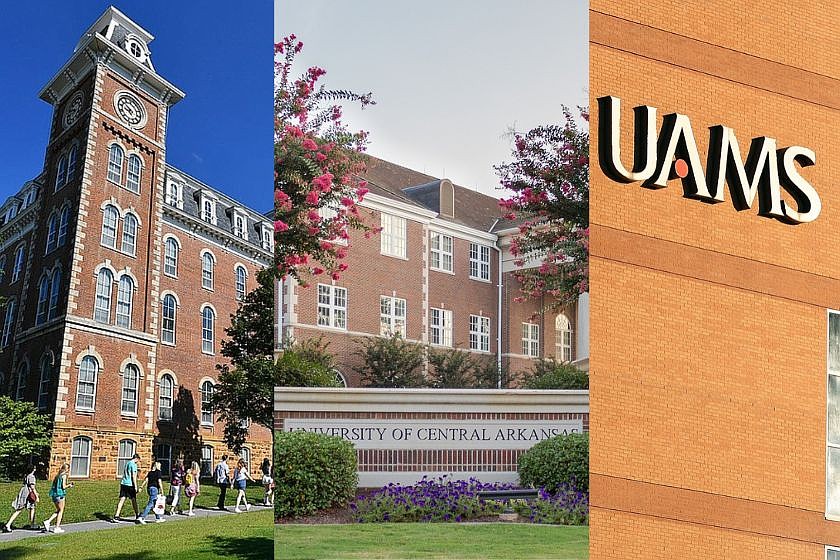
The University of Arkansas (UA)-Fayetteville has teamed up with several institutions to launch the Mid-South AI Research Consortium, aiming to consolidate the region’s artificial intelligence capabilities into a scalable ecosystem. Collaborating with the University of Memphis, the University of Mississippi, and the University of Tennessee Health Science Center, the initiative seeks to leverage the Mid-South’s prominence in transportation, energy, and advanced computing. The consortium is set to serve as a “living laboratory” for AI research, facilitating access to shared high-performance computing resources and promoting collaboration among leading researchers.
“Artificial intelligence is creating new possibilities in fields that are critically important to the Mid-South, from agriculture and logistics to health and energy,” stated UA-Fayetteville Chancellor Charles Robinson. “By working together, our universities can help establish the region as a leader in AI innovation while strengthening key industries, preparing students for success in the workforce, and improving lives across the Mid-South and beyond.”
The consortium plans to tackle various sectors including rural and precision health, supply chain logistics, energy efficiency, agriculture, and national defense. Specific goals include addressing healthcare disparities through AI-enabled evaluation, securing the next generation of global trade with industry partners such as FedEx and J.B. Hunt, tackling the energy demands of supercomputers, and advancing sustainability analytics for major agricultural producers in the region.
Workforce development is a central focus, with the consortium aiming to create training opportunities for local residents and students from member institutions. This initiative represents a significant step towards enhancing the region’s educational and economic landscape, positioning Arkansas as a future hub for AI innovation.
In another developmental stride, the University of Central Arkansas (UCA) Aviation Academy has been selected as one of six universities nationwide to partner with the U.S. Air Force Junior Reserve Officer Training Corps for a competitive summer flight training program. From June 10 to August 7, eight cadets will receive training at UCA, with opportunities to earn college credit, work towards their private pilot licenses, and gain practical insights into aviation careers. This program is designed to meet the increasing demand for pilots and to improve access to aviation opportunities for high school students.
“Being chosen as one of only six sites nationwide speaks to the strength of our program and the success we demonstrated last year,” remarked Brad Teague, director of the UCA Aviation Academy. “This opportunity continues to expand access to aviation training while strengthening our role in preparing the next generation of pilots.”
The Air Force Junior ROTC program aims to educate high school cadets in citizenship while promoting community service and instilling a sense of personal responsibility. Cadets pursuing further education may also receive special consideration for Air Force Reserve Officer Training Corps scholarships.
Additionally, the University of Arkansas for Medical Sciences (UAMS) has formalized a new memorandum of agreement with the University of Arkansas-Fort Smith (UAFS) to enhance healthcare education pathways. This agreement encompasses 14 UAMS programs across four colleges, offering qualifying UAFS students guaranteed interviews, priority application reviews, or automatic admission, contingent on program enrollment and student qualifications. Interested students must declare their intent to apply by the admissions deadline and receive confirmation from designated UAFS faculty.
“The significance of this agreement extends far beyond admissions as many of the students who start at UAFS go on to become the providers, practitioners, and health care leaders who serve this region,” stated UAFS Chancellor Terisa Riley. “Creating stronger pathways for their success is one of the most influential ways we invest in healthier communities and a stronger future for western Arkansas and the state as a whole.”
UAMS has also received initial accreditation for a preventive medicine residency program, marking a notable advancement in healthcare education. The Accreditation Council for Graduate Medical Education has approved the formation of the Dr. Joseph H. Bates Preventive Medicine Residency Program, which will recruit two residents annually starting in July 2027. This will be the only preventive medicine residency program in Arkansas, featuring a curriculum that incorporates public health principles.
“This is a big step toward bridging the chasm between medicine and public health in Arkansas,” commented Dr. Bala Simon, founding director of the residency program. The initiative is funded by the Arkansas Department of Health through state tobacco tax revenues and is a collaborative effort involving the Arkansas Department of Health, UAMS College of Medicine’s Department of Family and Preventive Medicine, and the UAMS College of Public Health.
The program honors Joseph H. Bates, a renowned figure in tuberculosis research and preventive medicine, who contributed significantly to public health in Arkansas.
See also Acer Edu Summit 2026 Unveils AI Innovations to Transform Education Across Asia Pacific
 Schools Ban Screens While Pushing for AI Literacy: A New Approach Emerges
 UK and DepEd Strengthen EdTech Partnership to Boost Learning in Philippines
 Star Trek Insights: Reimagining Ed Tech for Human-Centered Learning Environments