Demis Hassabis, the co-founder and CEO of Google DeepMind, is set to visit Seoul this week to reunite with Go grandmaster Lee Se-dol, commemorating a decade since their landmark human-AI Go match. Hassabis will arrive on Monday and is expected to meet South Korean President Lee Jae Myung to discuss the rapid advancements in artificial intelligence (AI) and potential collaborations on AI-driven innovations.
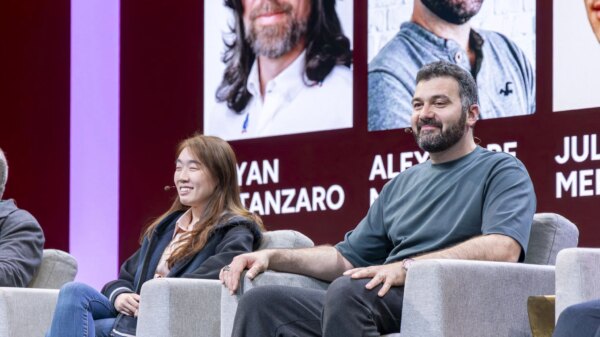
On Wednesday, he will participate in the Google for Korea 2026 event, where he is scheduled to hold a special dialogue with Lee Se-dol under the theme “AlphaGo 10 years: A Vision for AI for All.” The event will also feature bestselling author and YouTuber Cho Seung-yeon as a panelist, highlighting the cultural impact of AI technology.
Lee Se-dol, now an adjunct professor at Ulsan National Institute of Science and Technology, was among the world’s elite Go players at the time of their historic match. He notably became the only human to defeat AlphaGo in 2016, achieving a single victory in Game 4, which has been celebrated as a moment of exceptional human ingenuity against the AI system.
Hassabis is anticipated to reflect on the significance of that match during his dialogue with Lee, providing insights into the evolution of AI since their confrontation. Yoon Koo, Google’s country managing director in South Korea, will deliver the opening remarks on AI innovation, titled “Seoul Again: AI Innovation Shaped by Google and Korea Together.”
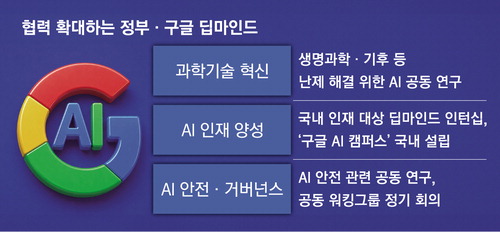
In his meeting with President Lee, Hassabis will discuss the broader implications of AI on science and technology. The South Korean president has been actively pursuing global partnerships in AI as part of his ambition to position the nation among the top three AI powers in the world. This involves collaborations with notable companies such as OpenAI, Nvidia, and SoftBank.
Seoul has also made strides in international agreements, securing the unanimous adoption of an “AI Initiative” at the APEC summit last year. The South Korean government is engaged with organizations like the World Health Organization, the United Nations Development Program, and the International Telecommunication Union to establish a global AI hub within the country.
The presidential office has indicated that Hassabis’s visit will further the government’s commitment to international AI cooperation and will help accelerate policies aimed at fostering AI-driven innovation while ensuring the responsible application of the technology.
In addition to his role at DeepMind, Hassabis was awarded the 2024 Nobel Prize in Chemistry for his pioneering work on AlphaFold, a protein-structure prediction model that has significantly advanced the field of biological research.
The reunion between Hassabis and Lee, alongside discussions with government officials, signifies a pivotal moment for both the AI industry and South Korea’s strategic positioning in the global technology landscape.
See also OpenAI Launches Codex Plugin for Claude Code, Streamlining AI Development Workflows
 ServiceNow Reports Q1 2026 Revenue at $3.77B, Guidance Raised Amid AI Growth
 Meta’s New Smart Glasses Introduce Controversial “Name Tag” Feature Amid Privacy Fears
 OpenAI’s Sam Altman Apologizes as Company Faces Criticism for Failing to Report AI Threats