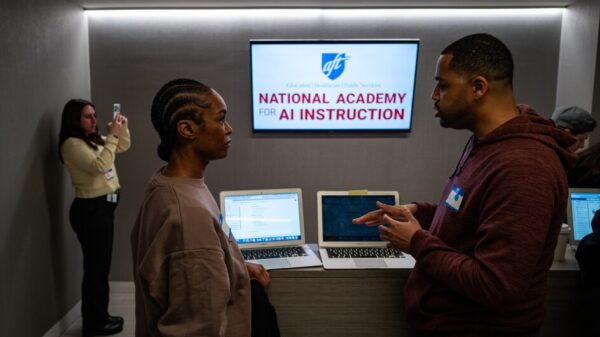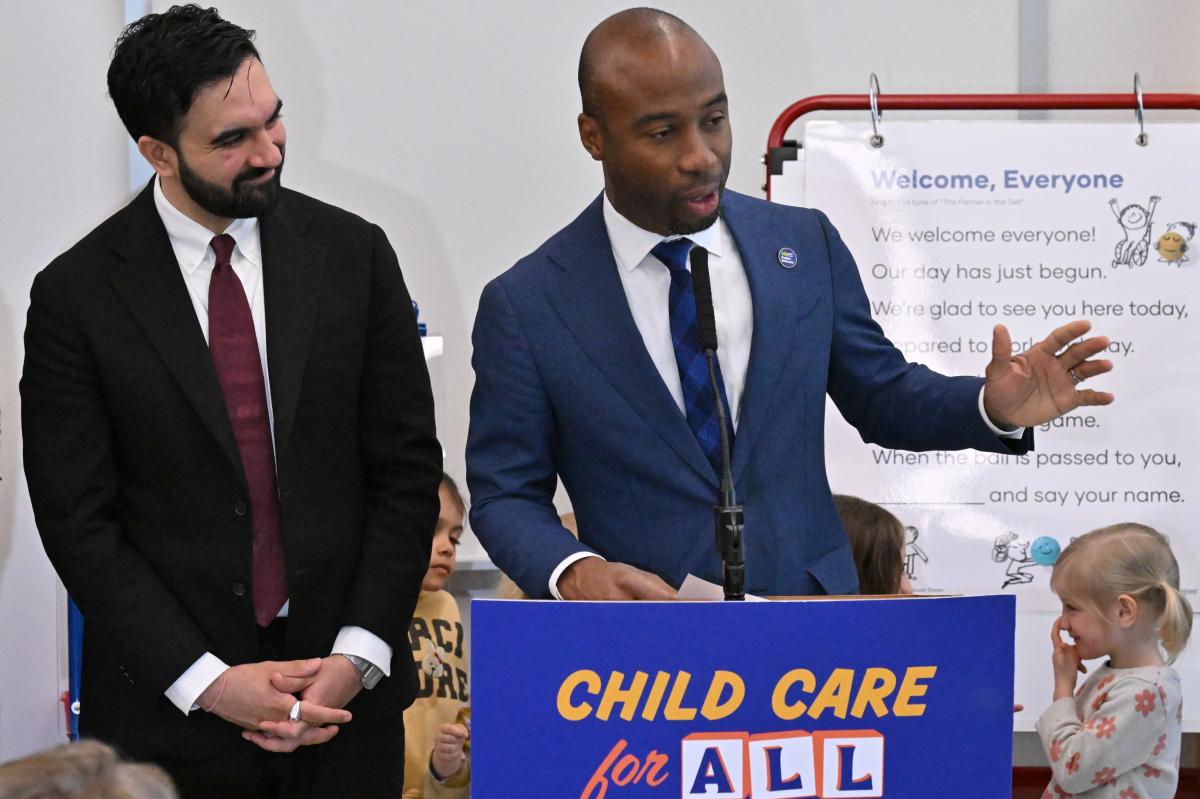
New York City’s plans for a specialized high school focused on artificial intelligence have been abruptly halted following significant backlash over its merit-based admissions policy. Schools Chancellor Kamar Samuels announced the cancellation of the Next Generation Technology High School in Manhattan after criticism from activists who argued that the admissions criteria would worsen racial inequalities.
The proposed school faced intense scrutiny, particularly regarding its selective admissions process. Greg Faulkner, chairman of the Panel for Educational Policy (PEP), expressed his opposition, stating that such “screened” schools fail to promote “equity and equitable access,” thereby exacerbating existing disparities among students of different racial and ethnic backgrounds.
In a communication to parents, Faulkner commented, “While I support the concept of a school dedicated to advanced technology and appreciate the academic rigor of this model, I will unfortunately not be voting to approve the Next Generation proposal.” He indicated that he would reconsider his position if proponents altered the admissions policy to be more inclusive.
The school, aimed at an opening in the fall at 26 Broadway, was unlikely to secure enough votes from the 24-member panel during an upcoming meeting. Chalkbeat first reported the chancellor’s decision to terminate the proposal.
Next Generation Technology High School had already attracted considerable interest, with approximately 1,000 applications submitted for just 100 available seats. Proponents of the school pointed out that the applicant pool included a diverse demographic: 39% Hispanic, 21% Black, 20% Asian, and 17% White, along with multiracial or Native American students.
Linda Quarles, secretary of the Citywide Council on High Schools and a supporter of Next Gen Tech, expressed her astonishment at Faulkner’s stance. “To have the chairman of PEP say that he’s not going to support a screened school is beyond surprising,” she remarked. Quarles emphasized that 120 screened high school programs across the city use performance or merit criteria for admissions.
She cautioned that phasing out merit-based schools with rigorous standards could deter parents from enrolling their children in the public school system, potentially leading to a decline in city school enrollments. “It is a dangerous precedent,” Quarles noted, adding that such a move would be “devastating for the kids.”
Mayor Zohran Mamdani, who graduated from the selective Bronx High School of Science, has called for the elimination of selective “gifted and talented” programs in earlier grades. A representative for Chancellor Samuels confirmed the withdrawal of the Next Gen proposal, along with other controversial decisions regarding the closure of Upper West Side middle schools, including PS 191 and the Manhattan School for Children.
“We take family and community feedback very seriously, and, after careful consideration, we have decided to withdraw some of the proposals from the April 29 PEP agenda,” stated a spokesperson for the city Department of Education. “Ensuring that every child has access to academically rigorous and truly integrated education remains our focus, and withdrawing these proposals is not an end to these important conversations. To our school communities: we heard you.”
Next Generation was designed to be an academically rigorous institution with a robust math and science curriculum, including calculus for 11th graders. Courses would cover essential technology skills like coding, and students could earn certificates in digital music audio production and cybersecurity. The school planned to partner with renowned institutions such as Carnegie Mellon University and Google.
Caleb Haraguchi-Combs, formerly an assistant principal at the Manhattan Center for Science and Math, was set to be the founding principal of the school, which would have shared its facilities with Richard Green High School and the Lower Manhattan Community Middle School. The proposed high school was intended to replace the Urban Assembly School of Business for Young Women, which is facing closure due to low enrollment.
Concerns regarding the AI-focused school were also voiced by parents and educators at the Lower Manhattan Community Middle School, who expressed interest in utilizing the space to expand their offerings to include grades nine to twelve.
See also High Five Expands EOR Services into Vietnam, Launches Autonomous AI Recruitment Agents
 Chinese Scientific Groups Launch Initiative for Neutral Global AI Governance Amid Rising Tensions
 ADGM Report Reveals AI and Tokenization’s Role in Reshaping Digital Finance Ecosystem
 Xtalks Hosts Webinar on Responsible AI Use in Accelerating Clinical Trials with Expert Insights
 Verkhovna Rada Advances Civil Code Draft, Securing Digital Inheritance and AI Regulations