






















































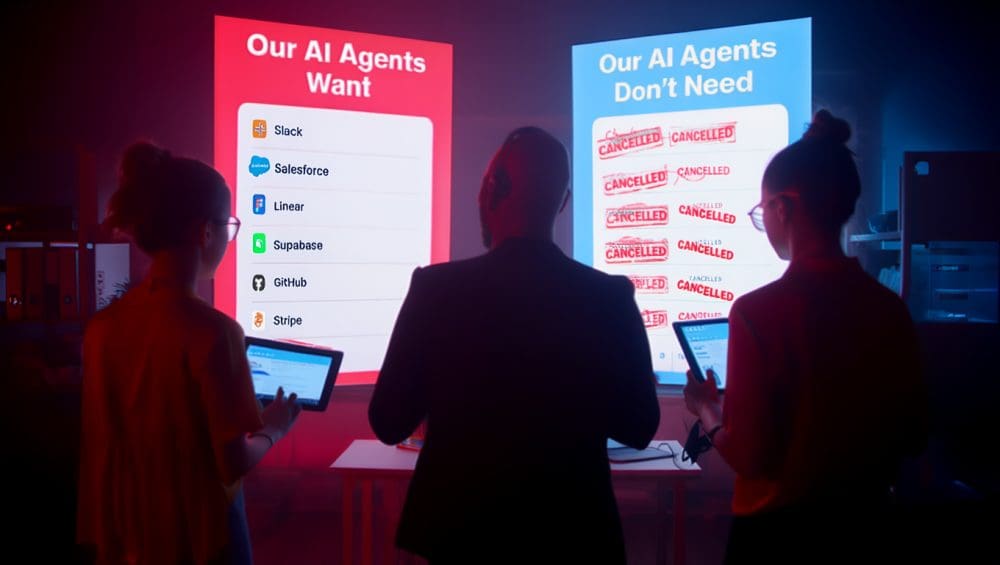
The rise of artificial intelligence (AI) agents is reshaping the business landscape, particularly in the realm of traditional B2B software. Many industry observers are questioning whether the conventional business model, centered around user seats, is in permanent decline as AI agents increasingly assume roles previously held by human employees. However, recent experiences at SaaStr illustrate a more nuanced reality.
At SaaStr, which operates with a team of three humans and over 20 AI agents, the implications of AI integration are significant. For instance, while the company has reduced its human user count from over ten to just two seats on Salesforce, its annual expenditure on the platform rose dramatically from approximately $12,000 to $22,000—an 83% increase. This surge in costs is attributed to the substantial usage by AI agents, which utilize Salesforce far more extensively than human users ever did, prompting a revision of the software’s value proposition.
This scenario serves as a testament to how traditional B2B software can benefit from AI integration. The AI agents perform tasks at a scale and speed that far exceed human capabilities, leveraging Salesforce as a critical component of SaaStr’s operations. The company now employs various AI tools, including a VP of Marketing powered by AI, and multiple agents that drive marketing campaigns with impressive metrics, such as a 72% open rate for win-back campaigns. This demonstrates that, rather than signaling the end of revenue potential for B2B software, the shift toward AI could lead to increased financial returns for platforms that adapt.
Contrastingly, SaaStr’s experience with Notion highlights the challenges some software may face in an AI-driven environment. Although Notion has released an effective AI product that has revitalized its growth, the SaaStr team found themselves increasingly dependent on AI-driven workflows that rendered Notion redundant for their operations. The AI agents do not require the functionalities provided by Notion, which resulted in the company ceasing to use the platform even while still paying for it. This “stealth churn” signifies a potential risk for many software providers, as their clients may increasingly find themselves bypassing their offerings in favor of AI solutions that fulfill their needs more effectively.
The fundamental question emerging from these experiences is whether AI agents actually need specific software to succeed in their tasks. If a B2B product is deemed essential by AI agents, organizations are likely to spend more to leverage its capabilities. Conversely, if the software is not critical, companies may find themselves reconsidering its value with every renewal cycle.
This unfolding landscape poses a crucial dilemma for B2B software companies and their executives. As AI continues to evolve, it is imperative for leaders to assess whether their products can effectively serve AI agents or if they are merely catering to diminishing human user bases. The future financial trajectory of many software providers could hinge on this evaluation.
In terms of market segmentation, certain categories appear well-positioned to thrive amidst the AI transformation. Companies offering AI infrastructure APIs, such as ElevenLabs and Twilio, might see accelerated growth as agents drive demand for voice, image, and data processing capabilities. Similarly, platforms like Salesforce and data management solutions such as Snowflake and Databricks stand to benefit significantly, as AI agents require robust data and integration capabilities.
Conversely, sectors like project management and support tools may face uncertainty. As AI agents take on more tasks traditionally held by humans, software designed primarily for human interaction could become less relevant. Companies like Zendesk and Intercom may need to adapt swiftly to maintain their relevance, lest they be surpassed by new solutions that better cater to AI workflows.
As the industry continues to grapple with these changes, SaaStr has developed a tool, the SaaStr AI Agent Grader, to evaluate how well existing B2B products cater to AI agents. This development underscores the growing recognition of AI’s potential to reshape software usage and spending patterns. The question facing B2B companies today is not merely whether they are integrating AI into their products, but rather, “Do AI agents actually need our software?”—a query that could define the future of the sector.
See also Solitics Launches AI Expert, Transforming Retail Broker Marketing with 40% Engagement Boost
 Amazon AWS Launches AI Office Tools to Compete in $300 Billion SaaS Market
 Initta Technology Unveils AI-Driven ‘Infinity’ Pavilion at CHINASHOP 2026, Showcasing Smart Retail Solutions
 Tredence Launches Gemini-Powered AI Accelerators to Transform Enterprise Operations
 Nvidia VP Reveals AI Compute Costs Surpass Human Labor, MIT Study Confirms 77% Jobs Cheaper















