



































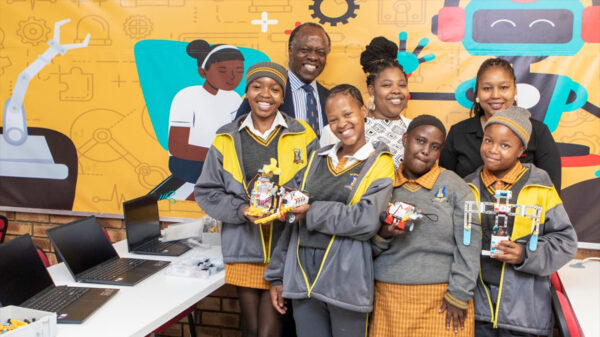













The Zambian government has entered a partnership with U.K.-based Obrizum Group to pilot the use of artificial intelligence in classrooms, with the initial phase set to launch in mid-April, as announced by the Ministry of Technology and Science on March 9. The agreement, signed in Lusaka, aims to enhance educational opportunities for secondary school students before expanding to include technical, vocational, and entrepreneurship training institutions.
The initiative will utilize AI-driven learning platforms designed to assess students’ needs and abilities in real time, thereby customizing educational content to meet individual learning requirements. Chibeza Agley, CEO of Obrizum Group, emphasized that the collaboration aims to showcase the capacity of technology-enabled learning to boost efficiency and academic performance. “The project will show how technology-enabled learning can improve efficiency, academic outcomes and better prepare graduates for the demands of the modern labor market,” Agley said.
The partnership also leverages Obrizum Group’s academic ties with the University of Cambridge, bringing technological expertise and research support to the program. Zambian Minister of Technology and Science Felix Mutati highlighted the initiative’s role in providing globally competitive learning solutions, particularly in bridging the gap in access to quality education across different geographical regions. “The quality of education must not be determined by geographic location,” Mutati stated, asserting that students in remote areas should have access to the same resources as their urban counterparts.
As part of the program, data generated by AI tools will enable educators to create personalized learning experiences tailored to each student’s unique capabilities. This shift is expected to transform the role of teachers from traditional instructors to strategic coordinators of personalized education.
This initiative comes amidst significant structural challenges facing Zambia’s education system. According to data from UNICEF, the transition rate from primary to secondary education stands at just 63%, largely due to a lack of school capacity. Furthermore, only 46.8% of secondary students advance to higher education or technical training, a gap that particularly affects girls who face risks such as early marriage and teenage pregnancy.
Learning outcomes in Zambia are also concerning, with average scores for Grade 5 students reported at only 34.97% in English and 31.07% in mathematics. These challenges are critical, especially in a country where the median age is just 18.2 years, according to 2024 United Nations data, underscoring the urgency for reform in the education sector.
The introduction of AI in Zambian classrooms represents a potential turning point for the country’s educational landscape, aiming not only to enhance learning outcomes but also to prepare students for a rapidly evolving labor market. As the program progresses, it may serve as a model for other nations grappling with similar educational challenges, showcasing the transformative power of technology in learning environments.
See also Andrew Ng Advocates for Coding Skills Amid AI Evolution in Tech
 AI’s Growing Influence in Higher Education: Balancing Innovation and Critical Thinking
 AI in English Language Education: 6 Principles for Ethical Use and Human-Centered Solutions
 Ghana’s Ministry of Education Launches AI Curriculum, Training 68,000 Teachers by 2025
 57% of Special Educators Use AI for IEPs, Raising Legal and Ethical Concerns