



































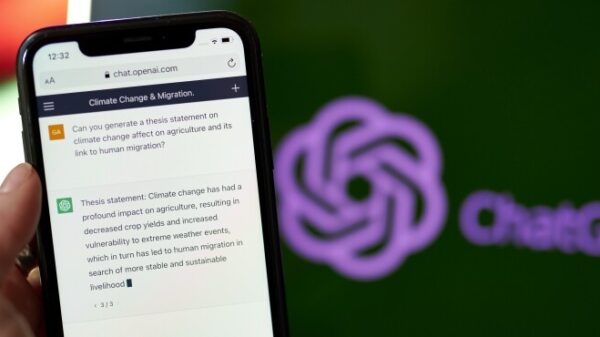








Since its launch in November 2022, ChatGPT has catalyzed a transformative shift in content creation through generative AI, sparking considerable debate over its implications. The term “slop” emerged as the Miriam Webster Word of the Year for 2025, highlighting the proliferation of low-quality, generic content churned out by AI systems. As businesses and individuals increasingly adopt AI for a variety of tasks, the landscape of content generation continues to evolve rapidly.
Generative AI, including tools like ChatGPT, has become invaluable for non-technical users in numerous sectors. These applications range from writing and research to coding and customer service, suggesting a growing reliance on AI-generated content in professional settings. The rise of multimodal capabilities allows these AI systems to handle different media types, enabling them to transform data from one format to another—such as converting audio files into transcripts. Businesses are thus redefining their content creation expectations, leveraging AI to enhance productivity and efficiency.
AI-generated content now spans various categories, extending beyond text to include images, speech, video, music, and even code generation. Advanced algorithms, particularly large language models (LLMs) like GPTs, Claude, and DeepSeek, power these tools. Major sectors utilizing AI for content generation include manufacturing, where it expedites product development; software development, which benefits from code generation and remediation; digital marketing, which employs AI for writing copy; and cybersecurity, which uses it for accelerated threat detection and malware development. Other fields, such as science, law, art, and academia, are also experiencing significant changes due to these technologies.
As AI content generators become more sophisticated, they can accommodate various content types, with both free and paid options available. Users face the challenge of navigating an ever-expanding array of tools and features tailored to specific needs. Notably, Microsoft’s Copilot integrates AI assistance across its product suite, aiding users in generating and analyzing text and data. In contrast, ChatSonic focuses on retaining brand voice by utilizing Google’s knowledge graph for timely information.
Claude, developed by Anthropic, serves enterprise needs with capabilities for document analysis and summarization, while Gemini, from Google, supports multimodal content across its suite of products. Jasper AI and Magic Write cater to content creators by offering templates and brainstorming tools, while Perplexity AI enhances search functionalities with original content generation. Other noteworthy tools include Rytr for customizable content generation and Spellbook, which assists lawyers with legal drafting.
The image generation space is also gaining traction, with tools like Adobe Firefly and DALL-E enabling users to create visually compelling content from textual prompts. Midjourney and Stable Diffusion focus on producing high-quality images, with each platform offering unique features that cater to different creative needs.
In the realm of audio and music, platforms like ElevenLabs and Soundraw provide innovative solutions for voice generation and royalty-free music creation. Meanwhile, Dadabots and Harmonai contribute to the exploration of generative music as an art form, though they may lack enterprise applications.
Turning to code generation, tools like GitHub Copilot and CodeWhisperer assist developers by translating natural language prompts into functional code. Replit and Tabnine further support programmers by facilitating code refactoring and suggestions based on their coding style.
AI’s impact is not limited to conventional sectors; innovative applications are emerging in drug discovery and design. For instance, Absci utilizes AI to generate antibodies, aiming to accelerate drug development. Similarly, Creo by PTC applies generative design principles in CAD, optimizing designs for material and manufacturing needs.
As generative AI continues to permeate various industries, its capabilities are evolving alongside societal concerns about content quality and authenticity. The distinction between high-quality and generic output remains a critical topic of discussion. Looking ahead, the trajectory of AI-generated content will likely influence both the creative landscape and business practices, prompting ongoing dialogue about its role in shaping the future of content creation.
See also Sarvam AI Launches India’s First Large Language Models, Secures $41M Funding
 India’s AI Mission 2.0: Vaishnaw Announces 80+ Signatories and Enhanced Safety Models
 OpenAI Retires GPT-4o and Legacy Models in Shift to New AI Systems
 OpenAI Reveals Best Free AI Generator Apps for 2024 to Boost Creativity and Productivity
 CremyX Launches Multimodal Brand Import, Enhancing AI Marketing with Website and TikTok Analysis