












































The global 3D Generative AI Model Market is experiencing remarkable growth as industries such as manufacturing, automotive, gaming, architecture, retail, and healthcare accelerate their adoption of digital transformation and hyper-automation. Businesses are increasingly integrating AI-driven 3D asset creation, simulation, and digital twin technologies, positioning generative AI as a vital component of future-ready business strategies.
Over the past two years, generative AI has evolved from a nascent concept to a mainstream tool. While early attention focused on text and image generation, enterprises now recognize that 3D generative AI models deliver significantly higher commercial value, particularly in sectors reliant on product design, prototyping, visualization, and simulation. This realization is propelling considerable investment from technology giants, specialized AI startups, and industry innovators.
Several factors are driving this market surge. First, the automation of 3D asset creation has streamlined processes that traditionally required skilled designers and lengthy production cycles. Today, 3D generative AI can generate complex models in mere minutes, allowing companies to reduce operational costs, quicken product development timelines, standardize design workflows, and enhance production throughput. Industries like gaming, film, and digital marketing are tapping into this rapid content creation to minimize reliance on large design teams.
Second, the mainstream adoption of digital twins is reshaping operational strategies. Businesses are utilizing 3D generative AI for realistic modeling of physical assets, automated updates of digital twin environments, and predictive simulations that inform operational decision-making. Sectors such as manufacturing, aerospace, smart cities, and utilities are particularly invested in these technologies due to the substantial value of predictive intelligence.
The rise of AI-assisted product design and prototyping is another significant trend. Companies focused on product development are leveraging generative design to create optimized, lightweight, and cost-effective product structures. This is especially transformative in the automotive electric vehicle (EV) sector, medical implants, consumer electronics, and industrial manufacturing. By evaluating thousands of design variations instantaneously, AI facilitates faster innovation cycles.
Retail and e-commerce are also witnessing rapid advances due to 3D generative AI. Retailers now employ AI-generated virtual try-on assets, 3D furniture visualizations, and product configuration models, which enhance customer experiences and improve conversion rates while reducing returns—a critical return on investment driver for e-commerce leaders.
The influx of investment from major technology companies is further supporting market growth. These firms are pouring resources into 3D model generation technologies, making advanced tools more accessible to enterprise customers through cloud platforms. This trend is lowering the barrier to entry for small and medium-sized businesses as well as large corporations.
Market opportunities are abundant across key industries. The demand for hyper-realistic assets in gaming and entertainment is rising, allowing studios to scale production without incurring significant labor costs. In the automotive and aerospace sectors, AI-driven design optimization and digital twin modeling are revolutionizing research and development cycles, testing workflows, and enhancing supply chain visibility. Furthermore, in architecture, engineering, and construction (AEC), generative AI is facilitating 3D floor planning, structural simulation, and virtual walkthroughs, accelerating project approvals and decreasing design errors. In healthcare, AI-generated anatomical models and surgical planning simulations are improving treatment precision and clinical efficiency. Finally, in e-commerce and retail, AI-powered 3D visualization is enhancing product representation and enriching digital customer experiences.
Looking ahead, the integration of 3D generative AI with augmented reality (AR) and virtual reality (VR) is a trend to watch. This combination fosters the development of virtual showrooms and immersive training environments, reshaping enterprise communication and digital commerce. Additionally, the adoption of AI-powered simulation engines is gaining traction, enabling enterprises to utilize physics-aware models for stress testing, thermal analysis, and motion simulation in engineering applications.
Advancements in multi-modal AI are also noteworthy. New models capable of converting text, images, and video into 3D representations are becoming more accurate, facilitating the rapid creation of digital assets with minimal input. The demand for on-device AI, driven by privacy and latency concerns, is prompting companies to integrate compact generative models into edge devices, expanding possibilities across IoT and robotics.
The competitive landscape of the 3D generative AI market remains intense, propelled by collaborations, cloud integration, and substantial R&D investments. Key players are concentrating on advanced neural rendering, cloud-based 3D asset generation, physics-aware generative models, and enterprise-grade deployment frameworks. As industries increasingly seek vendors offering data-centric AI and scalable infrastructure, the future of 3D generative AI looks promising.
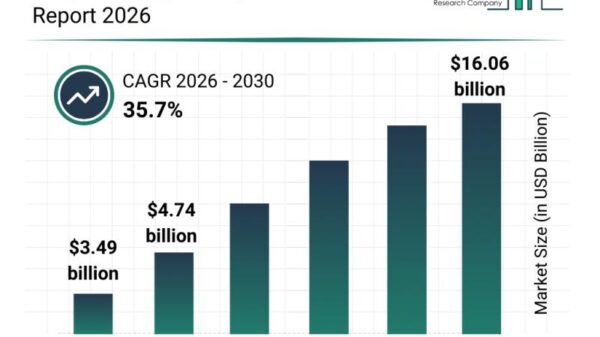
As businesses continue to prioritize automation, digital twins, and AI-driven design, the 3D generative AI model market is anticipated to grow exponentially. This technology is expected to evolve from asset creation tools to enterprise intelligence engines capable of driving operational, design, and strategic decision-making. The next decade will likely see the emergence of new catalysts for growth, including enterprise digital transformation, robotics and smart manufacturing adoption, autonomous systems development, immersive commerce expansion, and advancements in AI-driven engineering simulation.
In conclusion, the 3D Generative AI Model Market is entering a high-growth phase, shaped by automation, digital twin adoption, and escalating multi-industry demand for intelligent design tools. As organizations shift towards AI-first operations, the role of 3D generative AI will be crucial in crafting the next generation of product development, virtual environments, and business intelligence.
See also AI Detection Tips: Spotting Real vs. AI-Generated Media in the Digital Age
 Trust in AI: 74% of New Web Content is AI-Generated—Experts Urge Institutional Credibility
 Samsung Unveils Auto-Tagging for AI-Generated Photos in Galaxy S26 Photo App
 Google Unveils Redesigned Flow Tool with Enhanced Image and Video Editing Features
 OpenAI’s ChatGPT Co-Authors First Physics Paper, Sparking Debate on AI in Research