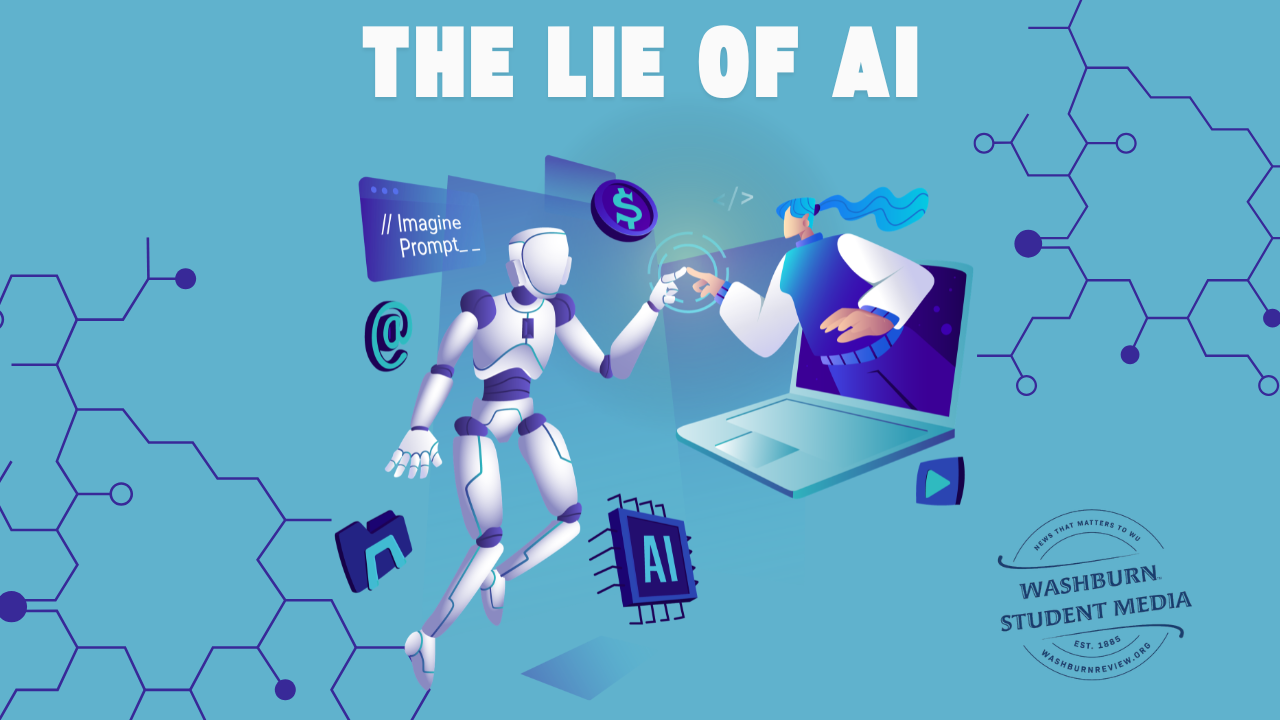
Advancements in artificial intelligence (AI) are blurring the lines between reality and digital creation, raising significant concerns about media authenticity. Programs like Google’s Nano Banana Pro are enabling users to generate images, videos, and audio that are nearly indistinguishable from real life, making it increasingly challenging for consumers to discern fact from fiction. The rise of these technologies comes at a time when younger audiences are increasingly consuming news through platforms like TikTok, Instagram, Reddit, and X, amplifying the need for media literacy in the digital age.
A recent study by the Pew Research Center highlights that younger individuals are more inclined to engage with news content on social media, where the presence of AI-generated influencers and fabricated news reports is on the rise. This landscape necessitates a proactive approach to media consumption, urging individuals to critically evaluate the information they encounter online. As AI technologies become more prevalent, being able to recognize AI-generated content is increasingly essential.
In light of these developments, digital investigative journalist Henk Van Ess of the Global Investigative Journalism Network offers several strategies for identifying AI-generated videos. He emphasizes the importance of trusting one’s instincts when something appears “too good to be true.” For instance, a common indicator of AI generation is overly smooth skin, which often lacks the natural texture seen in real human features. Additionally, inconsistencies in grooming relative to the context can be a telltale sign of artificial creation.
Another key method involves scrutinizing backgrounds for irregularities. Elements like misaligned cabinets or obstructed exits can indicate that a video may not have been shot in a traditional context. Furthermore, close examinations of human features can yield insights; for example, frizzy or overly textured hair and inconsistent mouth movements may signal AI involvement. Observing motion blur in rapidly moving hands or fingers can also serve as a crucial indicator of a video’s authenticity.
As AI technology becomes increasingly sophisticated, the necessity for media literacy cannot be overstated. Taryn Reed, an adjunct mass media professor at Washburn University, underscores the importance of understanding AI’s role in society. “It has a really good use and a really good purpose. You just have to use it correctly, and then you’re fine and dandy,” she remarked, highlighting the importance of ethical engagement with AI technologies in educational contexts. “We have to kind of start talking about AI in our classes, because if we just tell you guys kind of, ‘Hey, AI is bad,’— that’s not the company’s mentality.”
The rapid evolution of AI technology has implications not just for news consumers but also for professionals across various fields. Recognizing that misinformation can easily spread through seemingly credible channels, individuals, particularly students, must remain vigilant. The experience of thinking a fabricated video was real serves as a reminder of the urgent need to question the reliability of the media we consume. Failing to do so risks perpetuating false narratives and undermining informed discourse.
As the digital landscape continues to evolve, the intersection of AI and media poses both opportunities and challenges. The onus is on consumers to cultivate a discerning eye in order to navigate this complex terrain ethically and responsibly. As AI technologies further integrate into daily life, understanding how to utilize them effectively while remaining critical of their outputs will be crucial for fostering a well-informed public.
See also Trust in AI: 74% of New Web Content is AI-Generated—Experts Urge Institutional Credibility
 Samsung Unveils Auto-Tagging for AI-Generated Photos in Galaxy S26 Photo App
 Google Unveils Redesigned Flow Tool with Enhanced Image and Video Editing Features
 OpenAI’s ChatGPT Co-Authors First Physics Paper, Sparking Debate on AI in Research
 MIT’s New TLT Method Doubles LLM Training Speed While Preserving Accuracy