










































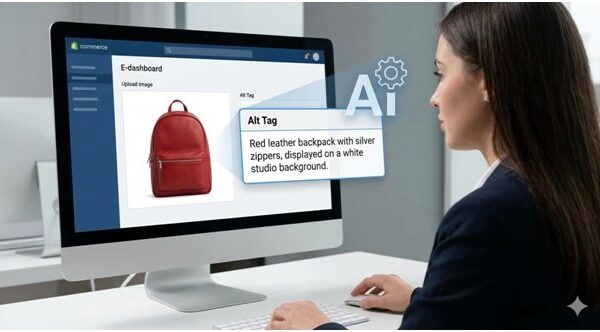




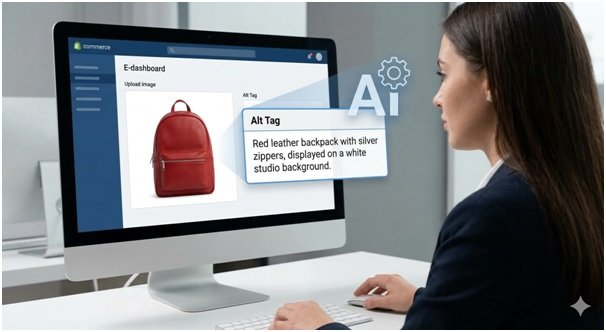
As e-commerce continues to burgeon, the integration of artificial intelligence (AI) in operational processes is emerging as a crucial strategy for enhancing efficiency and search engine optimization (SEO). A growing number of online retailers are turning to AI to automate the otherwise tedious task of generating alt tags for product images, a step critical for both SEO and accessibility. This transformation is not merely theoretical; it is already being employed by savvy store owners aiming to leverage AI’s capabilities to maximize their online visibility.
Alt tags, or alternative text descriptions, are essential for helping search engines index images correctly, while also ensuring that visually impaired users can understand the content of visual media. The traditional approach of manually writing these tags is often time-consuming and prone to inconsistency, which can hinder a website’s performance on search engines. Automating this process with AI offers a solution that is both efficient and scalable.
For instance, consider a new online furniture retailer launching a catalog with over 5,000 products. Each of these products typically includes at least three high-resolution images, leading to a staggering total of 15,000 images requiring unique alt tags. Manually crafting these descriptions could take weeks, delaying the launch and incurring additional costs. However, by integrating an AI tool, the store can automate this process and generate meaningful, keyword-rich descriptions in a matter of hours. An image of a sectional sofa could be automatically described as “Modern gray sectional sofa with chaise lounge and wooden legs,” thus providing a solid SEO foundation right from the start.
In another scenario, a fast-fashion retailer faces daily challenges with rapid inventory turnover. The brand frequently adds new styles to its online platform, but the marketing team, already focused on social media and influencer campaigns, finds it challenging to allocate time to create new alt tags. This often results in generic labels that detract from a product’s SEO potential. By employing an automated workflow, the retailer can send newly uploaded images directly to an AI for analysis. The AI generates descriptive alt tags that optimize the products for search engines immediately upon release, ensuring that even the most fleeting trends capture consumer interest.
Moreover, established online marketplaces with extensive listings often grapple with outdated or poorly written alt tags that can hurt their SEO and violate web accessibility standards like the WCAG. By leveraging bulk processing capabilities of image-to-text AI, these marketplaces can systematically enhance their existing catalog. This not only improves accessibility for users with visual impairments but also revitalizes older listings, ultimately boosting the site’s overall authority.
The advantages of adopting AI-powered alt tag generation are manifold, encapsulating significant time savings, enhanced SEO outcomes, and improved accessibility. By automating the alt tag process, retailers can focus their efforts on developing creative strategies while ensuring that all images are optimized for search engines. The integration process itself is relatively straightforward. Retailers can select an AI tool known for its accuracy in object recognition and connect it to their content management system (CMS) through an API. Once integrated, retailers can establish automation rules that trigger the AI to generate alt tags as soon as product images are uploaded.
Furthermore, while the results are often high-quality, retailers can refine the AI-generated output by adding brand names or important keywords, enhancing the relevance of the descriptions while maintaining a consistent voice across their catalog.
As e-commerce continues to evolve, the pressure on retailers to enhance their online presence grows ever stronger. The manual approach to generating alt tags is increasingly unsustainable. By employing AI to automate this laborious task, retailers not only save time and resources but also significantly boost their SEO and ensure compliance with accessibility standards. This convergence of AI technology with e-commerce operations signals a pivotal shift in how online businesses can optimize their digital strategies, ultimately aiming to capture more organic traffic and improve user experience.
See also Sam Altman Praises ChatGPT for Improved Em Dash Handling
 AI Country Song Fails to Top Billboard Chart Amid Viral Buzz
 GPT-5.1 and Claude 4.5 Sonnet Personality Showdown: A Comprehensive Test
 Rethink Your Presentations with OnlyOffice: A Free PowerPoint Alternative
 OpenAI Enhances ChatGPT with Em-Dash Personalization Feature