





































In March 2024, the IndiaAI Mission was launched with an allocation of INR 10,372 crore (approximately $1.1 billion) aimed at fostering a domestic artificial intelligence ecosystem. As global giants like OpenAI and Google surged ahead in the AI arms race, backed by billions in investments, India’s ambitions appeared formidable yet modest. By October 2024, OpenAI had raised over $18 billion, while competitors such as Anthropic and Mistral also secured multi-billion-dollar funding. Despite such disparities, the IndiaAI Mission was set on a course to develop indigenous AI capabilities, focusing on model creation, data infrastructure, GPU access, and research labs.
Undeterred by skepticism about its comparative budget, the IndiaAI Mission adopted a distributed approach, selecting 12 organizations to develop foundational models. Critics questioned whether this collaborative effort could yield globally competitive results. However, by 2025, the narrative shifted in favor of Indian AI startups, particularly highlighted by the emergence of Sarvam AI at the India AI Impact Summit.
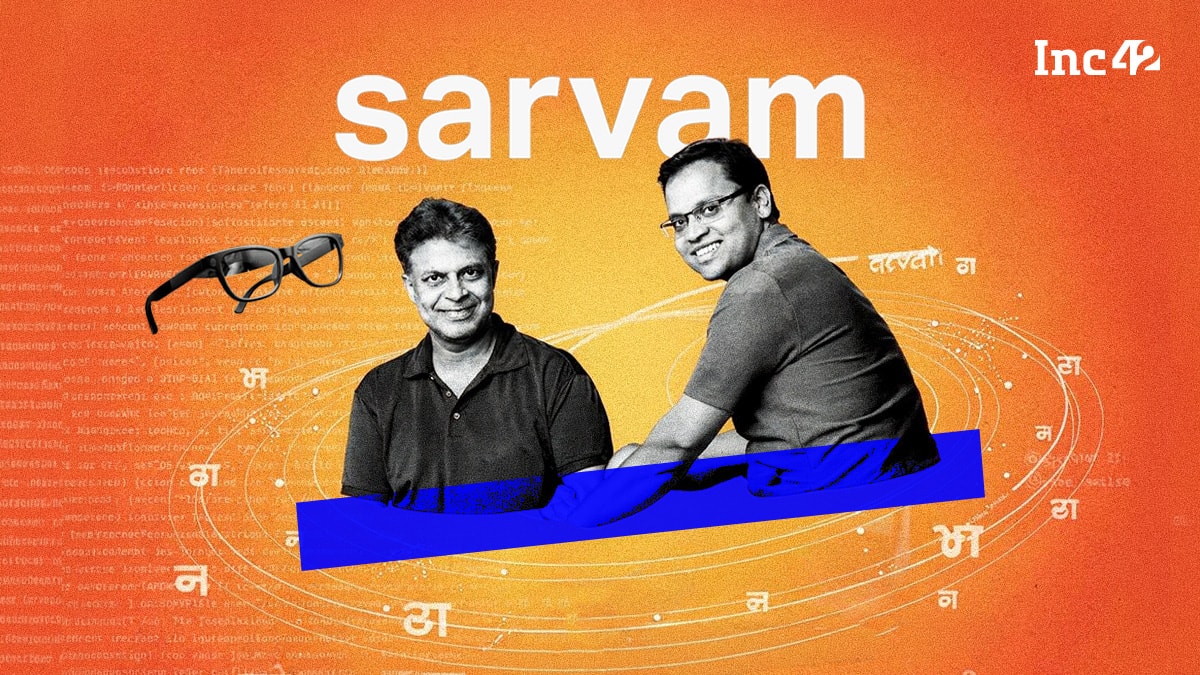
Founded in August 2023 by IIT alumni Vivek Raghavan and Pratyush Kumar, Sarvam AI gained significant attention after raising $41 million within five months of its inception. Despite initial hurdles in building traction, skepticism about its growth subsided when Sarvam was selected to develop an Indian large language model (LLM). The company made a notable impression at the AI summit by launching two foundational models: Sarvam-30B and Sarvam-105B, marking India’s formal entry into the global foundational LLM race.
Sarvam-30B is designed as a lightweight, cost-efficient model with a context length of up to 32,000 tokens, trained on nearly 16 trillion tokens. It is positioned as an efficient model for reasoning and coding tasks, performing competitively with rivals such as Google and Nvidia. In contrast, Sarvam-105B supports a 128,000 token context window, enabling complex reasoning capabilities. Internal evaluations suggest it competes well against various frontier models in its category.
While Sarvam’s models excel in specific areas, especially in Indic languages, they do not yet signify global leadership. Models developed by OpenAI and others operate on a vastly different scale, often trained on trillions of tokens and featuring millions of parameters refined over years of deployment. Although Sarvam’s offerings are competitive, they typically lag behind in aspects such as reasoning depth and context reliability beyond local applications.
Raghavan acknowledged this trade-off in an interview, stating the recent releases are a “significant first step” but emphasized that creating models at the scale of competitors like Gemini or Claude would require substantially more capital. This focus on an “India-first” strategy prioritizes efficiency, sovereignty, and localization, which is especially relevant for domestic governance and enterprises. However, this approach may limit broader applicability on a global scale.
At the summit, Sarvam AI also unveiled Kaze, AI-powered smart glasses that offer capabilities such as listening, interpreting, responding, and capturing visual context, signaling its intent to transition from a model developer to a full-stack AI company. This ambition reflects broader trends within India’s AI landscape, which is not solely reliant on Sarvam. Other companies, such as Gnani.ai with its Vachana TTS voice cloning system and the IIT Bombay-led BharatGen consortium with its 17 billion mixture-of-experts multilingual model, are also making strides as part of the IndiaAI Mission.
As India seeks to carve out its space in the global AI landscape, the journey is marked by a commitment to cost efficiency and localized solutions. However, significant challenges remain, including the need for sustained investment, improved access to computational resources, talent retention, and stronger ties between academia and industry. Without addressing these structural issues, Indian startups risk developing capable yet regionally confined models, raising the critical question of whether the nation can truly harness its potential in this rapidly evolving field.
See also India’s AI Mission 2.0: Vaishnaw Announces 80+ Signatories and Enhanced Safety Models
 OpenAI Retires GPT-4o and Legacy Models in Shift to New AI Systems
 OpenAI Reveals Best Free AI Generator Apps for 2024 to Boost Creativity and Productivity
 CremyX Launches Multimodal Brand Import, Enhancing AI Marketing with Website and TikTok Analysis
 India’s Sarvam, Gnani.ai, and BharatGen Launch Indigenous AI LLMs to Combat Bias