












































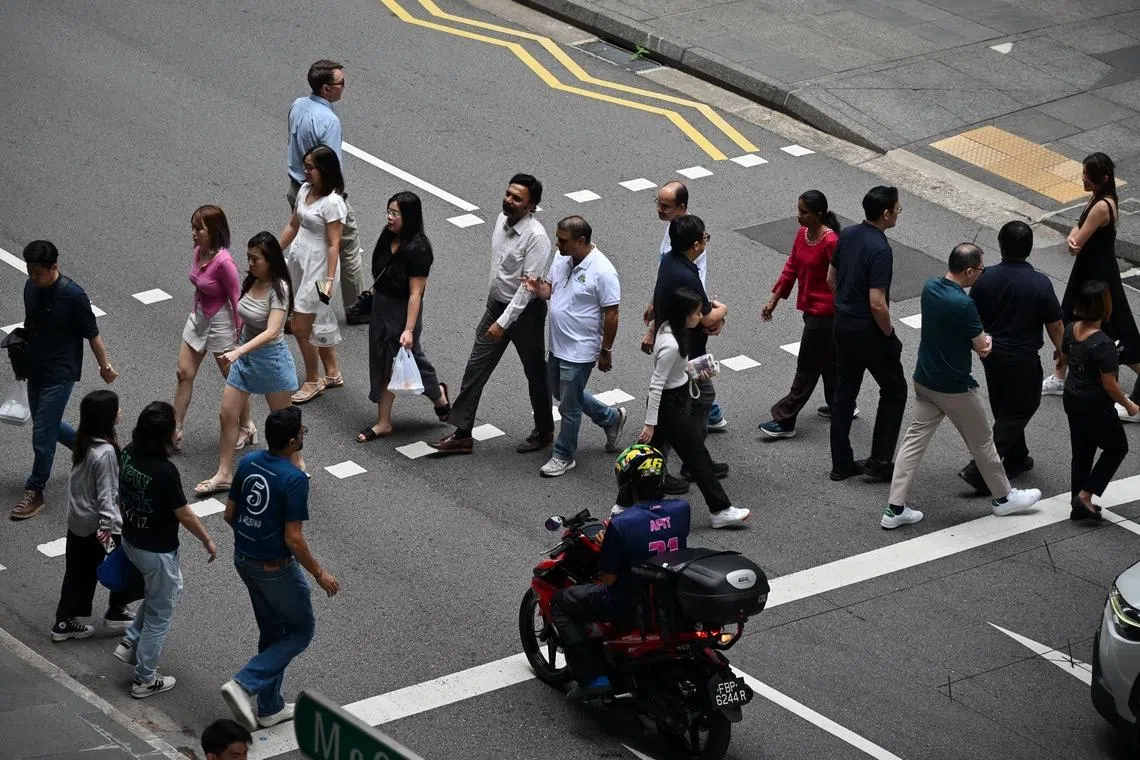
SINGAPORE – As Singapore aims to leverage artificial intelligence (AI) as a strategic advantage, members of Parliament (MPs) emphasized the necessity for AI initiatives to yield quantifiable outcomes that benefit the populace during the Budget debate on February 24. AI was a pivotal focus in Prime Minister Lawrence Wong’s Budget speech on February 12, which outlined extensive plans for AI adoption among companies and workers, including enhanced tax breaks, training programs, and free access to premium AI tools.
Given concerns that AI could exacerbate inequality and lead to job displacement, the majority of MPs called for the government to monitor outcomes such as productivity gains and wage increases. They urged that the Republic’s AI strategy must translate into better opportunities for Singaporeans. “If our AI strategy does not translate into higher wages and better opportunities for all Singaporeans, will we recalibrate our approach?” asked MP Mariam Jaafar.
MPs Yip Hon Weng and Mariam Jaafar questioned what metrics the government plans to publish annually on AI deployment. They recommended measuring the net number of new roles created, the time taken to redeploy workers, the proportion of small and medium-sized enterprises (SMEs) that have scaled their AI usage beyond pilot projects, and data on jobs displaced by AI.
Opposition leader Pritam Singh highlighted the importance of establishing clear requirements before disbursing AI-related grants, ensuring they lead to “genuinely transformative productivity gains” and are not misused. He suggested linking the variable component of ministers’ salaries to the objective outcome of job creation for Singaporeans in the AI era.
Amidst the Budget’s AI initiatives like the enhanced Productivity Solutions Grant and increased tax deductions for AI-related expenses, Nominated MP Mark Lee sought clarification on which investments would qualify. He proposed that incentives should extend beyond adoption risk reduction to include firms’ outcomes, such as increased worker output and reduced energy consumption.
Concerns were raised about the implications of AI automating routine tasks typically performed by junior workers. MP Henry Kwek noted that young graduates in his constituency have reported increasing difficulty in finding entry-level roles, while MP Denise Phua warned of a “broken ladder” scenario, where junior positions could effectively vanish.
There was also a call for Singapore’s AI roadmap to address the uplift of blue-collar workers. Ms Phua pointed out that for those in sectors like logistics, security, and cleaning, the risks extend beyond job loss to include intensified monitoring and precarious job contracts. MP Gerald Giam argued that workers in these sectors should be equipped with technologies, such as wearable haptic sensors for safety alerts and translation devices to help overcome language barriers, advocating for AI to enhance rather than divide the workforce.
MPs urged the government to consider how to mitigate the risk of AI adoption leading to greater inequality, where higher-income households could accelerate their career progression while lower-income families lag behind. Ms Jaafar suggested modifying the national social mobility scheme ComLink+ to encompass AI capability milestones, like ensuring parents complete foundational AI literacy modules.
To support SMEs in adopting AI, MPs including Jackson Lam and Edward Chia advocated for the creation of sector-specific AI playbooks in collaboration with trade associations and a more significant role for SME Centres across the island.
Minister of State for Digital Development and Information Jasmin Lau outlined the government’s approach to AI and the ongoing work of the Economic Strategy Review (ESR) committees. Lau, co-chairing the ESR’s committee on technology and innovation, indicated that the authorities will create systematic and lower-risk methods for SMEs to experiment with AI, building on previously conducted hackathons and collaborations with students.
She noted that the government is refining its funding schemes, aiming to shift focus from adoption to implementation, business process redesign, and the more challenging task of transforming organizational operations. Lau assured that the committee will continue to explore these ideas, with a full report on final recommendations expected by mid-2026.
Highlighting the need for educational reform, Lau remarked that economic resilience begins long before workforce entry, stressing the importance of teaching students to think critically. “AI will force countries to sharpen the focus of education on what truly matters: judgment, values, and the capacity to work with AI, rather than compete with it,” she said. She added that the educational framework must balance content knowledge with character and social development, equipping children with higher-order thinking skills.
“AI can improve the lives of our people, but this journey will undoubtedly cause much disruption,” Lau concluded. “We must find a way forward that keeps our people together.”
See also Hegseth Threatens Anthropic with Blacklist Over Refusal to Loosen AI Safety Standards
 Toby Walsh Warns Australia Faces AI Risks Without Strong Regulatory Framework
 Odisha Government Launches AI Training for Works Dept to Enhance Governance Efficiency
 NationGraph Secures $18M Funding to Enhance AI-Driven Public Procurement Insights
 Anthropic Partners with Rwanda on AI Health and Education Initiatives in Landmark MOU