






















































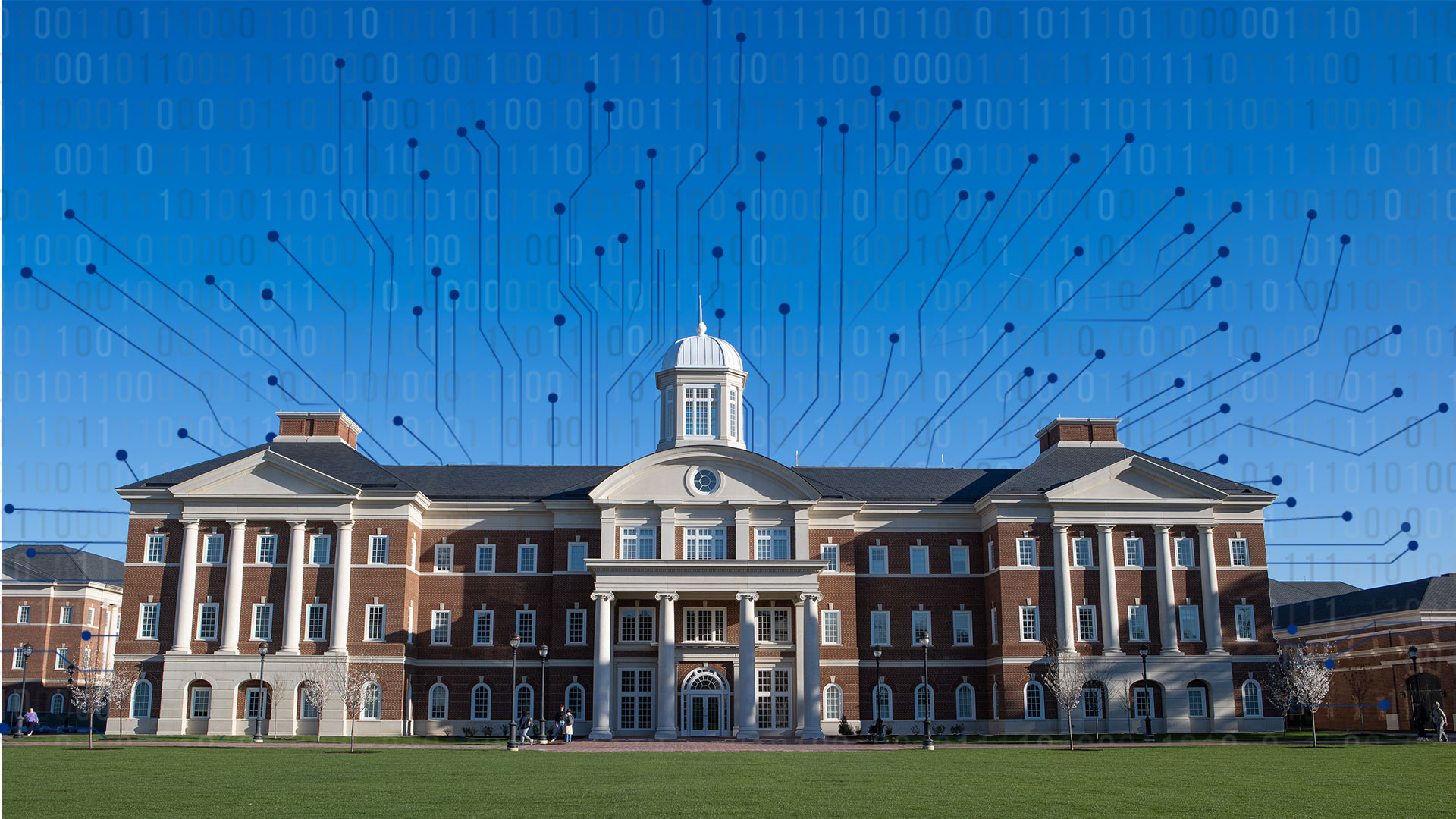
Students aspiring to enter the field of artificial intelligence (AI) now have a new academic pathway at Christopher Newport University (CNU), which is set to launch its AI major in the 2026-27 academic year. The initiative, spearheaded by the School of Engineering and Computing (SEC), positions CNU among the first Virginia universities to offer such a specialized program, reflecting a growing recognition of AI’s importance in education and industry.
Professors Keith Perkins and Roberto Flores played pivotal roles in developing the new major, which aims to equip students with a comprehensive understanding of AI technologies. According to Perkins, the curriculum will guide students through constructing the entire AI stack, starting from data science and machine learning to advanced topics such as cloud infrastructure, neural networks, and the large language models that underpin modern AI. “Students will train computer vision models, build agentic AI systems, and deploy real applications to the cloud—graduating with the practical experience to shape the future of intelligent technology,” Perkins explained.
This rigorous educational framework is designed to prepare graduates for a variety of career paths including AI, machine learning engineering, data science, and software development. It aligns with CNU’s broader mission to ensure that students are not only proficient in using AI technologies but also understand their ethical implications.
The majority of coursework and practical lab sessions for the new major will be conducted at CNU’s newly established Science and Engineering Research Center (SERC). This facility boasts state-of-the-art amenities, including a two-story drone lab and a makerspace, fostering an environment conducive to collaboration and innovation in technology research.
CNU President William G. Kelly highlighted the significance of AI in his recent address during the 2025-26 academic year’s Honors Convocation. He emphasized the university’s responsibility to prepare students for an AI-influenced world, stating, “As a university, it is our responsibility to ensure you, our students, know how to use AI effectively and, most importantly, ethically.” This commitment underscores the importance of integrating AI education with the core values of a liberal arts education, allowing students to navigate an increasingly complex technological landscape.
In tandem with the new major, CNU is also implementing a university-wide Quality Enhancement Plan (QEP) aimed at fostering responsible and effective AI use among students. This initiative reflects a broader trend in higher education to prepare graduates not only with technical skills but also with the ethical frameworks necessary to guide their application in real-world scenarios.
The introduction of the AI major at CNU signifies a critical step for the university and its students. As AI continues to permeate various sectors, from healthcare to finance, the demand for skilled professionals in this field is expected to rise dramatically. By equipping students with both technical knowledge and ethical considerations, CNU aims to produce a new generation of leaders capable of navigating the complexities of AI technology.
As educational institutions increasingly acknowledge the transformative power of AI, CNU’s initiative may serve as a model for other universities. The development of specialized programs like this not only enhances student employability but also contributes to the responsible integration of AI into society.
See also MatterChat Unveils Multimodal LLM Achieving 95% Accuracy in Material Property Predictions
 OSU Study Reveals AI Overreliance Threatens Cognitive Skills in STEM Students
 MIT Reveals Study Mapping AI Capacity in Central Eurasia to Guide Investment Strategies
 APOLLO AI Launches, Analyzing 25B Medical Events to Predict Future Diseases
 AI Framework by Jingyuan Yang Achieves Fairness-Performance Balance in Job Opportunities















