






















































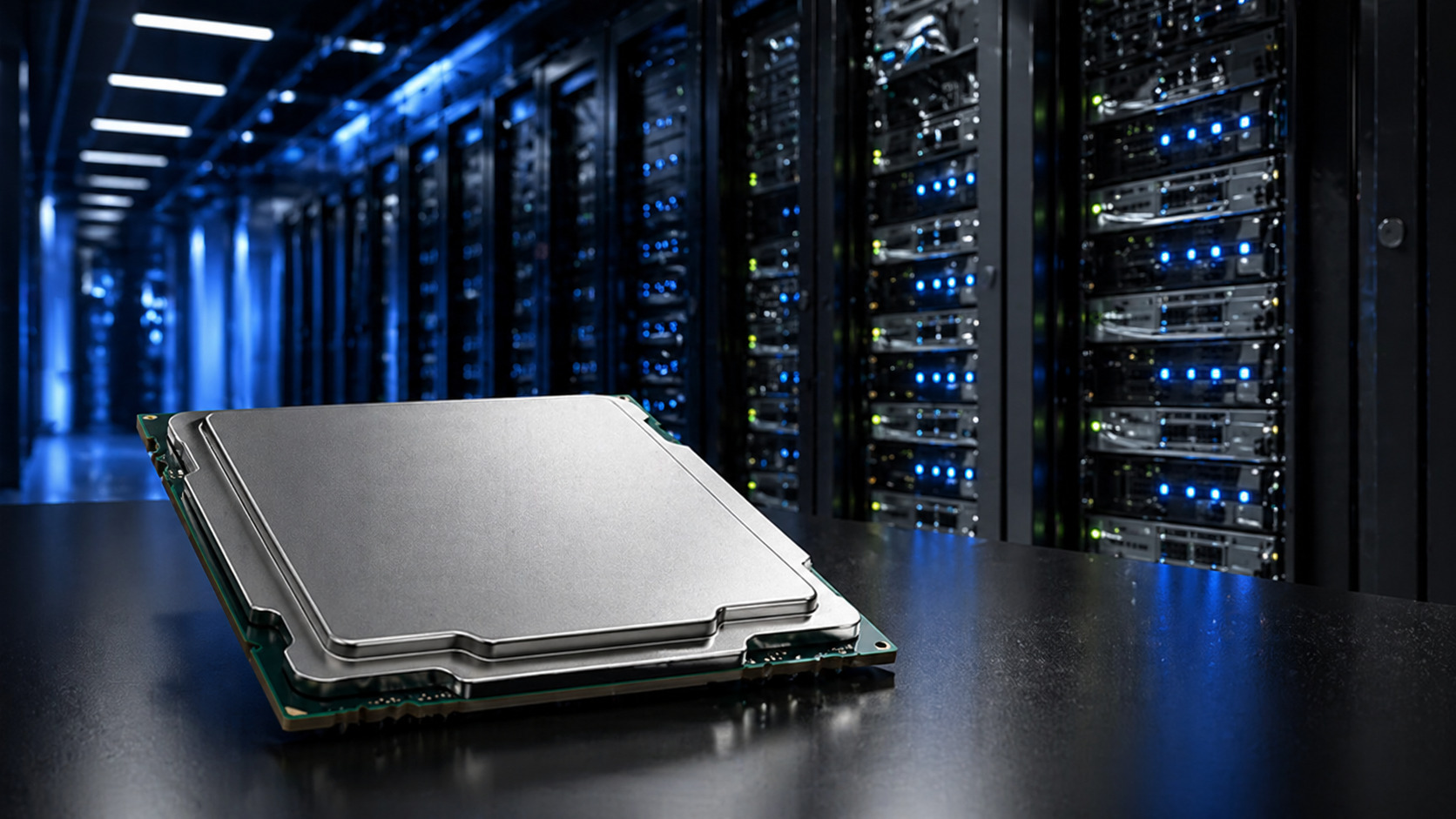
The semiconductor industry continues to present a complex landscape, with Intel re-emerging as a significant player amid evolving demands for artificial intelligence (AI) infrastructure. Traditionally dominated by GPUs and accelerators, the sector is witnessing a renewed reliance on classic server CPUs, particularly Intel’s Xeon processors. On April 23, 2026, Intel reported its first-quarter earnings for the year, highlighting a revenue of $13.6 billion—a 7 percent increase compared to the same period last year. The company also provided a positive outlook for the second quarter, projecting revenues between $13.8 billion and $14.8 billion and expected non-GAAP earnings per share of $0.20, surpassing analysts’ expectations, which were around $13.07 billion.
Despite the revenue bump, Intel recorded a GAAP loss per share of $0.73 for the first quarter, with adjusted non-GAAP earnings per share of $0.29. This discrepancy underscores that while the company is making strides towards operational recovery, its financial health remains fraught with challenges. Intel anticipates a GAAP gross margin of 37.5 percent and a non-GAAP gross margin of 39.0 percent for the upcoming quarter. Though not a return to the high-margin days of its past, this forecast shifts the narrative about Intel from a mere turnaround entity to one that is reclaiming its position in the AI infrastructure market.
The pivotal insight is not that Intel is closing the gap with Nvidia in the accelerator space; rather, it lies in the broader server architecture. AI systems necessitate host CPUs for various critical functions, including control, data preparation, memory management, and inference orchestration. As the focus shifts from training extensive models to productive inference and enterprise services, the significance of robust server platforms becomes increasingly apparent. Intel’s Xeon CPUs, established in numerous server configurations, are unlikely to fade from relevance soon. However, the market is competitive; AMD remains a formidable force in the server domain, while Arm-based server CPUs gain traction among cloud providers, and custom silicon solutions from hyperscalers pose ongoing challenges.
Despite its optimistic forecast, Intel faces persistent underlying issues. The transition to a foundry model is capital-intensive, the process roadmap requires consistent execution, and margins are still below historical highs. Interestingly, Intel’s role in the AI market is understated. Instead of offering widely recognized accelerators, the company focuses on foundational platform technologies. This shift in focus could have implications for Intel’s product strategy in the consumer segment as well. If the company prioritizes server CPUs, this attention could eventually influence the availability, manufacturing, and pricing of desktop and notebook processors. While there’s no immediate indication of a shortage in consumer products, the industry has shown that data center margins often take precedence over consumer demand.
In conclusion, while Intel’s outlook for the second quarter indicates potential for recovery, it does not resolve the company’s long-standing challenges. The announcement serves as a reminder that AI infrastructure encompasses more than just GPUs and high-bandwidth memory; it also includes critical components such as CPUs and platforms. This evolving landscape may offer Intel avenues for profitability, albeit not through dramatic gains but through steady, incremental advancements in a complex market.
See also Meta Partners with AWS in Multi-Year Deal to Expand AI Compute Using Graviton Chips
 Elon Musk Testifies Against OpenAI in $130B Lawsuit Over AI’s Nonprofit Mission
 Lumai Launches Iris Server, World’s First Optical System for Real-Time AI Inference
 EHS Leaders Embrace AI with 90% Voicing Concerns Over Overreliance, Says NSC Survey
 AI Accelerates Career Growth for Accounting Professionals by 73% Through Task Automation















