











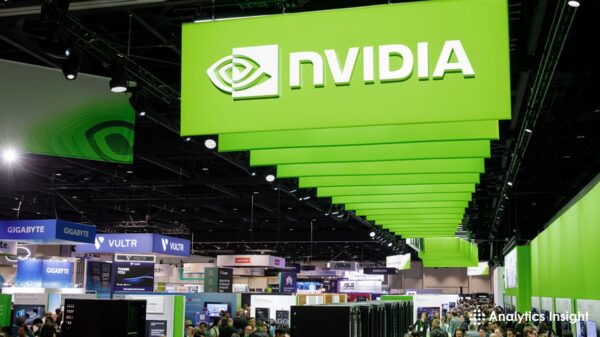
























Nvidia’s technical dominance in the graphics processing unit (GPU) market continues to reflect robust revenue growth, yet it is facing increasing competitive pressures as companies seek alternatives. The significant capital expenditures associated with these GPUs, combined with a shift in artificial intelligence (AI) focus toward inference—running AI models in a cost-sensitive manner—has led to a surge of startups developing more efficient inference chips. While Nvidia remains a leader in the AI hardware space, its position is becoming increasingly complex as it navigates a landscape of both competitors and collaborators.
Among the most formidable challengers to Nvidia’s supremacy is Google, which has been developing Tensor Processing Units (TPUs) for nearly a decade. Although these TPUs have primarily been utilized for Google’s internal workloads and cloud services, a recent deal allows Meta to rent them, further positioning Google in direct competition with Nvidia. Amazon is similarly diversifying its offerings with chips like Trainium for training and Inferentia for inference, aimed at undercutting Nvidia’s high costs.
Meanwhile, tech giants Microsoft and Meta are in the early stages of their chip development. Meta has announced plans to introduce four new generations of silicon in the next two years, and Microsoft recently unveiled its AI inference chip, the Maia 200. These developments indicate an industry trend toward self-reliance in AI hardware, as major players look to reduce dependency on Nvidia’s products.
Market Dynamics
A wave of startups is capitalizing on the growing demand for AI inference solutions, attracting significant investment. Nvidia, recognizing the potential threat, has committed $20 billion to license technology and recruit talent from Groq, a company founded by a former TPU engineer and a significant contender in the inference market. This influx of investment has resulted in several unicorns, many of which are thriving amid a boom in infrastructure spending.
One notable example is Cerebras, which constructs “wafer-scale” chips for both training and inference and recently secured a $10 billion deal with OpenAI. Another company, SambaNova, raised $350 million after unsuccessful acquisition discussions with Intel, focusing on AI hardware and software systems tailored for business clients. Tenstorrent, valued at $2 billion, is also positioning itself as an alternative to traditional GPUs.
Furthermore, Nvidia faces geopolitical challenges, particularly from China, where regulatory actions from the United States have tightened export controls on AI chips. Despite these restrictions, Nvidia CEO Jensen Huang has cautioned that limiting sales to China may only accelerate the local industry’s progress. Huawei, a major player in telecommunications, is seen as Nvidia’s closest rival, as it develops its own chips, servers, and cloud offerings. Chinese startups, including Cambricon, are also emerging as alternatives in the AI hardware space, while giants like Alibaba and Baidu work on chip designs for their respective cloud services.
The competitive landscape is further complicated by traditional chip makers like AMD, Intel, and Broadcom, which are vying for a share of Nvidia’s lucrative AI market. AMD, known for its GPU offerings, has secured partnerships with major cloud providers, including Meta. Intel holds a strong position among large businesses, while Broadcom specializes in networking and custom chip solutions, potentially benefiting even if Nvidia retains its lead in GPUs.
As the AI hardware market continues to evolve, the intertwining roles of companies as both competitors and collaborators lend an air of unpredictability to the landscape. Nvidia remains a dominant force; however, the emergence of alternative providers and continued innovation from established players suggest that the competitive pressures will only intensify. The industry will likely see rapid developments as companies strive to redefine their positions in this highly dynamic market.
See also Tesseract Launches Site Manager and PRISM Vision Badge for Job Site Clarity
 Affordable Android Smartwatches That Offer Great Value and Features
 Russia”s AIDOL Robot Stumbles During Debut in Moscow
 AI Technology Revolutionizes Meat Processing at Cargill Slaughterhouse
 Seagate Unveils Exos 4U100: 3.2PB AI-Ready Storage with Advanced HAMR Tech