




















































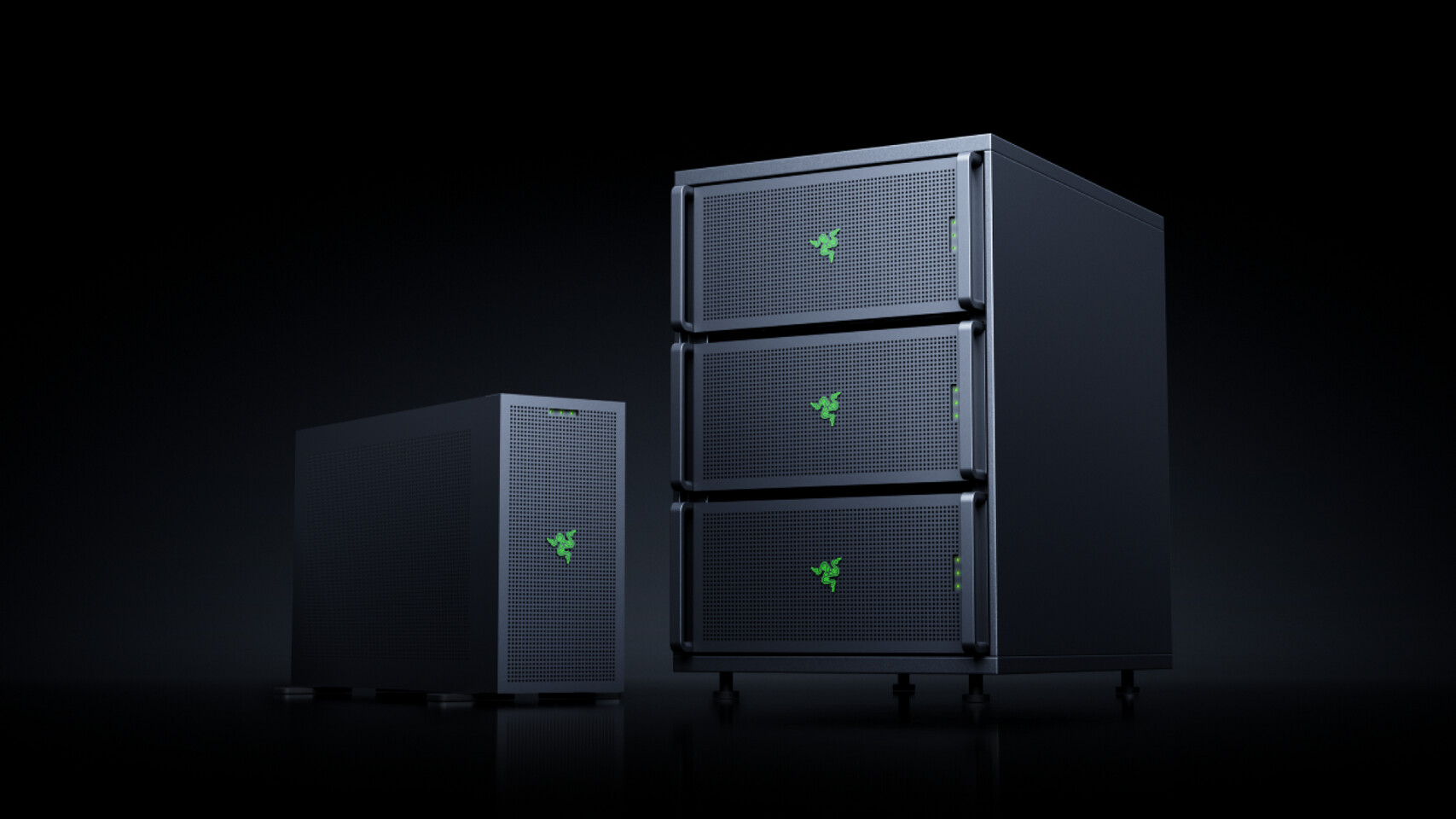
Razer, the prominent gaming hardware manufacturer, has unveiled its latest innovation, the Forge AI Dev Workstation, aimed at empowering developers and creators with high-performance, purpose-built hardware. The announcement was made during a recent tech conference, where Razer showcased its commitment to enhancing productivity through advanced technology. The workstation is designed to cater specifically to the increasing demands of artificial intelligence development and other resource-intensive applications.
The Forge AI Dev Workstation is equipped with cutting-edge specifications intended to facilitate complex AI computations and deep learning tasks. Central to its design is a powerful Intel Core i9 processor, which is paired with NVIDIA RTX A6000 GPUs to deliver superior graphical processing capabilities. This combination is expected to significantly expedite workflows for developers working on AI models, simulations, and other demanding tasks that require extensive computing power.
With the growing prevalence of AI across various sectors, including gaming, finance, and healthcare, Razer’s Forge AI Dev Workstation positions itself as a vital tool for professionals seeking to harness the full potential of this technology. The device’s specifications are tailored to ensure that it can efficiently handle data-intensive processes, enabling developers to produce results faster and more reliably.
Razer’s foray into the AI workstation market reflects a broader trend wherein traditional gaming companies are expanding their focus to embrace enterprise solutions. This move is indicative of the convergence between gaming technology and professional computing, as more developers seek hardware that can support both gaming and high-performance applications.
In addition to its impressive hardware specifications, the Forge AI Dev Workstation includes Razer’s proprietary software tools designed to optimize performance. These tools allow developers to fine-tune system resources and monitor performance metrics in real-time, further enhancing the user experience. Such thoughtful integration of software and hardware is a hallmark of Razer’s approach to product development, aiming to provide users with a seamless experience.
The release of the Forge AI Dev Workstation comes at a time when the demand for AI-related technologies is surging. According to industry analysts, the AI market is projected to grow exponentially in the coming years, driven by advancements in machine learning and data analytics. As organizations continue to invest in AI capabilities, the need for robust and reliable hardware becomes critical, positioning Razer’s new workstation as a timely addition to the market.
Moreover, Razer’s expansion into this domain could catalyze competition among hardware manufacturers. As more companies recognize the potential in developing specialized workstations for AI, innovation in this space is likely to accelerate. Razer’s strong brand presence in gaming hardware may provide it with a competitive advantage, attracting a segment of the market that values both performance and aesthetic design.
Looking ahead, the success of the Forge AI Dev Workstation will hinge on its reception within the developer community. As AI continues to reshape industries, the need for tailored solutions that meet specific challenges will be paramount. Razer’s commitment to creating hardware that addresses these needs could position the company as a leader in the AI workstation market, fostering further advancements in technology.
See also Nestlé’s CIO Highlights AI’s Value Beyond Efficiency, Focusing on Enhanced Fulfillment
 Big 7 AI Companies Propel Edge Computing Innovations with 2026 Market Insights
 AMD’s Lisa Su Reveals AI Will Require 10 Yottaflops, Transforming Industry Standards
 Intel Launches Core Ultra Series 3 Processors, Powers New TGS-2000 Edge AI Computers
 China Investigates Meta’s $100M Acquisition of AI Startup Manus Amid Tech Rivalry