

































In a world increasingly intertwined with artificial intelligence, the question of what distinguishes human creativity from machine replication has never been more pressing. The boundaries of this debate can be traced back to **Alan Turing**, the pioneering computer scientist, who in 1950 posed the fundamental question: “Can machines think?” In his seminal paper, “Computing Machinery and Intelligence,” published in the journal *Mind*, Turing introduced the **Turing Test**, a method designed to assess whether a machine could convincingly imitate human responses.
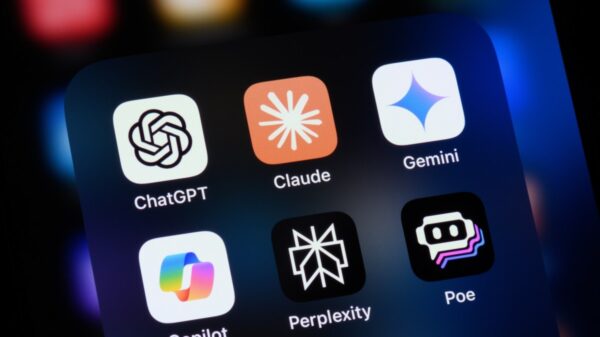
Turing’s test involves an “imitation game” where a human judge interacts with both a human and a machine without knowing which is which. If the judge cannot reliably tell the machine from the human, the machine is said to have passed the test. Turing’s focus on literature, pushing participants to write a sonnet about the **Forth Bridge**, highlights the complex interplay between art and machine intelligence. Yet, the question remains: do contemporary AI models like **ChatGPT** or **Claude** truly understand or create art, or are they merely mimicking human patterns?
Today’s large language models (LLMs) can generate poetry with remarkable speed, crafting pieces that adhere to traditional forms—like a sonnet—almost instantaneously. When prompted, Claude 4 produced a sonnet that featured creative linguistic elements, demonstrating that even machines can engage with artistic language. However, the crux of Turing’s inquiry was not just about imitation; it was about the **thoughts and emotions** behind creation—a nuance that many argue machines lack.
Another notable figure in this discussion is **Sir Geoffrey Jefferson**, a neuroscientist who argued that for machines to be considered equal to human brains, they must not only create art but also grasp the emotional weight of their creations. Jefferson’s stance, made during the Royal College of Surgeons Lister Oration in 1949, emphasized that without genuine understanding, machine-generated art holds no true value. This sentiment resonates in today’s artistic community as AI encroaches upon creative territories traditionally reserved for humans.
The emergence of **creative writing programs**, like the Writers’ Workshop at the University of Iowa founded in 1936, has parallels with Turing’s ideas. These programs embody the belief that writing can be taught and learned through structure and imitation. Aspiring writers are guided through established frameworks, such as **Syd Field’s** Three-Act Structure or **Christopher Vogler’s** Hero’s Journey, which serve as templates for generating compelling narratives. This method reflects the mechanics employed in AI training, specifically through techniques like back-propagation, which helps systems improve their output based on desired outcomes.
Despite the technological advances in AI and creative writing, there remains a significant disparity in the quality of work produced. Statistics show that around 4,000 students graduate yearly with Master of Fine Arts in Creative Writing in the U.S., yet the number of impactful literary works doesn’t equate to the output. This discrepancy raises questions about the effectiveness of both human and machine-generated creativity. As Turing noted, even as machines may produce text, they cannot replicate the human ability to infuse works with authentic, lived experiences.
In visual arts, the need for innovation persists, underscored by awards such as the **Turner Prize**, which recognizes new and groundbreaking work. However, literature seems to favor familiar forms that can easily become monotonous. This complacency allows AI to thrive in producing formulaic narratives, particularly in genres like thriller or romance, where established tropes dominate. A recent headline from *The Bookseller* suggested that an AI-generated bestseller may be on the horizon by 2030, indicating a potential shift in the literary landscape.
Yet, the more profound challenge lies in the essence of creativity itself. As **Ada Lovelace** observed in the 19th century, machines lack the capacity for true originality. This notion finds support in the argument that AI’s reliance on statistical probabilities cannot generate genuine artistic expression. Even as LLMs excel at generating text, they operate within a framework dictated by existing patterns rather than genuine innovation.
Ultimately, the communication between writer and reader embodies a unique connection akin to telepathy, a depth of understanding that machines have yet to achieve. Turing himself acknowledged the limitations of AI, asserting that while machines can imitate human behavior, they lack the intrinsic qualities that define human experience. This highlights the ongoing need for humans to engage authentically in the creative process, fostering a culture that values originality and emotional depth.
In response to the challenges posed by AI in creative fields, initiatives like the **Universal Turing Machine** have emerged, inviting writers to share personal memories in a collaborative format. This project aims to amplify the diversity of human existence through shared storytelling, asserting that while machines can generate text, they cannot replicate the intimate connection between human experiences. The future of art and literature, therefore, hinges not on competing with AI but on celebrating the unique capacities of human creativity.
See also Razer Unveils Project AVA: 3D AI Companion Raises Privacy and Dependency Concerns
 Core Scientific Transforms to AI Infrastructure; Analysts Upgrade to Buy Amid Risks
 Invest in AI’s Future: Top 4 Stocks—Nvidia, AMD, Broadcom, TSMC—Set for Explosive Growth by 2026
 Georgieva Warns of AI ‘Tsunami’ Reshaping 60% of Jobs; Lagarde Sounds Alarm on Wealth Inequality