














































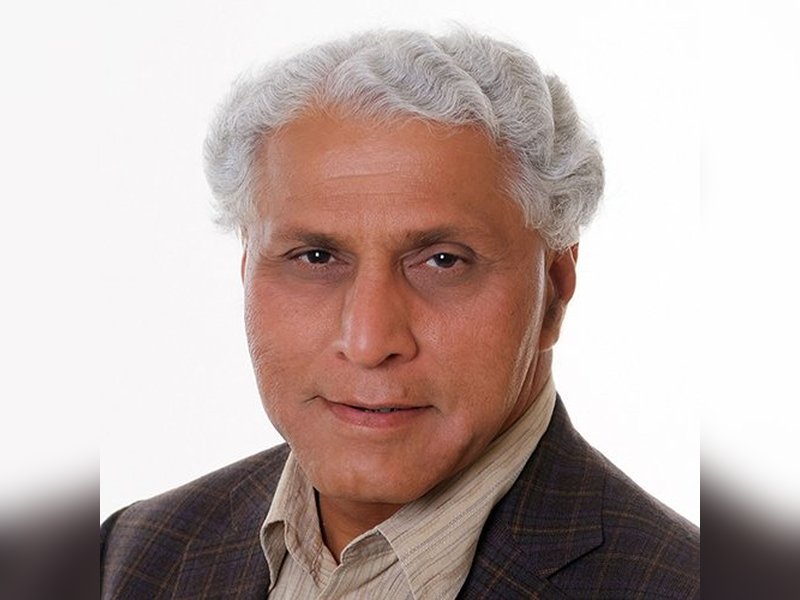
Washington, Jan 31 (IANS) The rapid advancement of artificial intelligence (AI) is set to shape national policy decisions over the next few years, influencing economic growth, geopolitical power, and social stability, according to technology entrepreneur Romesh Wadhwani. Speaking at a prominent CSIS conference ahead of India’s upcoming AI Impact Summit, Wadhwani highlighted a new phase in AI development characterized by autonomous AI agents capable of planning, executing, and learning with minimal human oversight.
Wadhwani remarked, “What was breakthrough technology three years ago now seems quaint,” referring to early generative AI tools. He noted that the global landscape is shifting towards AI agents that can augment, replace, and eventually surpass human workers. He projected that fewer than 5 million AI agents existed in 2025 but anticipated a compound annual growth exceeding 200 percent over the next five years.
He asserted that these AI agents will soon collaborate autonomously, replace humans in many tasks, and eventually manage entire business processes. “This is not a 50-year vision,” he emphasized. “This is a five-year vision.” Wadhwani cautioned that the speed of AI development is outpacing governmental regulations, drawing parallels with the lengthy delay between the invention of the telephone and the establishment of coherent U.S. telecommunications policy.
AI policy, according to Wadhwani, will have far-reaching implications across five key dimensions: geopolitics and national security, economic growth, business competitiveness, innovation speed, and social stability. “AI policy will determine winners and losers,” he stated, underlining the importance of strategic regulatory frameworks.
Wadhwani compared global approaches to AI regulation, noting that the United States favors a light-touch regulatory environment and innovation leadership, Europe prioritizes regulation through its AI Act, and China enforces mandatory AI adoption under political control. He characterized India’s strategy as focused on economic growth and large-scale deployment, saying, “I think of India as the land of practical innovation using AI.”
India, according to Wadhwani, emphasizes practical applications rather than capital-intensive frontier models, supported by extensive reskilling initiatives and relatively limited regulation. He projected that India aims to become one of the top three AI powers globally, trailing only behind the United States and China. Wadhwani estimated that AI could contribute between $1 trillion and $1.5 trillion to India’s GDP over the next five years while creating tens of millions of new jobs, even as automation displaces some existing roles.
The upcoming AI Impact Summit in India, he noted, reflects a significant shift in global AI discussions toward implementation and development outcomes, particularly for the Global South. This focus underscores the importance of harnessing AI technology in practical ways to drive economic growth and social progress.
See also Amazon Cuts 16,000 Jobs Amid $50B OpenAI Investment Talks, Signaling AI Strategy Shift
 Character.AI and Google Settle Teen Safety Lawsuits Following Suicide Tragedies
 Alphabet’s Project Genie Revolutionizes 3D World Building, Targeting Game Developers
 Amazon Shifts Strategy: $50B Stake in OpenAI Amid Retail Closures and Workforce Cuts
 China Approves DeepSeek’s Acquisition of Nvidia H200 Chips Amid Regulatory Conditions