

































Wall Street’s bullish ratings, notably from Morgan Stanley, are fueling optimism in the technology sector as investor sentiment shifts dramatically between the U.S. and China. Published on February 22, 2026, U.S. markets are currently experiencing an “AI scare trade,” where investors are offloading shares of software firms and wealth management companies. This reaction stems from concerns that rapid advancements in artificial intelligence (AI) could undermine established business models.
In stark contrast, the mood in China is considerably more upbeat. Rather than fearing disruption, investors are actively pursuing companies viewed as potential winners in the AI space, attracted by the technology’s growth prospects and its ability to drive cost efficiencies for users. Local players like MiniMax Group and Knowledge Atlas Technology JSC, known as Zhipu, have emerged as investor favorites, with their stock prices more than doubling in February.
The optimism in the Chinese market is supported by encouraging ratings from Wall Street banks. As pure AI companies draw investors away from traditional Internet giants, the difference in sentiment becomes evident. “China has been relatively insulated from the AI scare trade because the market is still focused on what AI can aid rather than what it can take away from incumbents,” said Charu Chanana, chief investment strategist at Saxo Markets in Singapore. “In the U.S., there’s anxiety about rich profit pools getting competed away, while China is still about penetration.”
This divergence is partly attributed to China’s relatively insulated competitive landscape, where regulatory constraints and geopolitical tensions limit the involvement of foreign companies in the AI sector. According to Gary Tan, a portfolio manager at Allspring Global Investments in Singapore, this structural distinction emphasizes how insulated China’s AI landscape truly is. Foreign large language models (LLMs) “have limited access to the domestic market, giving local model makers a clear run.”
MiniMax and Zhipu are especially appealing to investors due to a scarcity of publicly listed global companies focused on LLM development. Both firms debuted in Hong Kong in January; Zhipu’s shares have surged 524 percent since then, while MiniMax’s stock has risen 488 percent. Meanwhile, industry pioneers like OpenAI and Anthropic remain unlisted.
Other recently listed Chinese AI-related companies are also thriving. Among chip designers, Shanghai Biren Technology has seen its shares rise by over 80 percent since its January 2 listing, while Montage Technology has experienced a stock surge of more than 98 percent since starting trade on February 9.
The success of these Chinese firms is further boosted by a favorable funding landscape. Recent rounds of private financing for prominent AI companies suggest rising valuations. OpenAI is reportedly close to raising over $100 billion at a valuation that could surpass $850 billion, while Anthropic recently secured $30 billion at a valuation of $380 billion. Analysts at Jefferies Financial Group, including Edison Lee, noted a significant potential for upside in China’s AI valuations as new models emerge and fundraising figures grow.
However, some market observers caution that sustained optimism may be challenging if earnings growth does not align with investor expectations. Concerns linger that focusing on AI champions might obscure broader disruption risks that could impact various sectors and ultimately harm corporate earnings across the market.
Market Dynamics
Nonetheless, each new AI development is currently perceived as a catalyst for both developers and users in China. The recent launch of a video-making application by ByteDance, the parent company of TikTok, has invigorated stocks within the film and media sectors. Zhipu’s release of its latest LLM, GLM-5, which bested a competing offering from Moonshot AI, has garnered attention for achieving the highest ranking among open-source models globally, according to the Jefferies note.
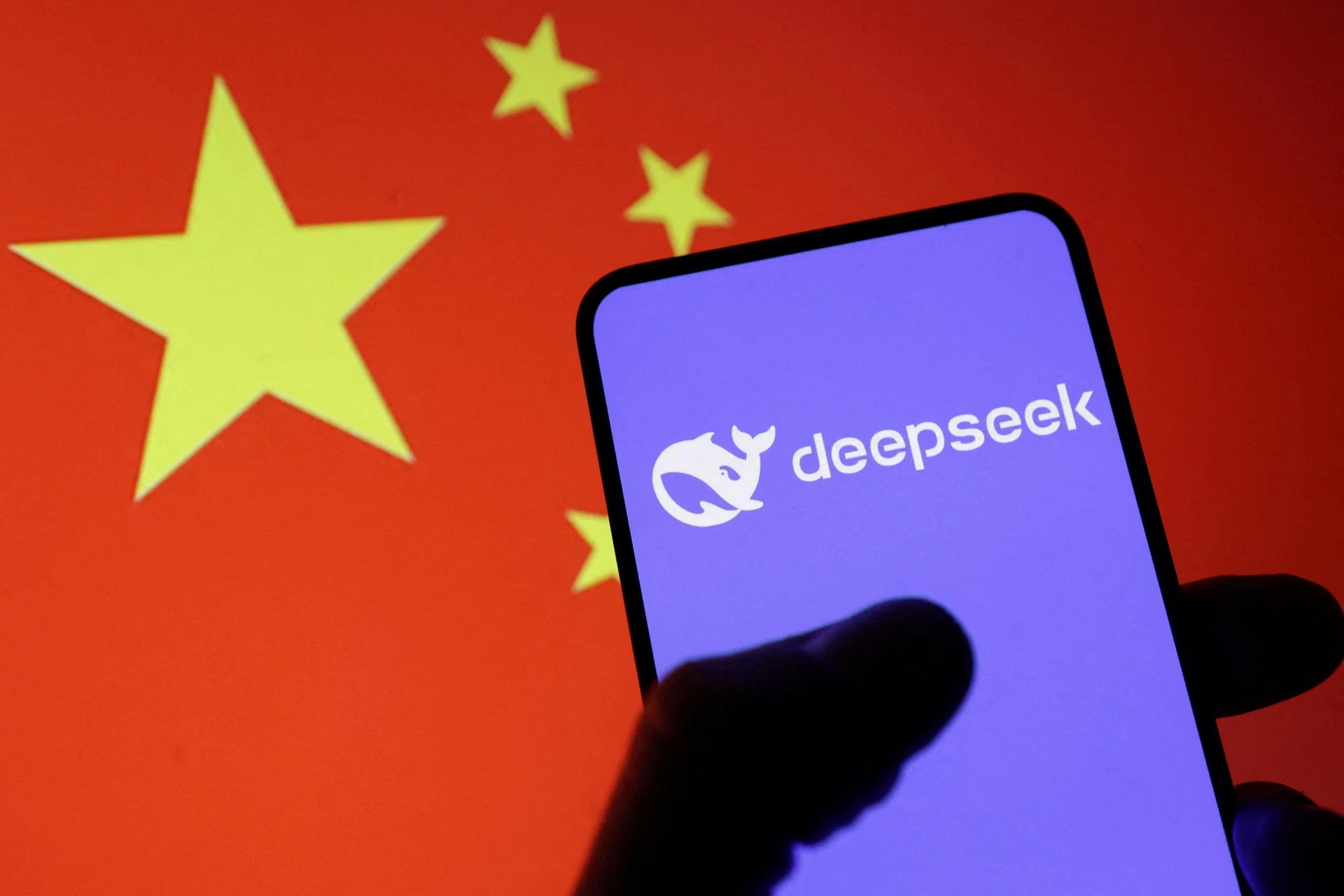
Anticipation is building around DeepSeek, a firm that has sparked significant interest in China’s burgeoning AI industry. The company is expected to unveil its next-generation model soon, potentially providing a further boost to the sector. Additionally, the cost-competitiveness of Chinese AI models, such as those developed by DeepSeek, is expected to accelerate user adoption.
Morgan Stanley, Jefferies, and UBS Group have initiated coverage of MiniMax with buy-equivalent ratings, projecting that the company’s revenue could reach approximately $700 million by 2027—a potential tenfold increase over the next two years. Investment strategist Billy Leung at Global X Management commented that recent releases of AI models in China have “reignited interest in foundation model leaders,” with Morgan Stanley’s aggressive revenue forecasts reinforcing this trend. Investor capital is currently rotating into pure AI names, while diversified platforms such as Alibaba and Tencent are witnessing profit-taking.
As the AI landscape evolves, the contrasting investor sentiments in the U.S. and China reflect deeper market dynamics. The ongoing developments in AI technology not only highlight the competitive landscape but also underscore the potential for transformative changes across industries.
See also Sam Altman Faces Backlash Over Controversial Comments on AI Energy Use and Human Comparison
 Underrated AI Tools: Gamma, Perplexity, and Runway Transform Productivity and Creativity
 Amazon’s CEO Andy Jassy Declares Generative AI a $250 Trillion Game-Changer
 Modine Achieves 31% Quarterly Growth in Data Center Cooling as AI Demand Soars